
YOUR CAR
CAN BE STOLEN
in under 60 seconds with no alarm triggered
How relay attacks steal keyless cars, and what stops them
LockCAR designs immobilisers in the UK, and relay theft is the problem we hear about most. Here is how a relay attack works, step by step, which cars it affects, which popular tips do not really help, and what keeps the car where you left it.
- No damage left behind
- Works through walls
- Stopped by a second check
What is a relay attack?
It does not copy or break your key. It extends its reach.
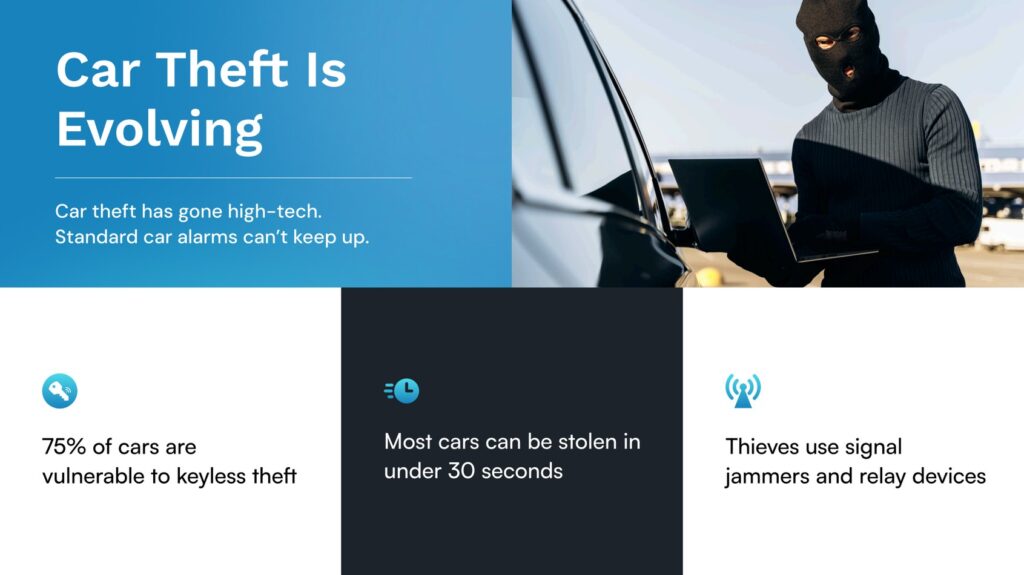
A keyless car opens and starts when its key is close, usually within a metre or two. A relay attack stretches that distance. Two thieves use a pair of devices to pass the signal between your key, inside the house, and your car, on the drive. The car believes the key is next to it.
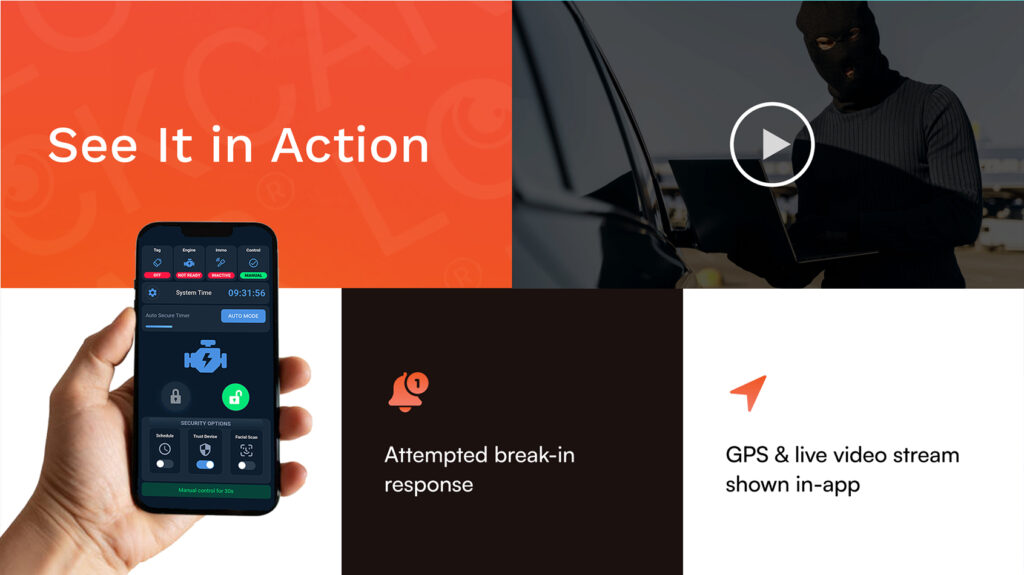
There is usually no broken glass and no alarm, which is why many owners only find out in the morning.
Step by step: how the theft happens
Two people, two devices, a short time.
At the front door
The first thief holds a receiver near the door or window, closest to where the key is kept, and picks up its signal.
At the car
The second thief stands by the car with a transmitter that repeats the signal. The car unlocks.
The engine starts
The factory immobiliser accepts the relayed signal as the genuine key, and the car drives away.
Which keyless cars relay attacks target
It is about how the key system works, not about one brand.
Any car with passive keyless entry and push-button start can be targeted, whatever the brand. That includes many Range Rovers, BMWs, Mercedes, Audis, Volkswagens, Fords, Toyotas and Lexus models. Several of them were among the most stolen cars in the UK in 2025, according to DVLA car theft statistics.
Some newer keys use ultra-wideband or go to sleep when they stop moving, which makes relaying harder. Check your handbook, and remember that relaying is only one of several methods.
What does not really stop it
Popular tips, and their limits.
Helps, if you never forget
- A signal-blocking pouch or metal tin, every night
- Keeping the key away from the front door
- Switching off keyless entry, where your car allows it
Does not stop the engine
- A steering wheel lock: it slows a thief after the car is open
- Putting the key in the fridge or microwave: not reliable
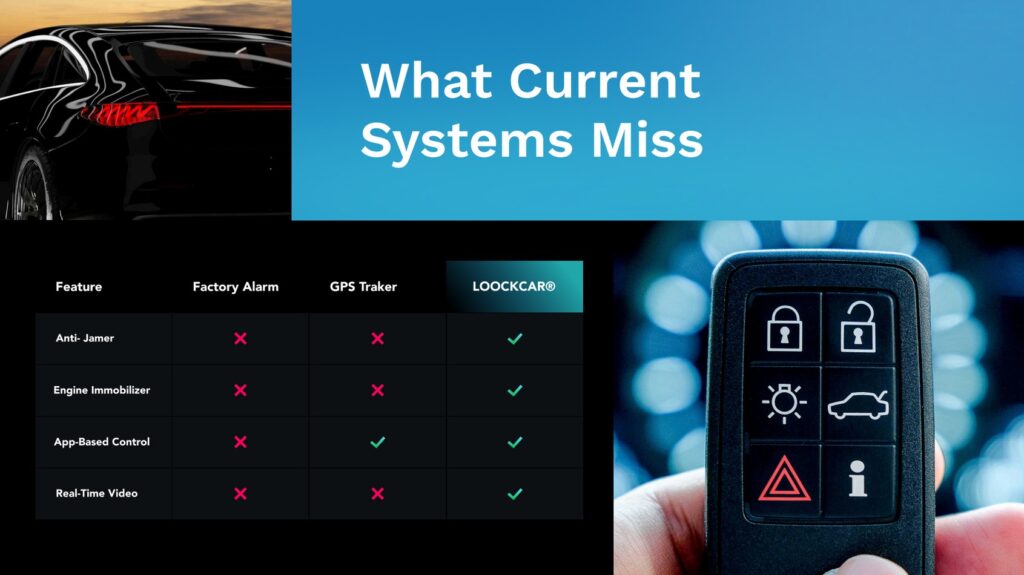
- The factory alarm: the car thinks the key is present
Habits help, but they depend on you remembering every night, and they do nothing against key programming or CAN injection.
What actually stops a relay attack
Something the key signal cannot provide.
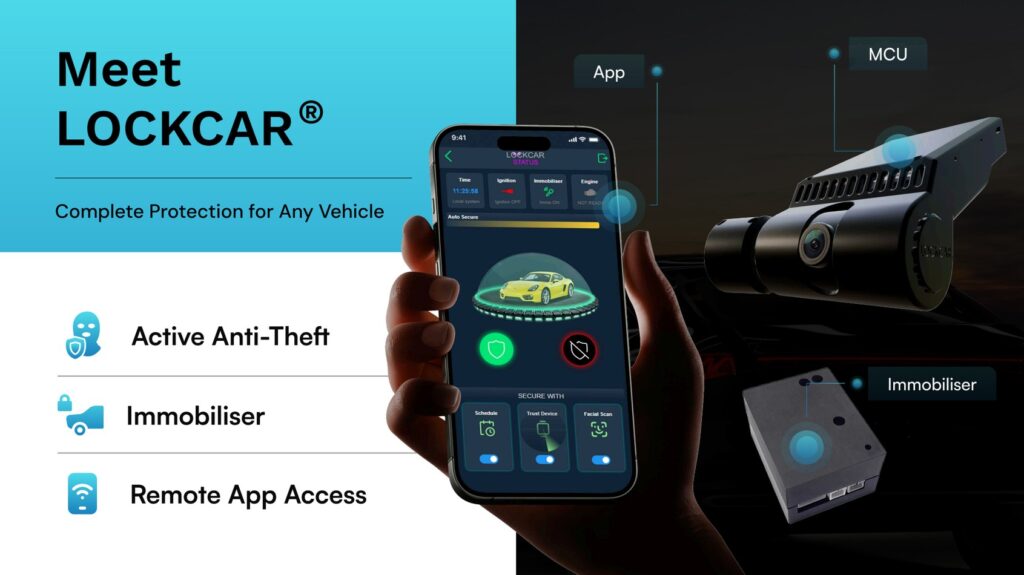
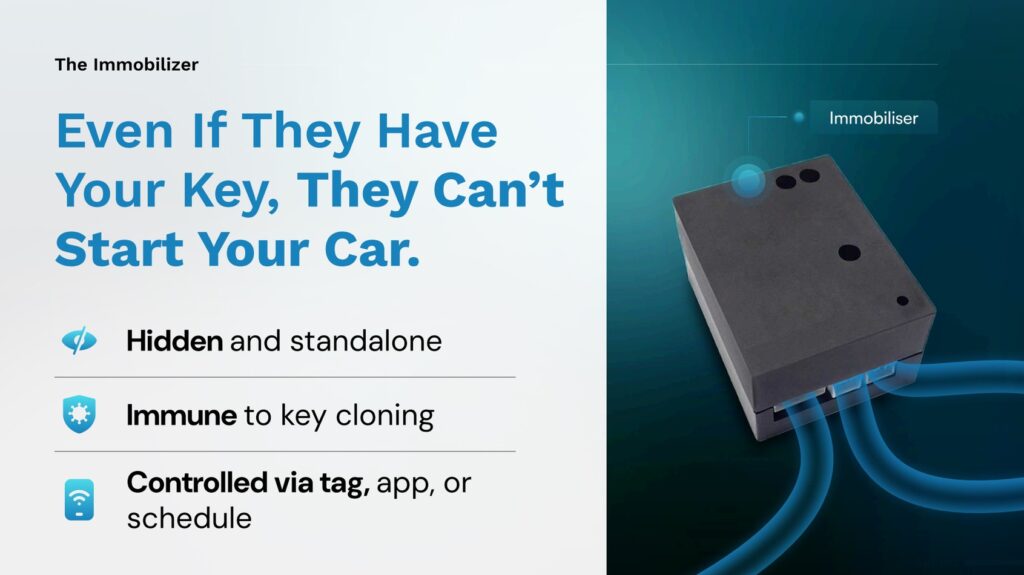
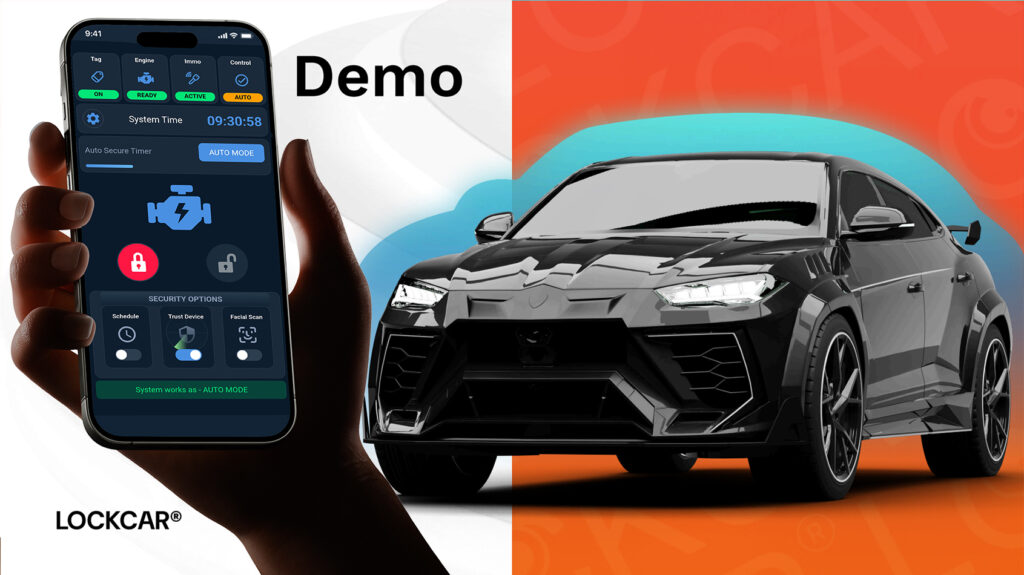
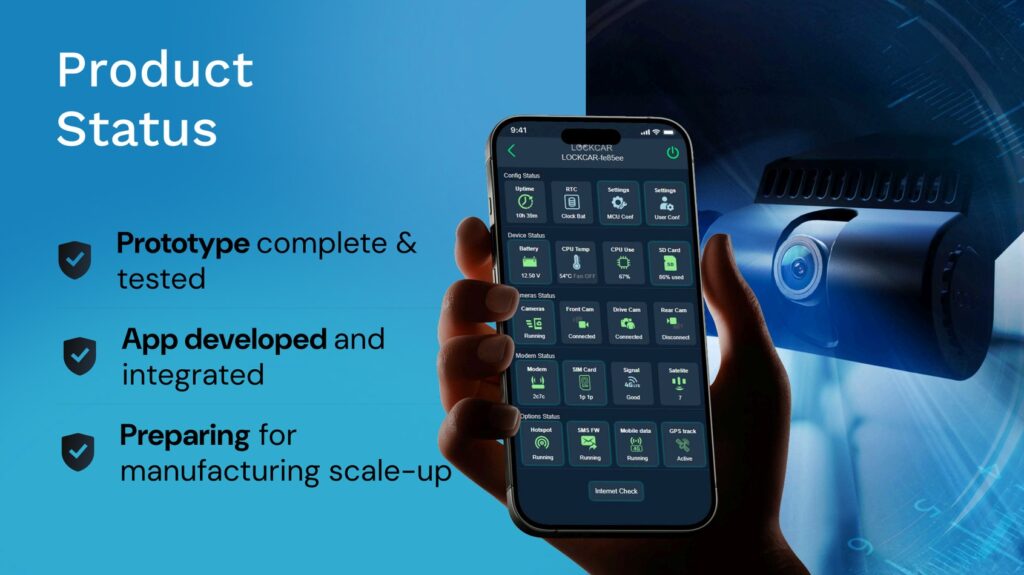
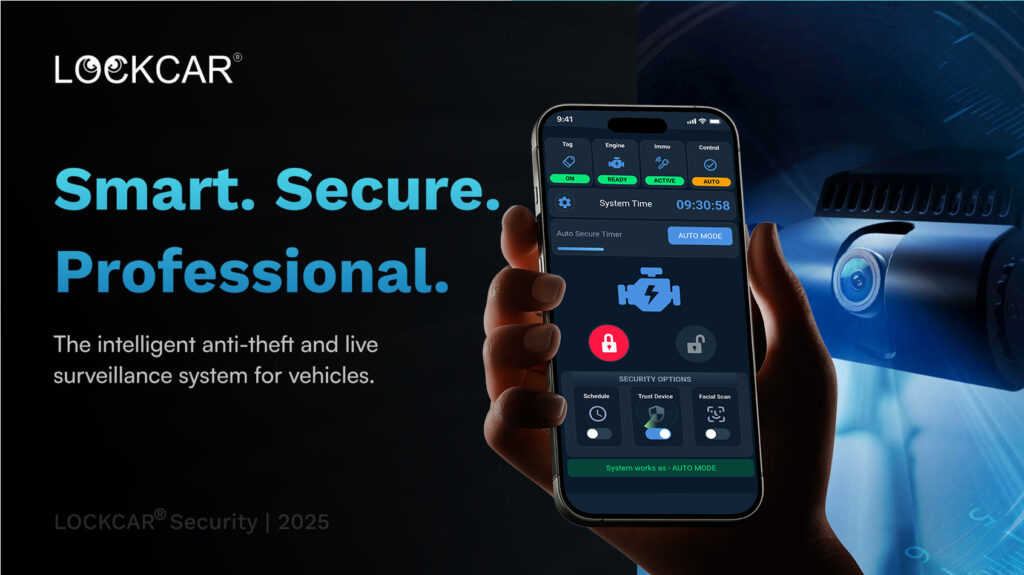
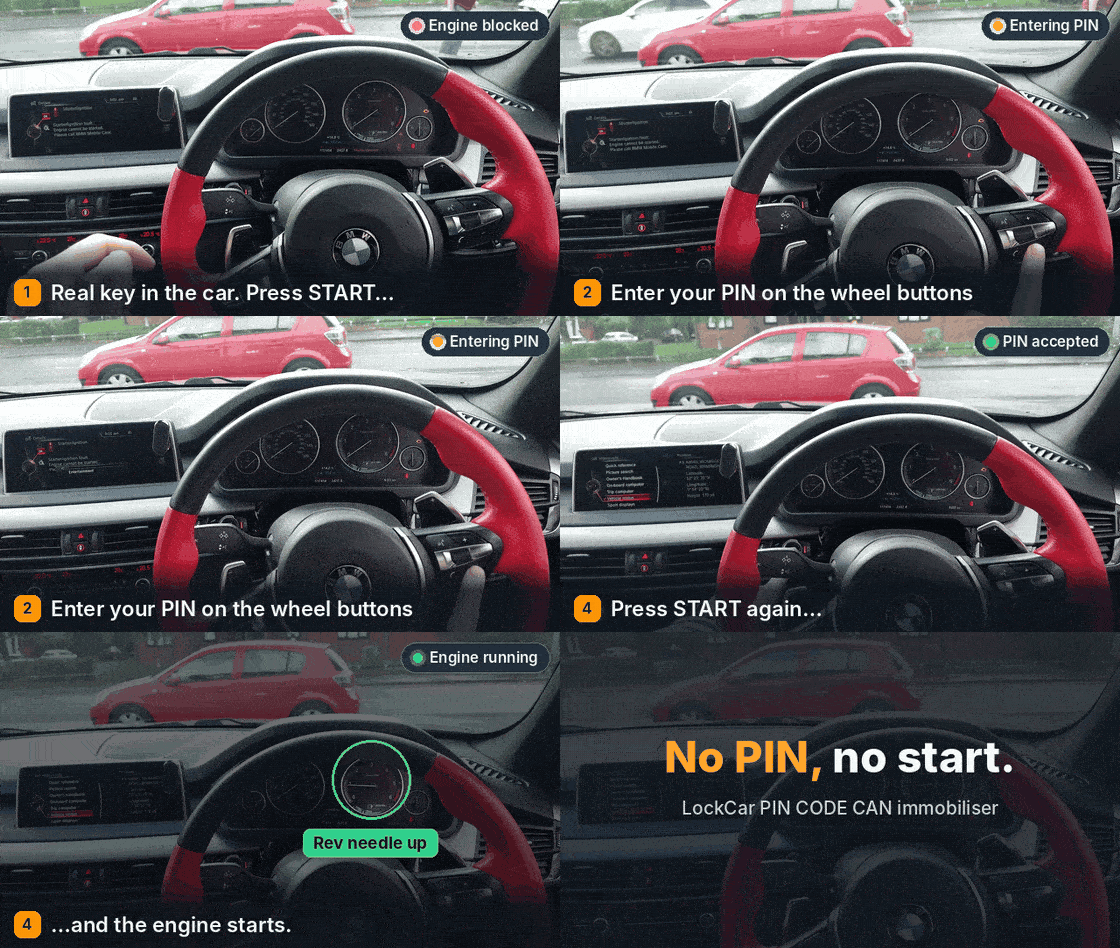
A second check that the relay cannot pass. An aftermarket immobiliser sits outside the keyless system and keeps the engine blocked until it gets its own signal: a TAG fob, a smart ring, a smartwatch or a PIN on the steering wheel buttons. The car may open for the relayed key, but it does not start.
| Immobiliser | How you disarm it | Hands-free | Kit | Fitted |
|---|---|---|---|---|
| Fob (TAG), IC3262 | Carry the small TAG fob | Yes | £139 | £249 |
| Smart ring | Wear the paired ring | Yes | £149 | Ask us |
| Smartwatch | Wear your smartwatch, no extra fob | Yes | £160 | Ask us |
| PIN code, CAN-IMMO | Enter your sequence on the steering wheel buttons | With optional TAG | £189 | £299 |
Relay attack questions
Can thieves relay my key through the wall of the house?
Yes. The receiver picks up the key’s signal through doors, windows and walls, which is why keys near the front door are most at risk.
Does a Faraday pouch stop relay theft?
It blocks the key’s signal while the key is inside it, so it helps at home. It does not help when the key is out of the pouch, and it does nothing against key programming.
Can I turn off keyless entry?
On some cars, yes, through the settings or the dealer. You lose the convenience, and the car can still be taken by other methods.
Does an immobiliser stop a relay attack?
Yes. The LockCAR immobiliser keeps the engine blocked until it gets its own TAG, ring, watch or PIN, which the relay cannot provide.
How much does it cost to protect my car?
Kits start at £139. Fitted by a LockCAR approved installer, the TAG version costs £249 and the PIN version £299.

Written by the LockCAR engineering team. We design and build our immobilisers in the UK and fit them through our approved installers. Meet the engineers. Last updated October 2026.