



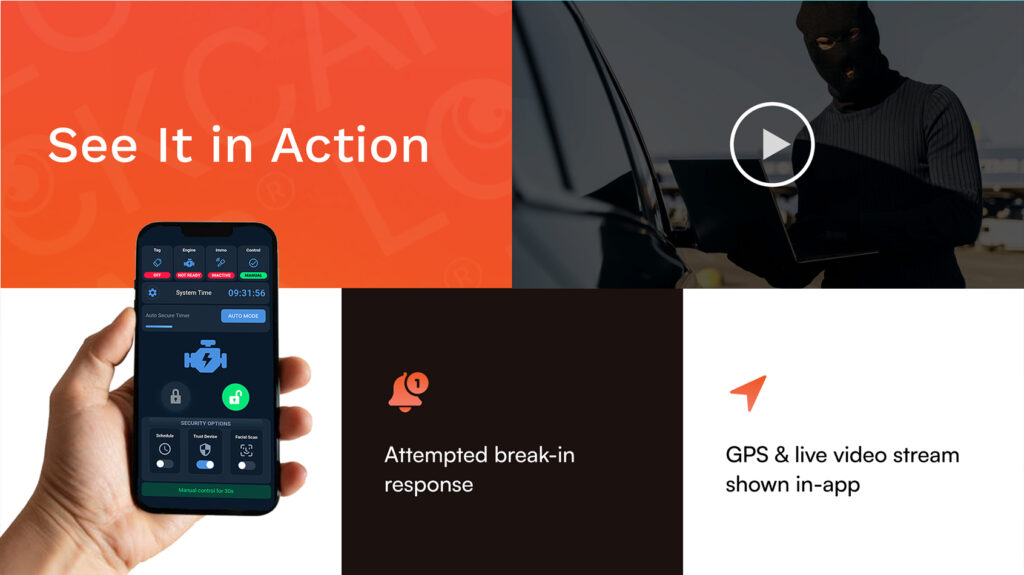

YOUR CAR
CAN BE STOLEN
in under 60 seconds with no alarm triggered
Car Theft Prevention UK: How Thieves Steal Cars and How to Stop Them
Relay attacks, CAN injection and OBD key cloning explained in plain English – plus the layered security that keeps your car on your driveway.
On this page
Car theft prevention in the UK has changed. Hotwiring is gone – today most cars are stolen electronically, in minutes, without a window being broken. Thieves use relay amplifiers to trick keyless entry, CAN injection devices to send fake “start” commands, and OBD programmers to create new keys. This guide explains how each method works, which cars are most at risk, and the practical steps that genuinely stop thieves – from a £10 Faraday pouch to a hidden relay immobiliser.
How are cars stolen in the UK today?
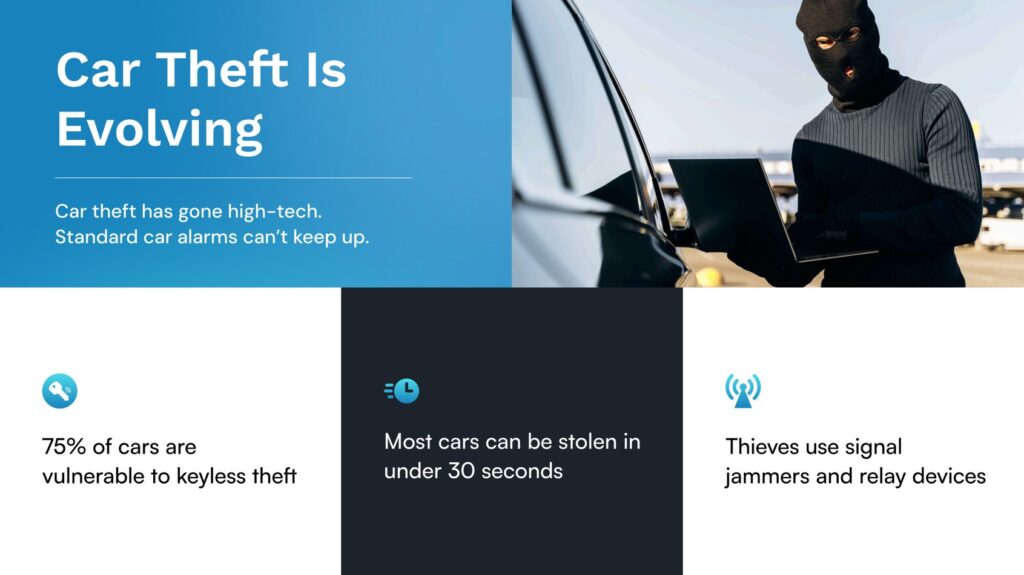
Most modern cars are protected by a factory immobiliser that only lets the engine start when it recognises the key’s electronic code. That system stops old-fashioned hotwiring – but it has a weakness: it trusts the electronics. If a thief can make the car believe the right key is present, or can talk directly to the car’s computers, the factory immobiliser simply switches off.
That is why keyless car theft, CAN injection and key cloning now account for so many thefts of mid-range and premium vehicles. The tools are sold online, the attacks are quiet, and the car usually leaves with no visible damage – which can also complicate insurance claims.
Relay attacks: how keyless car theft works
A relay attack targets cars with keyless entry and push-button start. Thieves usually work in pairs. One stands near your front door or window with a relay amplifier that picks up the signal from your key fob inside the house. That signal is passed to a second device held next to your car. The car believes the key is beside it, so it unlocks and starts. A relay theft can be over in around a minute.
How to stop a relay attack
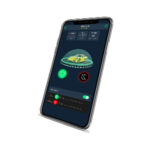
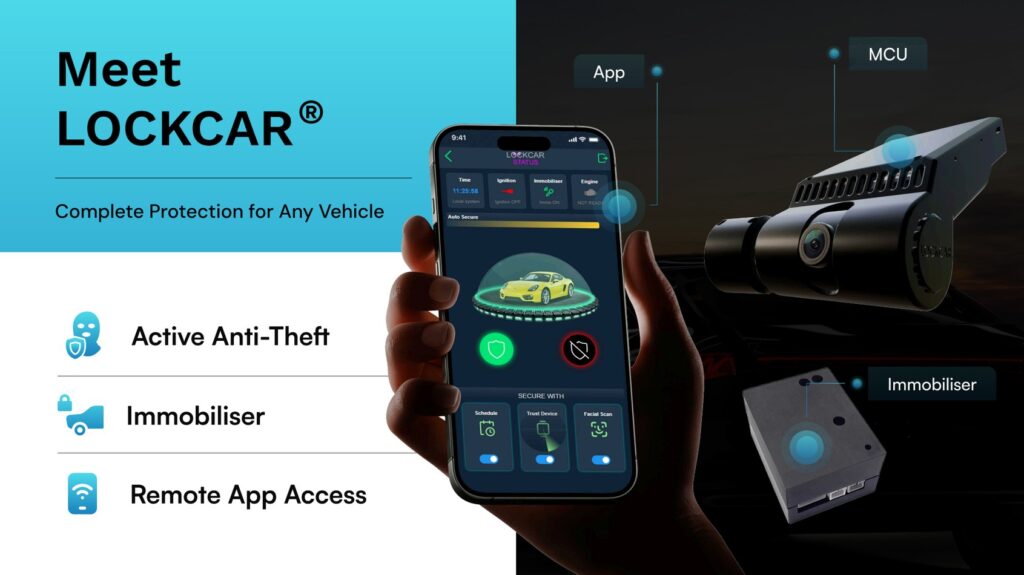
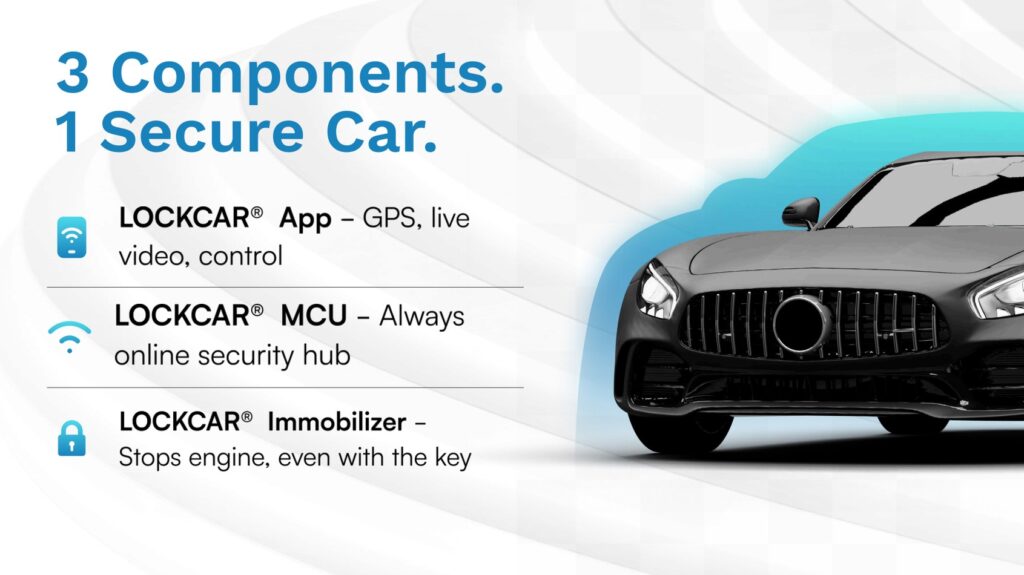
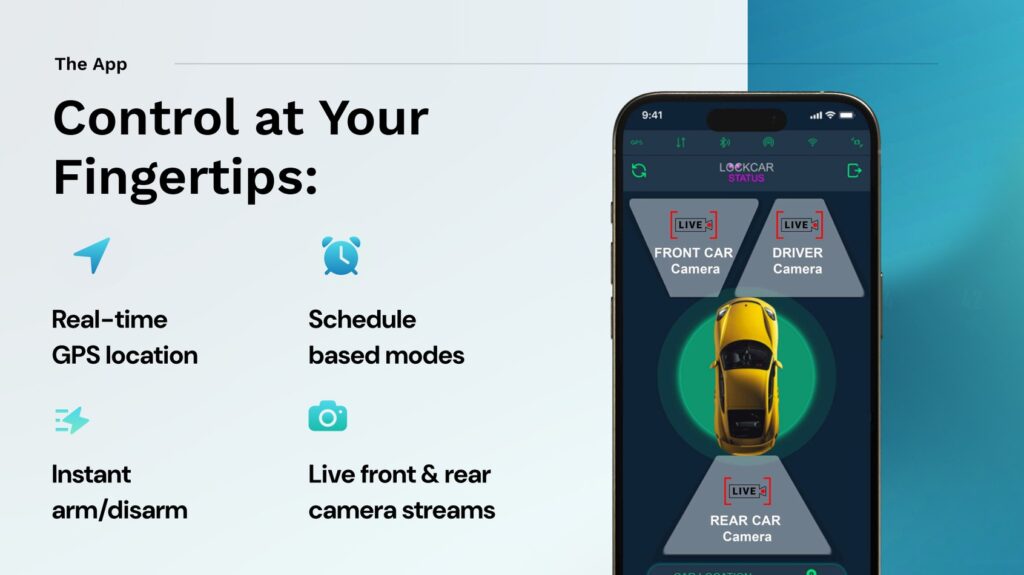
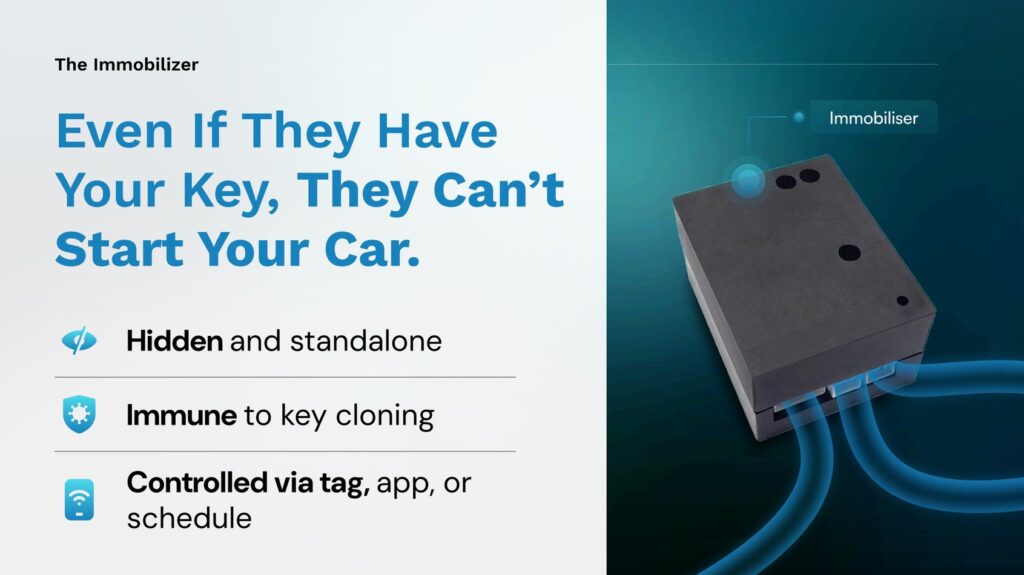
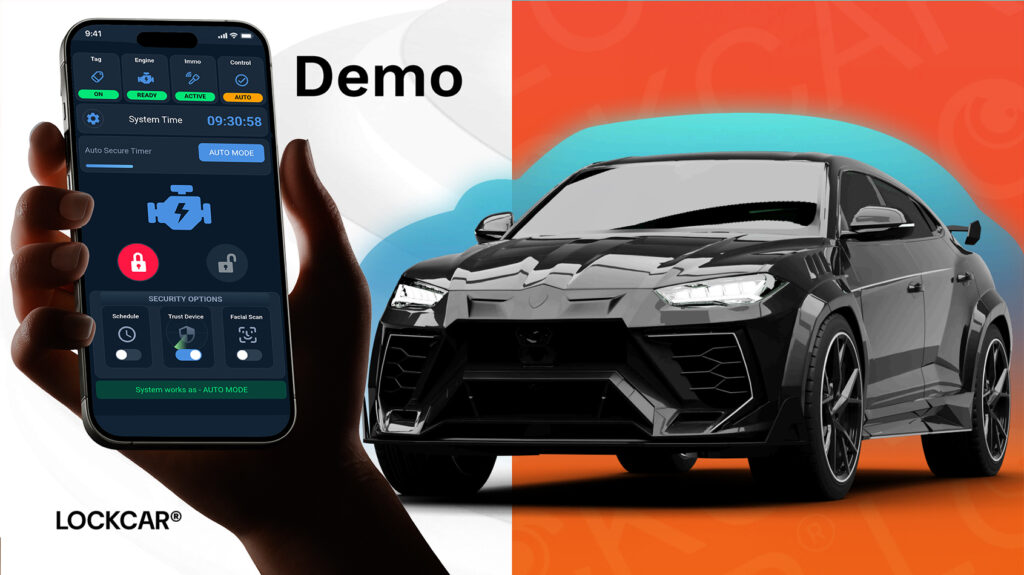
Keep keys in a Faraday pouch or metal box away from doors and windows, turn off keyless entry if your car allows it, and fit an immobiliser that does not rely on the key fob signal at all. A LockCar immobiliser needs its own separate tag or app confirmation, so a relayed key signal on its own is not enough to drive away.
A Faraday pouch only protects your key while it is inside the pouch. At a restaurant, gym or office your key is exposed again. An immobiliser protects the car wherever it is parked.
CAN injection: the “headlight hack”
CAN injection is a newer and more sophisticated attack. The CAN bus is the network that lets your car’s computers talk to each other. Thieves reach this wiring from outside the car – often by pulling back a bumper or headlight – and connect a device that floods the network with fake messages, including “the key is valid, unlock and start”. The car’s own systems accept the command, and the factory immobiliser is bypassed.
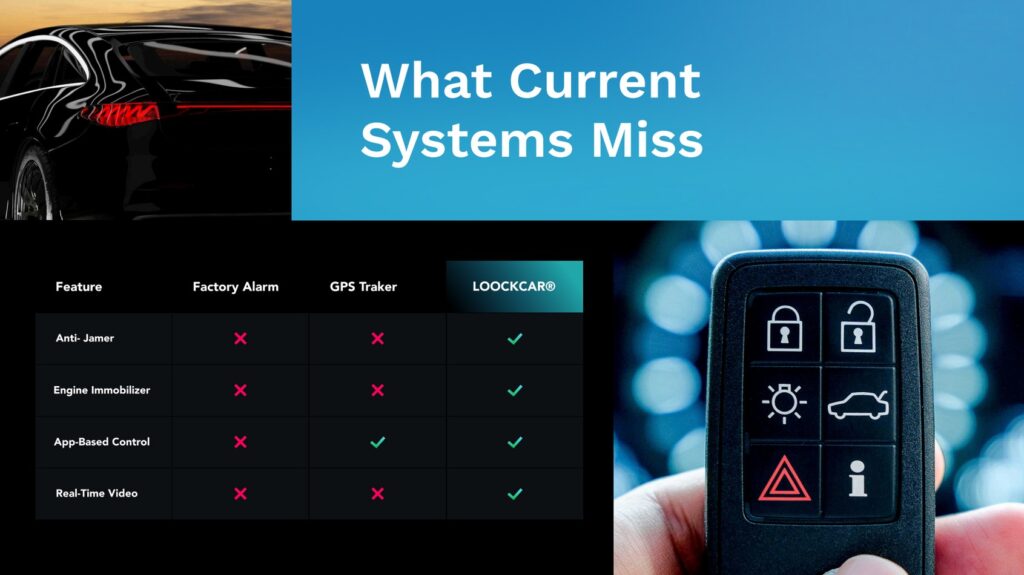
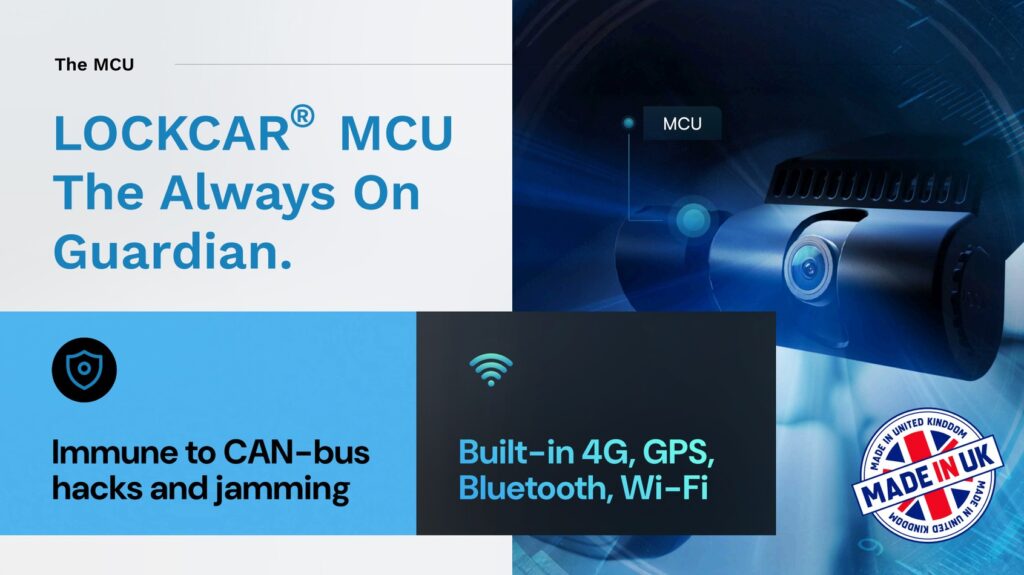
Because the attack comes through the car’s own network, a Faraday pouch does nothing to stop it. What stops it is a separate immobiliser that sits outside the CAN bus and physically controls a circuit the engine needs. LockCar’s relay immobilisers do not take commands from the CAN bus, so a fake “start” message cannot switch them off.
OBD key cloning and key programming
Every car built since the early 2000s has an OBD (on-board diagnostics) port, usually under the dashboard. Garages use it to read fault codes and program new keys. Once inside the car, thieves can use the same port with a key programming tool to register a blank fob as a genuine key. From that moment, the car treats the thief’s key exactly like yours.
Prevention: fit an OBD port lock or have the port relocated, and use an immobiliser that is independent of the car’s key system. Even with a newly programmed key, a car fitted with a LockCar immobiliser still will not run without the owner’s tag or app.
Other common car theft methods
Key burglary. Thieves break into homes specifically to take car keys, often from a hallway hook or table. Keep keys out of sight and away from the front door.
Signal jamming. A jammer blocks the lock signal when you walk away, leaving the car open. Always check the doors are locked – listen for the lock and watch for the mirrors folding or lights flashing.
Theft to order and parts stripping. Popular models are often stolen for their parts rather than to be sold whole. A visible deterrent plus a hidden immobiliser makes your car a slower, riskier target.
Loading or towing. Occasionally a car is simply lifted onto a truck. An immobiliser can’t prevent this, which is why a 4G GPS tracker is the right partner for high-value cars.
Is your car at risk?
Your car is at higher risk of electronic theft if it has any of the following:
- Keyless entry and push-button start
- A popular SUV, 4×4 or premium badge that is in demand for parts or export
- Only the factory immobiliser and alarm – no aftermarket security
- Regular on-street or driveway parking overnight
- Keys kept near the front door
If you ticked two or more, a layered security setup is worth considering. We regularly protect Range Rover, Land Rover, Mercedes, BMW, Audi, Lexus, Toyota and Ford models, but every make and model can be fitted.
How to stop car theft: 8 practical steps
No single product makes a car impossible to steal. Effective car theft prevention works in layers: each layer costs the thief more time, and time is what thieves avoid.
- Store keys in a Faraday pouch or box – blocks relay attacks at home.
- Keep keys away from doors and windows – reduces relay range and key burglary.
- Disable keyless entry if your car’s settings allow it.
- Fit a hidden relay immobiliser – stops relay, CAN injection and cloned keys from starting the engine.
- Protect the OBD port with a lock or relocation to block key programming.
- Add a GPS tracker so the car can be located and recovered if it is towed or loaded.
- Use a visible deterrent such as a steering wheel lock – alongside, not instead of, an immobiliser.
- Park smart – in a garage, a well-lit area or behind a driveway post where possible, and check the car has locked.
Car security options compared
| Security measure | Relay attack | CAN injection | OBD key cloning | Towing / loading |
|---|---|---|---|---|
| Faraday pouch | Yes, at home only | No | No | No |
| Steering wheel lock | Slows thief | Slows thief | Slows thief | No |
| OBD port lock | No | No | Yes | No |
| LockCar relay immobiliser | Yes | Yes | Yes | No |
| GPS tracker | Helps recovery | Helps recovery | Helps recovery | Helps recovery |
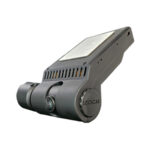
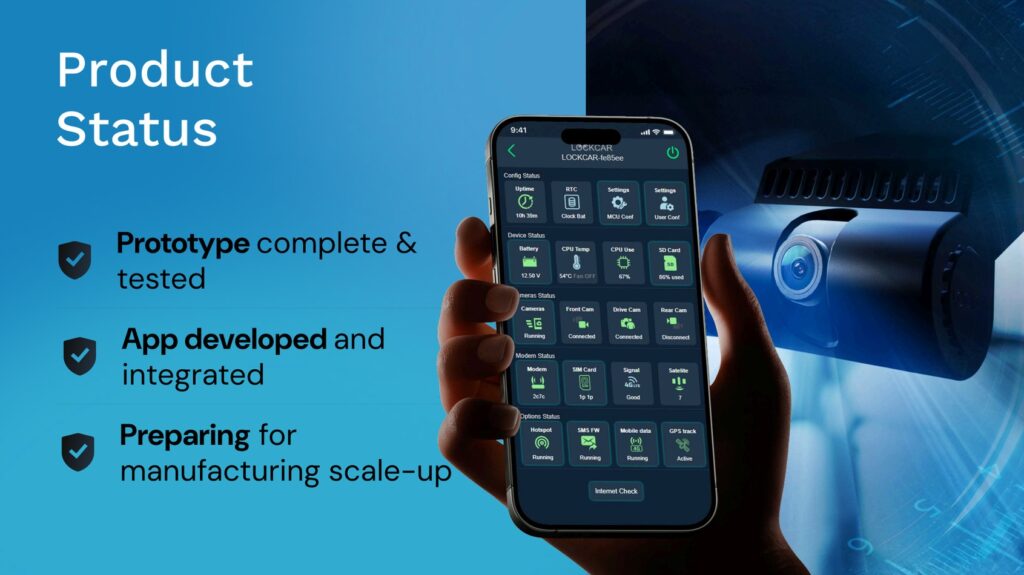
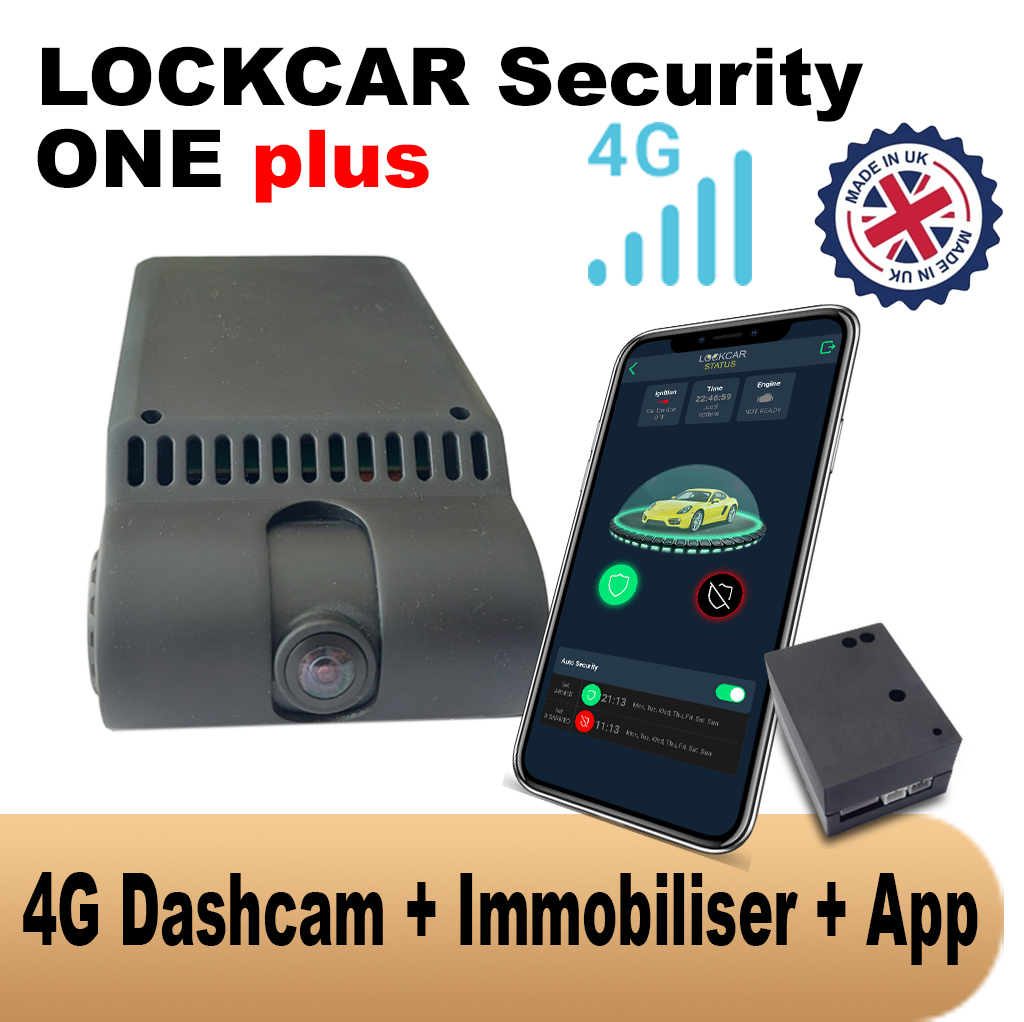
The strongest setup combines an immobiliser (prevention) with a GPS tracker (recovery) – which is exactly what the LockCar One Plus does in one unit.
LockCar car immobilisers – supplied and fitted UK-wide
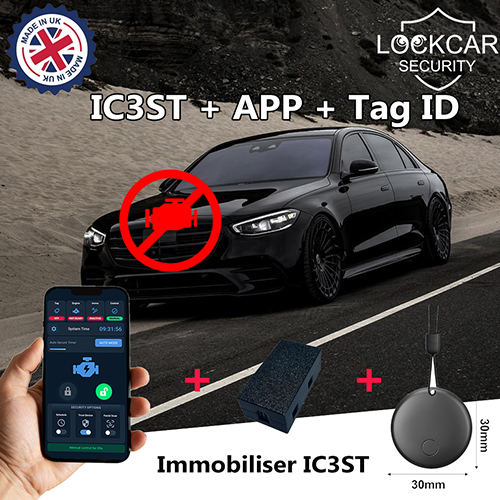
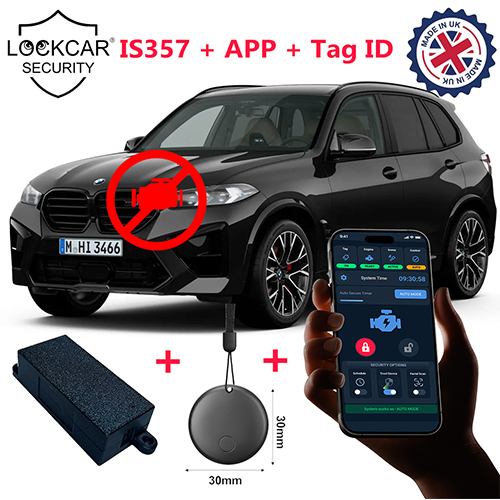
Every LockCar immobiliser uses a hidden 20A relay that physically cuts a circuit the engine needs to run. Until the owner’s tag is present or the app confirms, the car will not drive – no matter which key or command the thief uses.
Car theft prevention FAQ
What is the best way to stop keyless car theft?
Combine a Faraday pouch at home with a hidden immobiliser that works independently of the key fob. The pouch stops relay attacks while the key is stored; the immobiliser stops the car being driven away even if the key signal is relayed or a new key is programmed.
Can a thief bypass a physical relay immobiliser?
Bypassing a hidden, hardwired relay means finding its location and physically rewiring around it. That takes time and tools, and each installation is hidden differently – so most thieves move on to an easier car.
Does a Faraday pouch stop CAN injection?
No. CAN injection attacks the car’s wiring directly and doesn’t use your key signal at all. Only an immobiliser that sits outside the CAN bus can stop it.
Is a steering wheel lock enough?
Steering wheel locks are a good visible deterrent, but they can be cut in minutes and do nothing against electronic theft. Use one alongside an immobiliser, not instead of it.
Will an aftermarket immobiliser affect my car warranty?
A professionally fitted immobiliser that doesn’t alter the car’s original systems should not affect your warranty. Keep your fitting invoice, and if in doubt check with your dealer.
Do I need to tell my insurer about an immobiliser?
Yes, it’s good practice to tell your insurer about any security modification. Policies and discounts vary, so ask your insurer how they treat aftermarket immobilisers.
How long does immobiliser fitting take?
Most LockCar installations take around 1–2 hours, depending on the vehicle. Our mobile fitters come to your home or workplace.
Which cars can LockCar immobilisers be fitted to?
All makes and models – petrol, diesel, hybrid and many electric vehicles – including Range Rover, Land Rover, Mercedes, BMW, Audi, Lexus, Toyota and Ford.
Protect your car before thieves find it
Mobile fitting at your home or work · All makes and models · Professional installation
Book on WhatsApp Call 07300 989091i226 immobiliser