
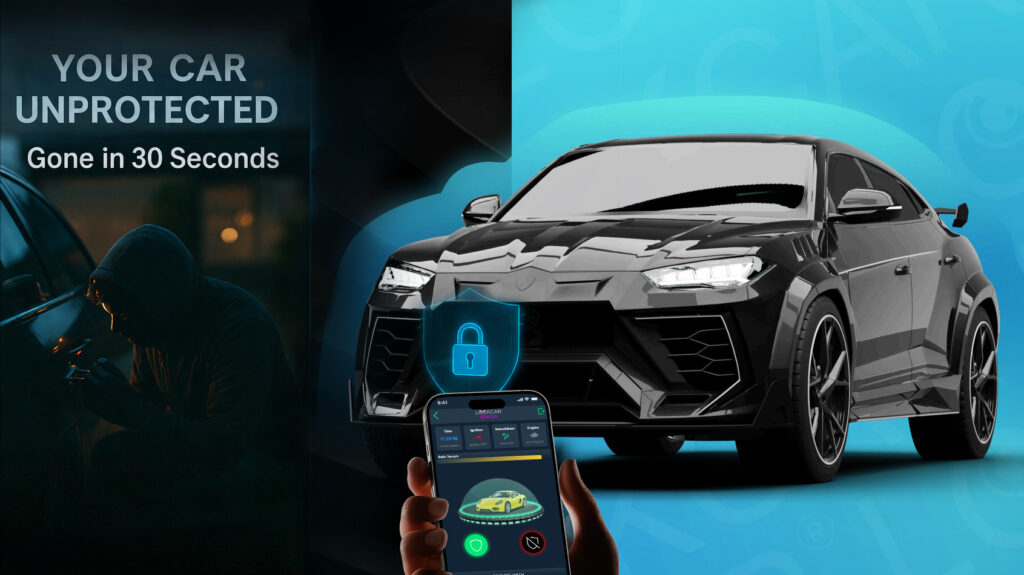
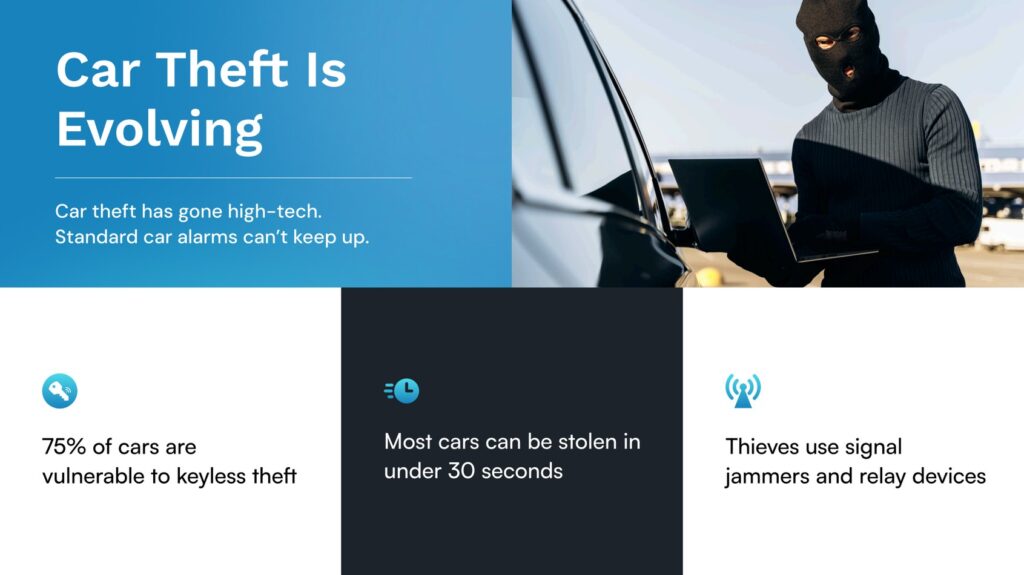
YOUR CAR
CAN BE STOLEN
in under 60 seconds with no alarm triggered
Keyless entry: how it works, UK theft risks and how to stop relay attacks
LockCAR designs and makes CAN bus immobilisers in the UK, fitted by approved installers. This page explains in plain terms how your car’s keyless entry and push-button start decide that the key is present, why relay thieves can fake that, and what UK drivers can add to keep the engine blocked.
- Plain-English guide
- Keep your keyless
- Engine stays blocked
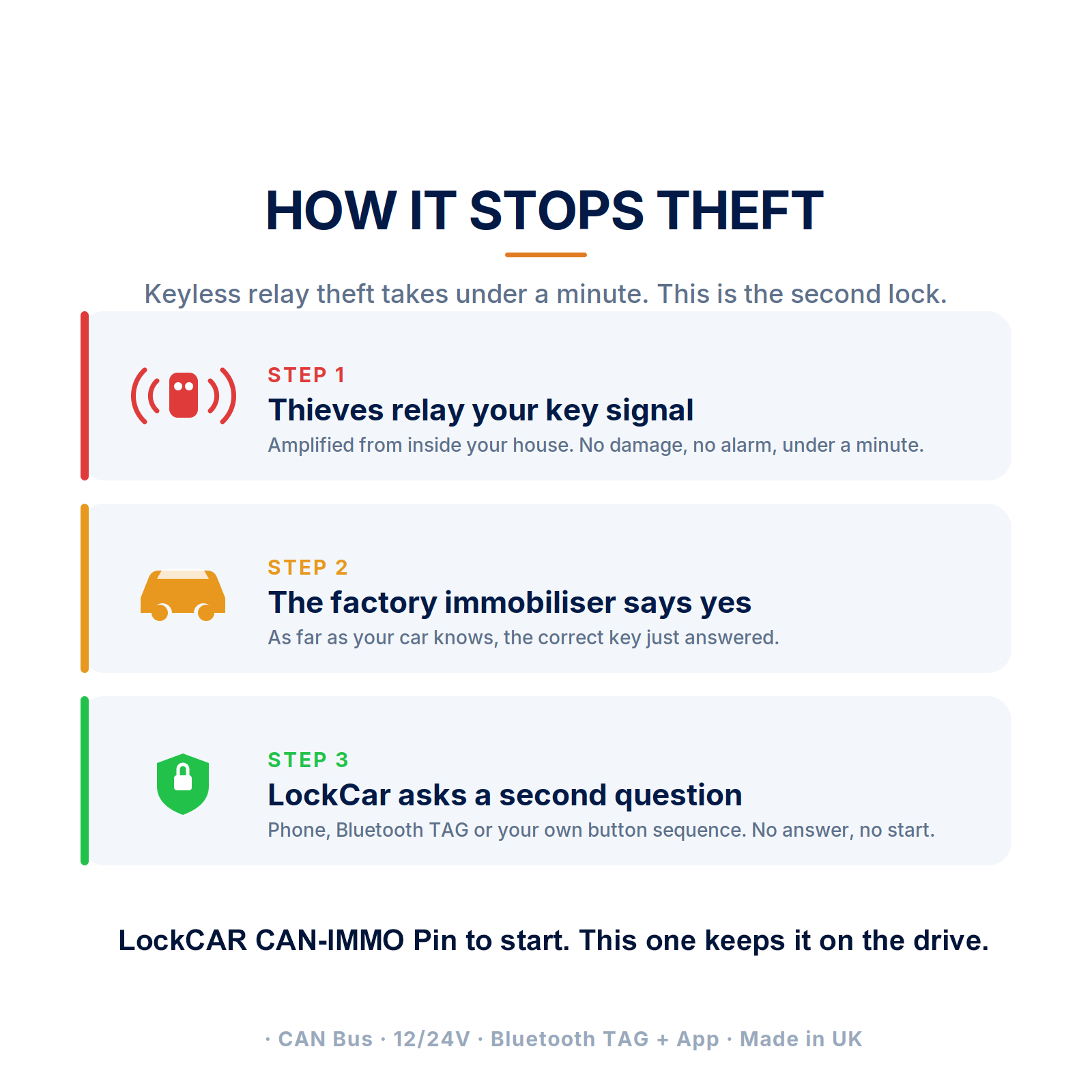
How keyless entry works, step by step
Passive keyless entry means you never press a button on the fob. The car and key do all the talking.
The car calls out
When you touch a door handle or press start, the car sends a short-range, low-frequency signal, around 125 kHz, that reaches about a metre around the car. Outside that small bubble, the key should be out of reach.
The key answers
Your key hears the call and replies on a higher frequency, usually 433 or 868 MHz depending on the maker, with a coded answer the car checks.
The start button checks again
Push-button start runs a second, shorter-range check to confirm the key is inside the cabin before it lets the engine fire. If the key is not found, the dashboard shows a warning instead.
Why a relay box can fool it
The weakness is not a fault in one car. It comes from how every passive keyless system decides the key is nearby.
- The car checks the signal, not the distance
- As long as the right answer comes back, the car assumes the key is close. It cannot tell that the signal travelled through two boxes.
- The call passes through walls
- The low-frequency signal travels through doors, windows and brickwork, so a device outside your house can reach a key in the hallway.
- No cloning needed
- A relay does not copy or crack your key’s code. It simply carries the real conversation between key and car much further than a metre.
- The start button is fooled the same way
- Once the car is open, the same relay convinces the start button that the key is inside.
- Some thieves skip the key entirely
- CAN injection and OBD key programming work through the car’s own electronics, with no key signal at all.
- It is quick and quiet
- Nothing is forced and no glass is broken, so a relayed car can be gone before anyone in the house wakes up.
What manufacturers have changed, and why it is not enough
Car makers raise the cost of an attack. They have not closed the gap.
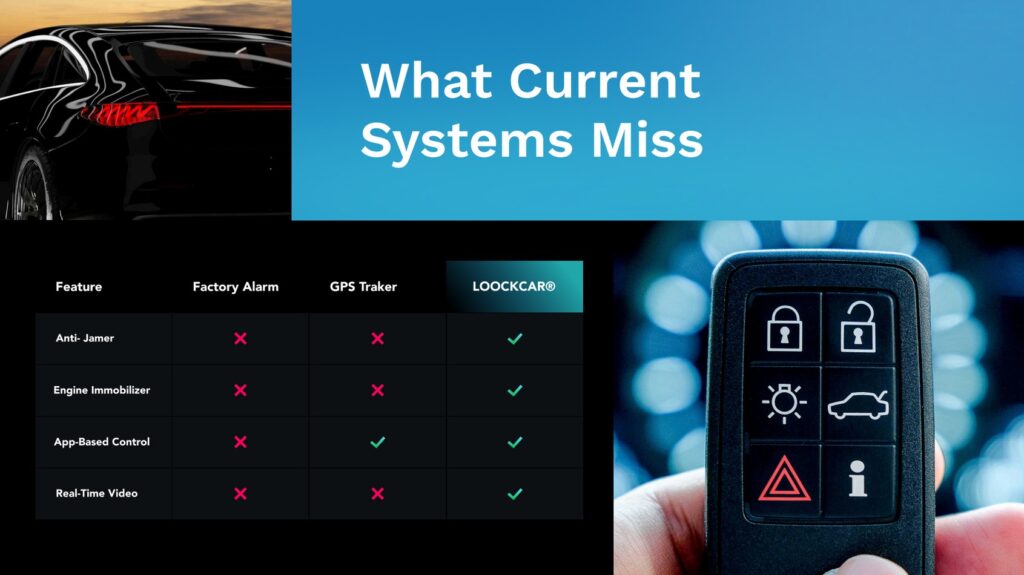
- Motion-sleep fobsSome keys stop answering when they have been still for a while, which helps only if the fob really is left untouched.
- Distance measuringNewer cars use ultra-wideband to measure how far away the key is, which makes relaying harder but not impossible.
- Switching keyless offSome models let you turn passive entry off in the settings. Check your handbook.
- None of it stops CAN injectionMethods that bypass the key altogether are untouched by changes to the key.
Keep your keyless, add a check thieves cannot pass
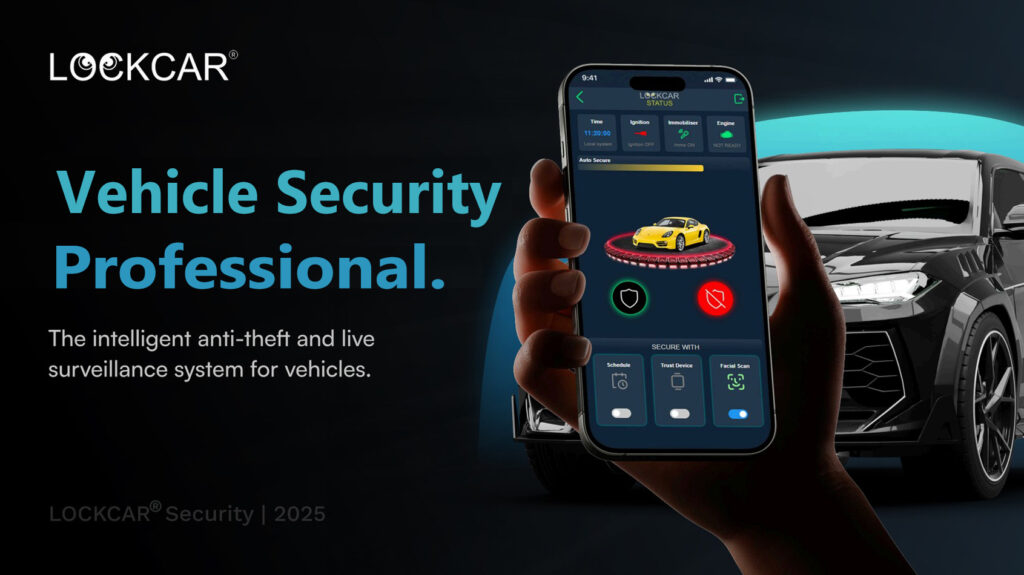
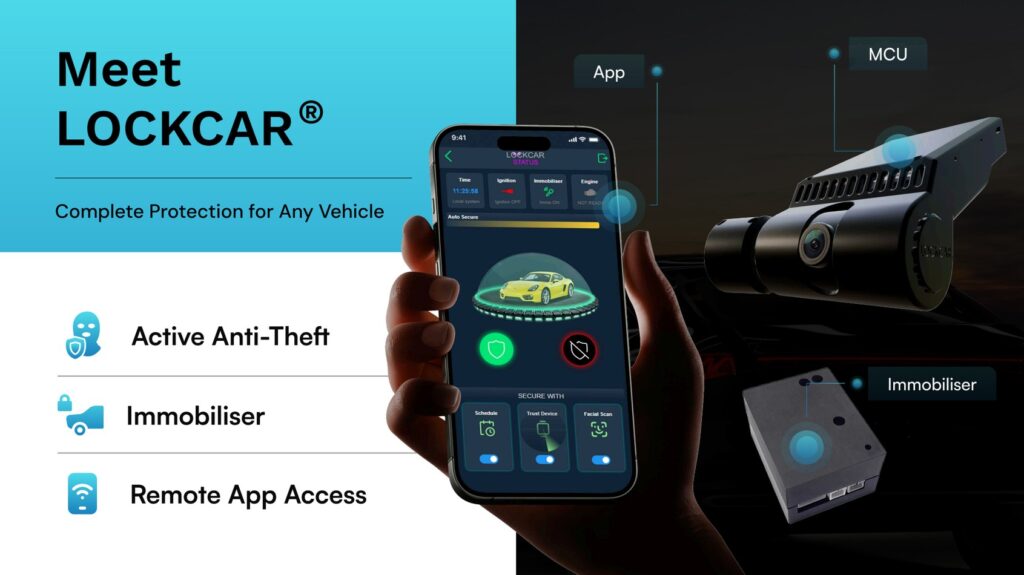
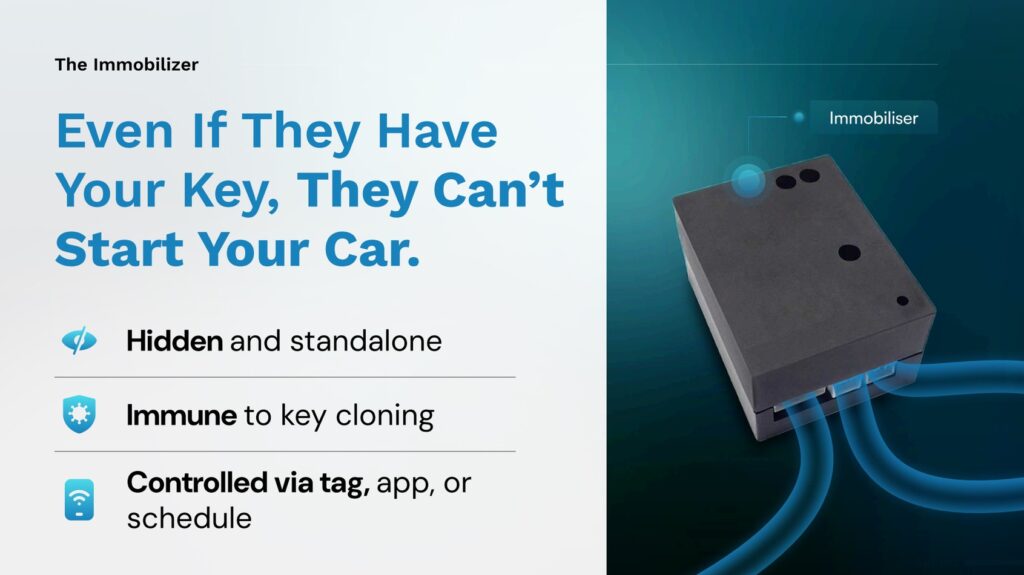
A LockCAR immobiliser does not try to make keyless entry harder to fool. It adds its own check before the engine can start, which a relayed key cannot answer. The module sits on the CAN bus behind trim, and you keep the keyless convenience you paid for.
| Option | What you do to start | Feels keyless? | Kit | Fitted |
|---|---|---|---|---|
| Fob (TAG), IC3262 | Nothing, the TAG on your keys is recognised | Yes | £139 | £249 |
| Smart ring | Nothing, the paired ring is recognised | Yes | £149 | On request |
| Smartwatch | Nothing, your smartwatch is recognised | Yes | £160 | On request |
| PIN code | Enter a sequence on the steering wheel buttons | With optional TAG | £189 | £299 |
Next step for your car
Two quick steps take you from reading about relay theft to a car that stays put. The Vehicle CHECK shows which options suit your make and model.
Confirm it fits
Our immobilisers suit 12 V and 24 V vehicles. Put your registration into the Vehicle CHECK.
Book an installer
An approved installer comes to your home or office, or you drop the car at an installation centre.
Keyless entry questions
Can I turn off keyless entry on my car?
On some models, yes, through the settings menu or a button sequence. Your handbook or dealer can tell you. It removes the easy relay route, but not CAN injection.
Is keyless entry the same as keyless start?
Not quite. Keyless entry unlocks the doors when the key is near. Keyless start, or push-button start, lets you start the engine with the key in the cabin. Most cars with one have both.
Does a Faraday pouch stop relay attacks?
Yes, while the key is inside it, because the car’s call cannot reach the key. It only works if you use it every time.
How far can a relay attack reach?
Much further than the metre or so the system is designed for. Thieves usually work in pairs: one holds a device near your door or window, the other waits by the car. That is why a key kept near the front door is the easiest to relay.
Will an immobiliser stop me using keyless entry?
No. You still unlock the car without touching the fob. The engine just stays blocked until the immobiliser recognises your TAG, ring or watch, or you enter your PIN.
Do I pay a monthly fee?
No. LockCAR immobilisers need no subscription. You pay once.
Are LockCAR immobilisers Thatcham approved?
Not yet. They are going through Thatcham Security Certification, so check what your insurer asks for before you rely on any added security for a policy.

Written by the LockCAR engineering team. We design and build CAN bus immobilisers, GPS trackers and 4G dashcams in the UK and fit them through our approved installers. Meet the engineers. Last updated .