


Your basket is currently empty!
What to do if your car is stolen in the UK — a complete step-by-step guide
The exact steps in the right order: police, insurance, DVLA, personalised plates, vehicle tax refunds, and what happens if your car is recovered. Updated March 2026 with current GOV.UK guidance.
If your car was just stolen — do these things first
- 1 Call 999 if the theft is in progress or you feel unsafe. Call 101 for everything else.
- 2 Get your crime reference number from the police. You cannot proceed without it.
- 3 Call your insurer. Most have 24-hour claims lines. Have your policy number ready.
- 4 If you have a GPS tracker active, share the location data with police immediately.
- 5 Do not touch anything left behind by thieves without gloves. It may contain fingerprint evidence.
Discovering your car has been stolen is one of the most disorienting experiences a driver faces. The shock is real. But the steps you take in the first few hours matter more than most people realise — for recovery chances, for the insurance process, and for avoiding administrative problems that can drag the situation out for weeks.
This guide covers every step in the right order, based on current GOV.UK guidance and official insurer advice. It also covers the less obvious situations: what to do with a personalised plate, how to claim vehicle tax back, and what happens legally when your insurer pays out.
In 2025, 150 cars were stolen every day across the UK, according to analysis of DVLA data published by What Car?. Recovery rates improved in 2025, with around 44.9% of stolen cars successfully recovered according to QuestGates analysis of DVLA data, but that still means more than half of stolen vehicles are never returned to their owners. The steps you take in the first hours directly affect which side of that statistic you end up on.
Before you call anyone — confirm it is actually stolen
Before dialling 101, take two minutes to rule out the most common non-theft explanations. Police call handlers appreciate this, and it avoids an embarrassing correction later.
Check these first
✓ Did a family member or partner move the car? Check before assuming the worst.
✓ Is it possible you parked in a different location than you remember? Particularly relevant in unfamiliar areas or after a long day.
✓ Was it parked on a restricted road or yellow line? Local councils tow vehicles. In London, you can call TRACE on 0845 206 8602 to check if your vehicle has been impounded.
✓ Did you receive any parking letters or notices recently that could indicate the vehicle was removed by authorities?
If none of the above explain it, your car has almost certainly been stolen. Move to Step 1 now.
1
Report to the police
Your first call must be to the police. This is not optional — without a crime reference number from the police, you cannot make an insurance claim, apply for a vehicle tax refund, or complete most of the other steps that follow.
If the theft is happening now or you believe you are in danger, call 999.
For all other situations — the typical scenario where you discover the car is gone the next morning — call 101 and ask to speak to your local police station.
Have this information ready when you call: your vehicle registration number, make, model, and colour; the location where the car was last parked; the approximate time you last saw it; any distinguishing features; and whether you have a GPS tracker active. If you have CCTV footage or a doorbell camera that may have captured the theft, tell the officer so they can arrange to view it.
The officer will issue you a crime reference number. Write this down and keep it safe. You will need it for your insurer, for a vehicle tax refund application, and possibly for several other processes that follow. The police will also register the theft with the DVLA directly, though it is still advisable to contact the DVLA yourself in the steps below.
If items were left behind at the scene — keys, tools, clothing, or any other objects the thieves may have dropped — wear gloves before touching them. These may contain fingerprint or DNA evidence. Tell the police what is there and follow their instructions before handling anything.
The police may not send an officer to the scene in every case, particularly for overnight thefts with no witnesses. This is not unusual. Your report will be logged, the crime reference number issued, and the DVLA notified of the stolen vehicle status. The National ANPR (Automatic Number Plate Recognition) system will flag your vehicle if it passes any camera on the network.
2
Contact your insurer
Contact your insurer as soon as possible after reporting to the police. Most motor insurance providers operate 24-hour claims lines — check your policy documents for the number.
Have ready: your policy number, your crime reference number from the police, the vehicle registration, and details of when and where the theft occurred. If you have dashcam footage, CCTV footage, or other evidence of the theft, let them know.
Your insurer will explain the claims process. If you have comprehensive or third-party, fire and theft (TPFT) cover, vehicle theft should be covered. Third-party-only policies do not cover theft.
What your insurer will likely do next
Most insurers will wait a period — typically around 30 days, though this varies by policy — before settling a theft claim, to allow time for the vehicle to be recovered. During this period they may arrange a courtesy car depending on your policy terms. Check your policy carefully, as not all policies include courtesy car cover specifically for theft claims.
If the vehicle is not recovered within the waiting period, the insurer will typically offer to settle the claim at the vehicle’s market value at the time of the theft. This is important: insurers pay market value, not what you paid for the car. If the car has depreciated since purchase, the settlement will reflect its current value, not its original purchase price.
No-claims bonus impact: A theft claim will typically reduce your no-claims bonus. The exact impact depends on your policy. Some comprehensive policies offer protected no-claims, which can limit the effect of a single claim. Check your documents before assuming your bonus is unaffected.
Tools and personal belongings inside the car
Standard motor insurance policies typically do not cover personal belongings or tools left inside the vehicle. These usually fall under home or contents insurance, or a separate tools-in-transit policy for tradespeople. Check your home insurance policy and report the lost items to that insurer separately if covered. Some motor policies have a small personal belongings allowance — check the schedule of your specific policy.
3
Notify the DVLA
The police will notify the DVLA of the theft when you make your report. However, it is still advisable to contact the DVLA yourself to confirm the theft is recorded and to initiate any processes that require your direct involvement.
The DVLA’s vehicle enquiries line is 0300 790 6802, available Monday to Friday 8am to 7pm and Saturday 8am to 2pm.
You will need to contact the DVLA directly in two situations: if your insurer pays out on the claim (because the vehicle is then considered sold to the insurer and the DVLA must update the registered keeper); and if your vehicle has a personalised registration number you wish to retain (covered in Step 4 below).
What to do with your V5C log book
If your insurer pays out on the claim, you must notify the DVLA that the vehicle has been transferred to the insurance company. According to GOV.UK guidance, you can do this by completing section 9 of the V5C log book and sending the perforated section to the DVLA, along with a letter stating when the payment was accepted and the insurance company’s details. Send the remaining part of the V5C to your insurance company.
If your insurer asks you to send them the whole V5C, send a letter to the DVLA separately with the insurance company’s name, the claim date, and your vehicle details. Include your signature.
Do not notify the DVLA you no longer own the vehicle until after you have dealt with your personalised registration number (if you have one). Once you tell the DVLA you have sold the vehicle to your insurer, you lose the ability to retain the personalised plate through the standard process. Step 4 explains this.
4
Personalised plates — act quickly
If your vehicle has a personalised or private registration number that you want to keep, you must take action before you tell the DVLA that the insurance company is now the registered keeper. Once you transfer ownership to the insurer, you cannot use the standard retention process.
According to GOV.UK guidance, to retain a personalised registration number from a stolen vehicle you must apply within 2 years and 6 months of telling the DVLA your vehicle has been stolen. The application must be made by post and costs £80.
Required documents for personalised plate retention: the vehicle’s V5C log book (or green “new keeper” slip with a completed V62 application form), a letter confirming the theft and insurance claim, and your crime reference number. Contact the DVLA on 0300 790 6802 for current guidance specific to your situation.
If you have already applied to keep your personalised number, you can apply to put it on another vehicle straight away. You must apply before the original vehicle is sold or scrapped, and you must wait 6 months before transferring the registration to another vehicle.
Road tax and personalised plates: if your vehicle has a private registration number, a road tax refund is not automatic. You will need to apply separately using form V33, which you can request from the DVLA. Include your crime reference number. Allow 4 to 6 weeks for the refund.
5
Claim your vehicle tax refund
Once the DVLA cancels your vehicle registration — which happens automatically when they are notified you no longer own the vehicle — your vehicle tax will also be cancelled. If you pay by Direct Debit, this will be cancelled automatically. You should receive a refund cheque for any full months of tax remaining.
For most standard plates, the DVLA calculates the refund from the date they receive your notification. The cheque is sent to the address on the log book, so ensure the DVLA has your current address on record.
For personalised registration numbers, as noted above, the refund is not automatic. You must request form V33 from the DVLA, complete it with your crime reference number, and submit it. The refund usually arrives within 4 to 6 weeks.
DVLA contact: 0300 790 6802, Monday to Friday 8am to 7pm and Saturday 8am to 2pm. You can also contact the DVLA via the vehicle enquiry form at gov.uk/contact-the-dvla.
If your car is recovered
44.9%
Recovery rate for stolen cars improved in 2025. Analysis of DVLA data by QuestGates found that 44.9% of stolen cars were successfully recovered in 2025, up from 42.5% in 2024. The average time from theft to recovery fell from 27.1 days in 2024 to 25.6 days in 2025. If your car has an active GPS tracker, recovery odds increase significantly.
If the police find your vehicle, they will contact you with the news. The car will typically be held at a police pound pending any forensic examination or investigation. You will be told when you can collect it.
Before you drive it away
Do not drive a recovered stolen vehicle until it has been inspected by a qualified mechanic. Thieves frequently modify vehicles to enable starting without the key, and these modifications can affect safety systems. A dealer or independent garage should check the vehicle before you use it on a road.
Tell your insurer immediately when the police notify you of the recovery, passing on all the information provided. If your insurer has already begun paying out the claim, or if the vehicle is returned while the claim is in progress, the situation becomes more complex and you should seek guidance from your insurer directly about how to proceed.
If it is returned damaged
If the recovered vehicle has been damaged during the theft or by the thieves, your comprehensive or TPFT insurance should cover the repair costs. If the repair cost exceeds the vehicle’s market value, the insurer may declare it a total loss and pay out the market value instead. Report all damage to your insurer before arranging any repairs independently.
GPS tracker advantage: vehicles with active GPS trackers have substantially higher recovery rates than untracked vehicles. According to government data reported by Inn-Track, only 10% of vehicles stolen in 2024 had trackers. Recovery rates for tracked vehicles with police assistance are significantly higher than the national average.
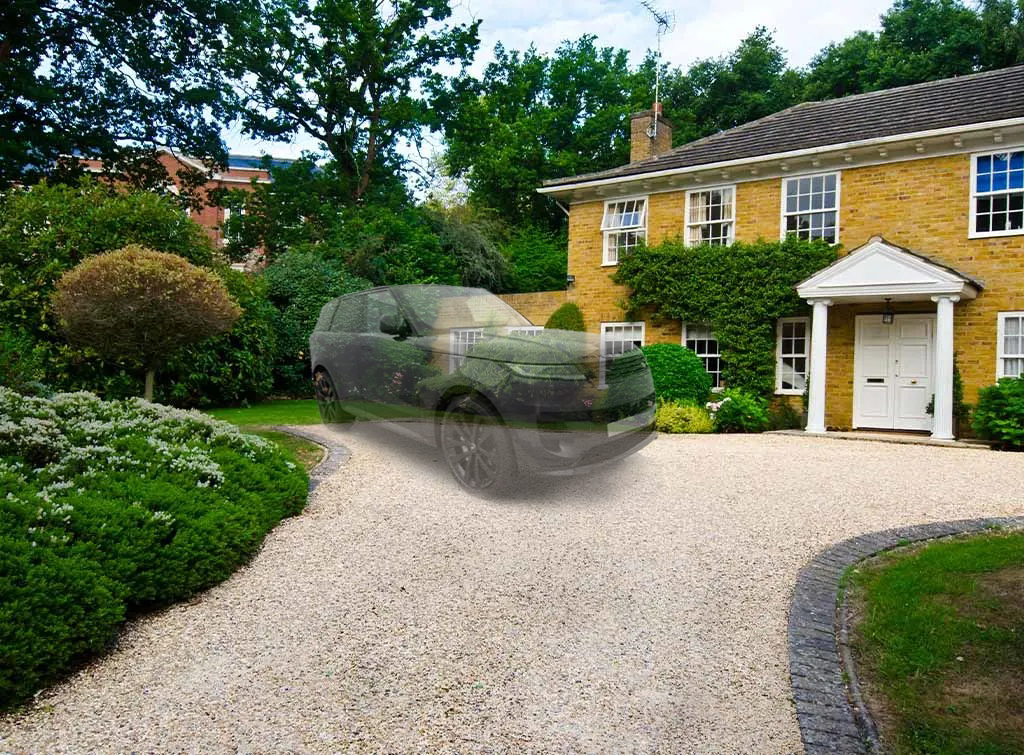
The steps you take in the first hour matter for recovery chances and for everything that follows with your insurer.
If your car is not recovered
If the vehicle is not found within the insurer’s waiting period, they will typically offer to settle the claim. Before accepting any settlement offer, check it represents a fair current market value for your vehicle. You can use AutoTrader, CarGurus, or similar platforms to verify comparable listings for your make, model, year, and condition. If you believe the offer is too low, you can negotiate or ask for a formal review before accepting.
Once you accept the settlement and the payment is made, you will need to complete the DVLA notification steps described in Step 3. The vehicle is legally sold to the insurance company at that point, even if it has never been found.
Where stolen vehicles go: the majority of stolen cars that are not recovered are broken down for parts within hours of the theft, shipped abroad, or given false identities for onward resale. Organised criminal networks can process a stolen vehicle extremely quickly, which is why the first hours after discovery are critical for recovery. An active GPS tracker with police liaison support gives the best chance of intervention before the vehicle is broken down or moved to a container.
After it is over — what to do next time
Going through a vehicle theft once is a powerful motivator to prevent it happening again. The most important step you can take, particularly if you drive a keyless entry vehicle, is to fit an aftermarket relay immobiliser before your next car is on the road.
The dominant method of modern car theft is the relay attack — thieves amplify your key’s signal through the walls of your home, trick the car into thinking the key is present, and drive away in under 60 seconds. Factory security was not designed to stop this. A relay immobiliser cuts the engine circuit physically, independently of the key system. Even a perfect relay attack cannot start an engine whose circuit is physically broken.
For a full explanation of how relay attacks work, see: How relay attacks steal keyless cars in under 60 seconds.
For a comparison of CAN bus versus relay immobilisers, and why the method matters beyond just the headline function, see: CAN bus vs relay — the difference that could cost you £800.
For buyers wondering which specific product is right for their vehicle, the complete guide is at: The complete car immobiliser buyer’s guide for UK drivers.
Prevent the next theft before it happens
LockCar relay immobilisers — from £139, fitted at your door
Physical relay circuit cut. Zero CAN bus contact. Hands-free proximity tag. Full app control. Professionally installed by the engineer who built it. Works on cars, vans, EVs, HGVs, and motorhomes.
View the IC3ST (£139) WhatsApp for a free quoteFrom £139product only
from £300 fitted
from £300 fitted
Quick-reference checklist for a stolen vehicle
Complete these steps in order
1 Confirm the vehicle is actually stolen — check it has not been moved, towed, or borrowed.
2 Call 999 if theft is in progress or you are unsafe. Call 101 for all other situations.
3 Obtain your crime reference number from the police. Keep it safe.
4 Contact your insurer. Have your policy number and crime reference number ready.
5 If you have a GPS tracker active, share location data with police immediately.
6 If you have a personalised number plate you want to keep, act before notifying the DVLA of the insurance payout.
7 Notify the DVLA yourself to confirm the theft is recorded, even though the police should have done so.
8 Apply for a vehicle tax refund via form V33 if required (particularly for personalised plates).
9 If the vehicle is recovered, have it professionally inspected before driving. Report all damage to your insurer first.
10 If the vehicle is not recovered and the insurer settles, verify the settlement reflects current market value before accepting.