

Your basket is currently empty!
CAN bus vs relay immobiliser — the difference that could cost you £800
Ghost and other CAN bus systems connect to your car’s ECU network. Here’s what that actually means — and why it’s the one thing your installer probably won’t tell you before they take your money.
There’s a conversation happening across UK car forums that the immobiliser industry doesn’t want you to see. Owners of Ghost-fitted vehicles are reporting dashboard warning lights, limp mode, failed starts, and diagnostic bills — months after installation. The cause, in documented case after documented case, is CAN bus interference. When Ghost is removed, the problems disappear.
I’m going to explain exactly why this happens, what it means for your car, and why the type of immobiliser you choose matters as much as whether you have one at all. I’ll show you the technical difference — in plain English — and let you draw your own conclusions.
This isn’t a hit piece on Ghost. Ghost is a well-known product with a large installer network. But it has a structural technical limitation that real car owners are experiencing in real time. You should know about it before you spend £500.
What is a CAN bus — and why does it matter?
CAN stands for Controller Area Network. It’s the internal communication system that modern cars use to let all their electronic modules talk to each other — the engine management unit, the ABS system, the airbag controller, the instrument cluster, the transmission, and dozens of others.
Think of it as the nervous system of your car. Every time you press the accelerator, brake, or turn on the headlights, signals travel across the CAN bus. It’s a live, constantly active network that runs the length of the vehicle — and every module on it is connected to every other module.
The CAN bus was designed to carry a specific volume of precisely-timed messages between authorised modules. Every module on the network knows what signals to expect and when. Anything that doesn’t belong — an unexpected message, a signal at the wrong time, a module the car wasn’t built with — is, at best, noise. At worst, it causes faults.
This is the network that CAN bus immobilisers — including Ghost — connect to. And this is where the problem begins.
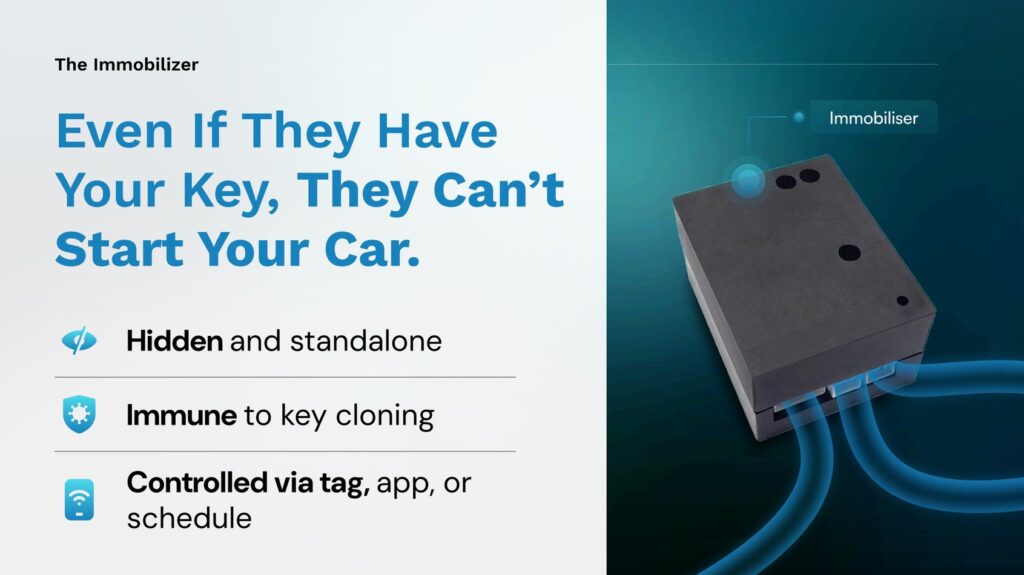
The relay breaks a physical circuit. Your car’s ECU never knows it’s there.
How Ghost and CAN bus immobilisers connect to your car
Ghost works by tapping into the CAN bus and monitoring the signals sent by the driver — pressing buttons in a specific sequence on the steering wheel, window switches, or other controls. The correct sequence is the driver’s PIN. Until that PIN is entered, the car won’t start.
To do this, Ghost physically connects to the CAN bus wiring inside your vehicle. It reads the data on the bus to detect which buttons you’re pressing. It also communicates back on the bus to immobilise the engine — by sending signals through the same network that runs everything else in your car.
live network
tapped in here
in the circuit
The relay approach is simpler — and that simplicity is the point. A 20A relay cuts a physical wire in the engine circuit. The ECU never knows it’s there. The CAN bus is never touched. There is no communication, no data, and no interference. The engine either has a complete circuit or it doesn’t.
The problem: what CAN bus interference actually does
Your car’s ECU and the modules connected to the CAN bus are calibrated to a precise specification. They were engineered to work with the exact modules the manufacturer fitted — and nothing else. Adding any device to the bus introduces variables the system wasn’t designed for.
In many cases, nothing goes wrong. A well-implemented CAN bus connection on a vehicle with a forgiving bus architecture can run fine indefinitely. But in a meaningful number of real-world cases — particularly on European vehicles with tightly-timed ECU networks — the interference causes problems that accumulate over time.
Here’s how the failure typically progresses:
Installation — everything seems fine
Ghost is installed by a professional. The car starts, drives, and appears normal. The installer leaves. The customer is happy. This phase can last weeks or months.
Intermittent oddities begin
Occasional unexplained warning lights. A start that takes a fraction longer than usual. A dashboard fault that clears itself and doesn’t come back immediately. Easy to dismiss as unrelated. The owner may not even connect it to the immobiliser.
Faults become persistent
Warning lights stay on. The car throws diagnostic codes. In some cases it enters limp mode — a protective state where the ECU limits engine output to prevent damage, often leaving the driver unable to go above 30mph. A dealer visit is now required.
Diagnostic bill arrives — and the cause is unclear
The dealer plugs in a diagnostic tool. They find fault codes but no obvious cause. Diagnostic time at a main dealer runs £120–£180 per hour. They may spend two or three hours chasing a problem that only disappears when the immobiliser is finally identified and removed.
Ghost is removed — faults disappear
The immobiliser is removed. The fault codes clear. The car behaves normally again. The owner is left with a repair bill, a car that was intermittently undriveable, and no immobiliser. And in some cases, a warranty claim that the manufacturer has declined because a third-party device was connected to the vehicle’s network.
This is not theoretical. Every stage of this timeline is documented in real cases shared on UK automotive forums. The quotes in the next section are verbatim from owners who lived through it.
Real cases: what UK car owners are reporting
These quotes are drawn from UK automotive forums — PistonHeads, T6 Forum, Volvo Forums, and others. They represent real people, real cars, and real money spent.
“He struggled to get it to function properly — it was freaking out the ECU and throwing numerous odd codes. He removed it as it was messing with the ECU.”
— VW owner, UK automotive forum
“Get Ghost removed. Low and behold, all issues disappear. This has now been the case for over 1,000 miles and 6 weeks.”
— T6 Forum, UK van owners community
“The most annoying thing was that if you switched off the van when the lights were on, you couldn’t input the Ghost disarm sequence. Back to Ghost installer who agreed to refund me.”
— T6 Forum
“I was talking to my converter, who advised me against Ghost. He’d been hearing about problems starting to crop up.”
— Motorhome owner, T6 Forum
“I want to fit one on my next car and want to make sure that it won’t cause any problems in the long run.”
— Volvo Forum — a buyer researching before purchase
That last quote is particularly telling. Buyers doing their research are already asking the ECU interference question — because they’ve seen enough forum threads to know it’s a real concern. The awareness is spreading, even if the mainstream conversation hasn’t caught up yet.
“I asked BMW’s warranty company if they would cover the car with a Ghost immobiliser fitted and they said categorically ‘No.’” — BMW owner, PistonHeads
This is not a minor footnote. BMW — one of the most commonly targeted vehicles for relay attacks, and therefore one of the most common recipients of Ghost installations — has explicitly told owners that a Ghost-fitted vehicle is not covered under warranty. If a CAN bus fault develops on a car under manufacturer warranty, and a CAN bus device is found connected, you may have no recourse at all.
How a relay immobiliser works — and why it’s fundamentally different
A relay immobiliser operates at the physical circuit level, entirely independently of the car’s electronic systems. Here’s the mechanism in plain terms.
Your engine needs a complete electrical circuit to run — fuel pump, starter circuit, or ignition circuit depending on the implementation. LockCar places a 20A relay in that circuit. When the relay is open, the circuit is broken. The engine cannot start, regardless of what signal the key sends, regardless of what the ECU says, regardless of anything happening on the CAN bus.
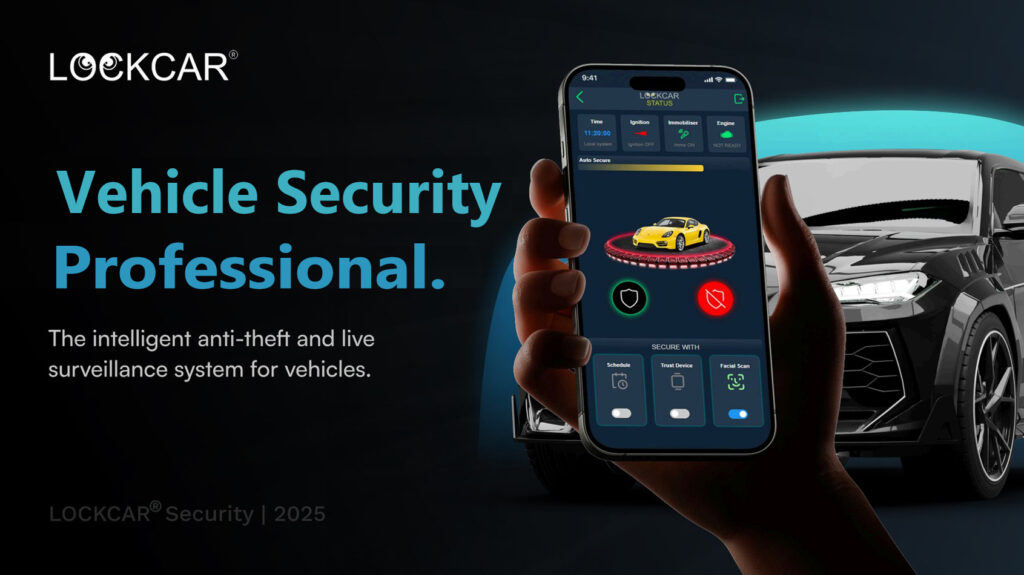
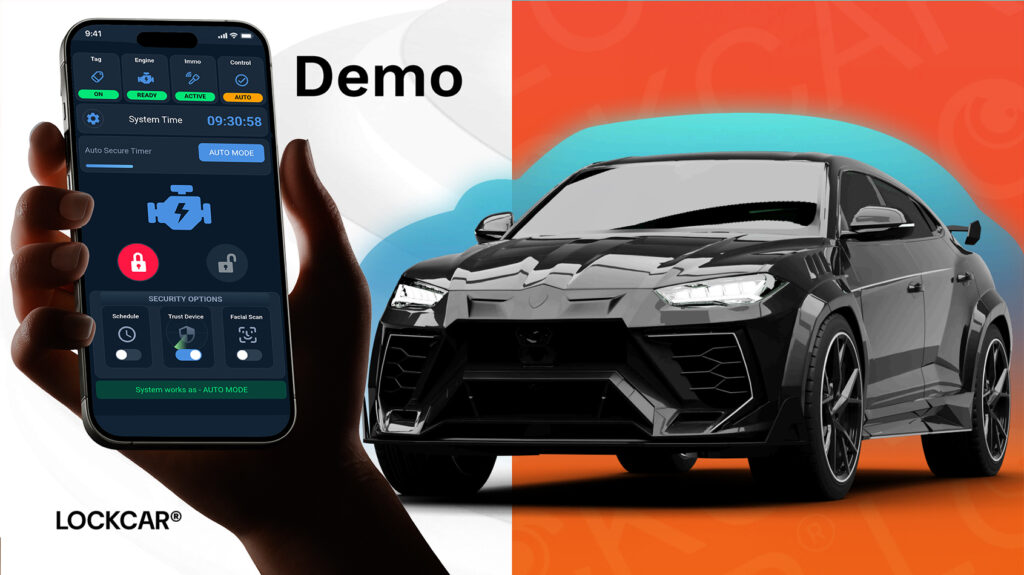
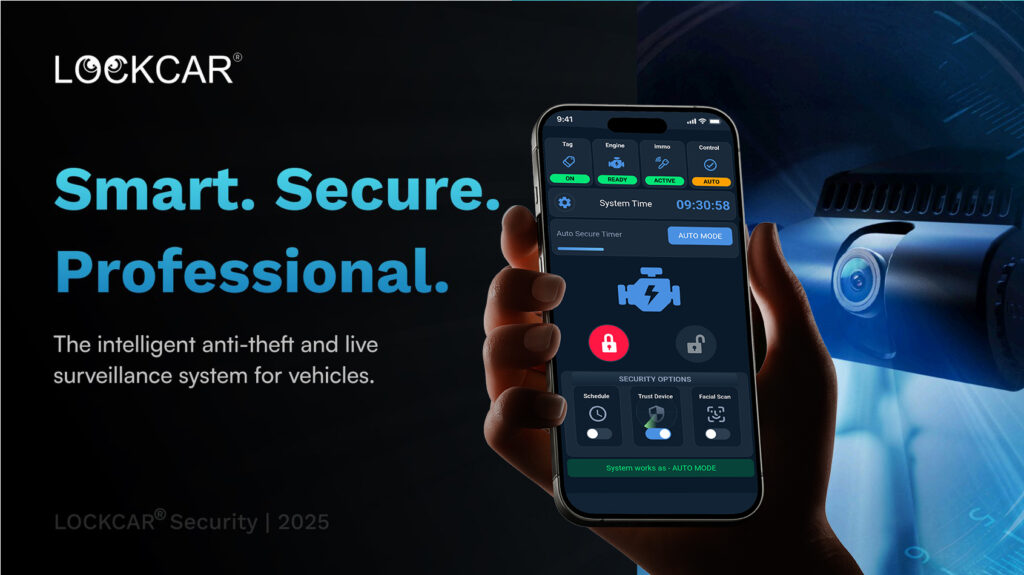
When you’re authorised — through your proximity tag, the app, or your wearable — the relay closes. The circuit is complete. The engine starts normally.
The ECU never knows the relay is there. The CAN bus never carries a single message related to LockCar’s operation. From the car’s perspective, the circuit is simply open or closed — exactly as it would be if a wire had been connected or disconnected. No foreign signals. No new network node. No interference. Ever.
This also means relay immobilisers have no dependency on the car’s specific CAN bus architecture. Ghost requires vehicle-specific configuration because it needs to understand which buttons on which modules send which signals. LockCar’s relay-based products work across cars, vans, HGVs, EVs, and motorhomes — 12V or 24V — because they don’t talk to the vehicle’s brain at all.
Why relay-based is safer
The relay breaks a physical circuit. Your car’s ECU never knows it’s there.
There is one further advantage worth naming. Because relay-based operation is independent of CAN bus protocols, it is also independent of CAN bus injection attacks — an emerging theft method where thieves use a diagnostic port or direct bus access to send commands that disable CAN-based immobilisers remotely. A physical relay cannot be defeated by a software command. There is no command to send.
Full comparison: Ghost vs LockCar
Here is an honest side-by-side. Ghost is a well-established product with genuine strengths — particularly its brand recognition and installer network. But the technical differences are significant, and they go beyond marketing.
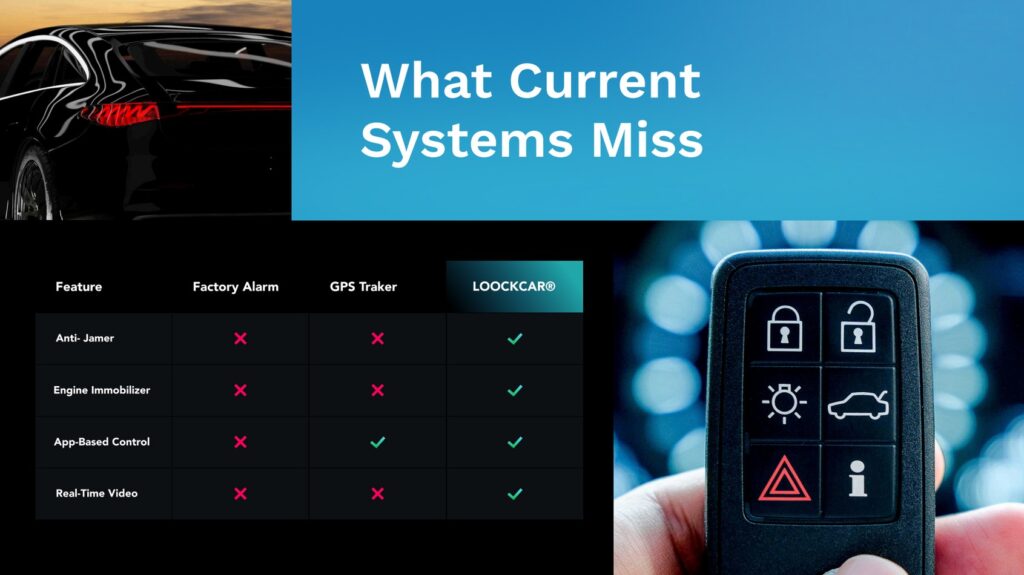
| Dimension | Ghost Immobiliser | LockCar (relay-based) |
|---|---|---|
| Method | CAN bus — digital signals on ECU network | Physical relay — circuit cut, no ECU contact |
| ECU interference risk | ✗ Documented — real-world forum evidence | ✓ Zero — ECU never touched |
| Warranty risk | ✗ BMW, Volvo others have declined warranty claims | ✓ Non-invasive to ECU network |
| Stops relay attacks | ✓ Yes | ✓ Yes |
| Vulnerable to CAN injection? | ✗ Potentially — it’s a bus-level device | ✓ No — physical relay can’t be sent a command |
| User disarm method | Button sequence (PIN). Partners must learn it. Timed lockout if wrong. | Proximity tag (hands-free) or app. Just walk up. |
| App control | Basic | ✓ Full Wi-Fi app, remote immobilise, Face ID |
| 4G remote access | ✗ No | ✓ Yes — ONE Plus |
| Night auto-immobilise | ✗ No | ✓ Yes — ONE Plus |
| GPS tracking | ✗ No | ✓ Yes — ONE and ONE Plus |
| Fitted price (approx.) | ~£500 | £300–500 (IC3ST/IS357 fitted) |
| Made in UK | Distributed UK; origin unclear | ✓ Designed and built by Victor, UK |
| Works on EVs & HGVs | Vehicle-specific configuration required | ✓ All 12/24V — cars, vans, EVs, HGVs, motorhomes |
The column that matters most is ECU interference risk. Everything else — app features, GPS, night mode — is a bonus that LockCar offers. But the relay vs CAN distinction is the one that determines whether your car keeps working as it should for the years after installation.
Which should you choose?
If you drive a modern European vehicle — particularly a BMW, Mercedes, VW Group car, Volvo, Land Rover, or any vehicle currently under manufacturer warranty — a relay-based immobiliser is the safer technical choice. There is no ECU risk to weigh against anything else, because the ECU is simply never involved.
If you’ve already had Ghost fitted and experienced unexplained electrical issues, dashboard faults, or starting problems: have the Ghost removed first. In documented cases, the faults clear completely once the CAN bus connection is removed. Then come to us.
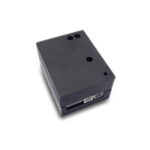
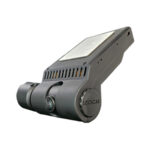
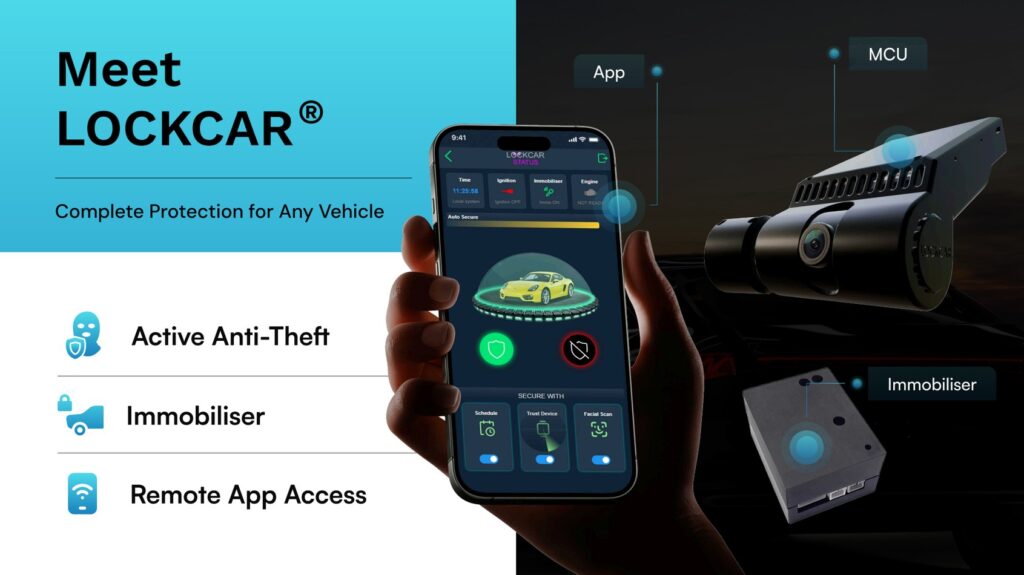
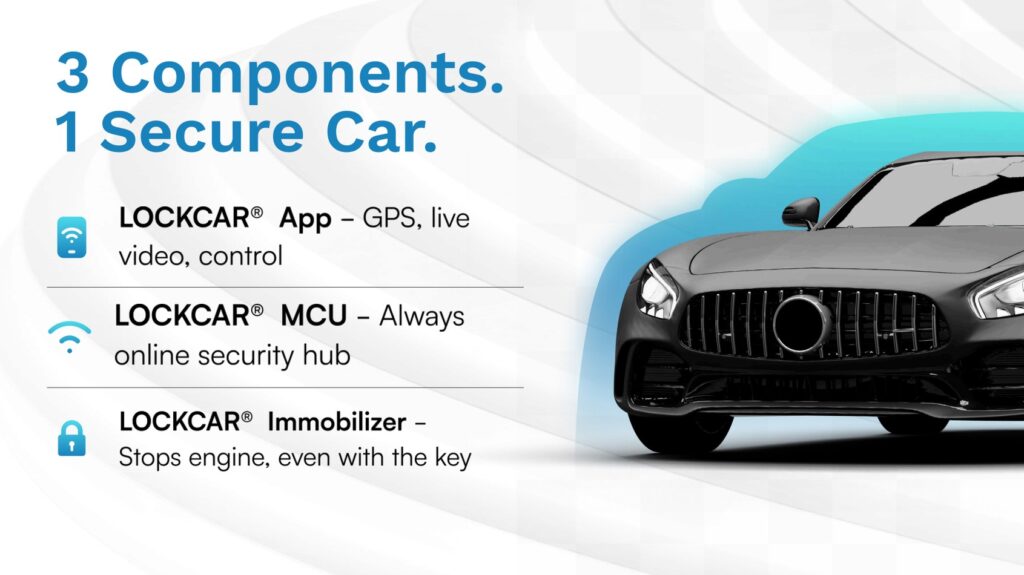
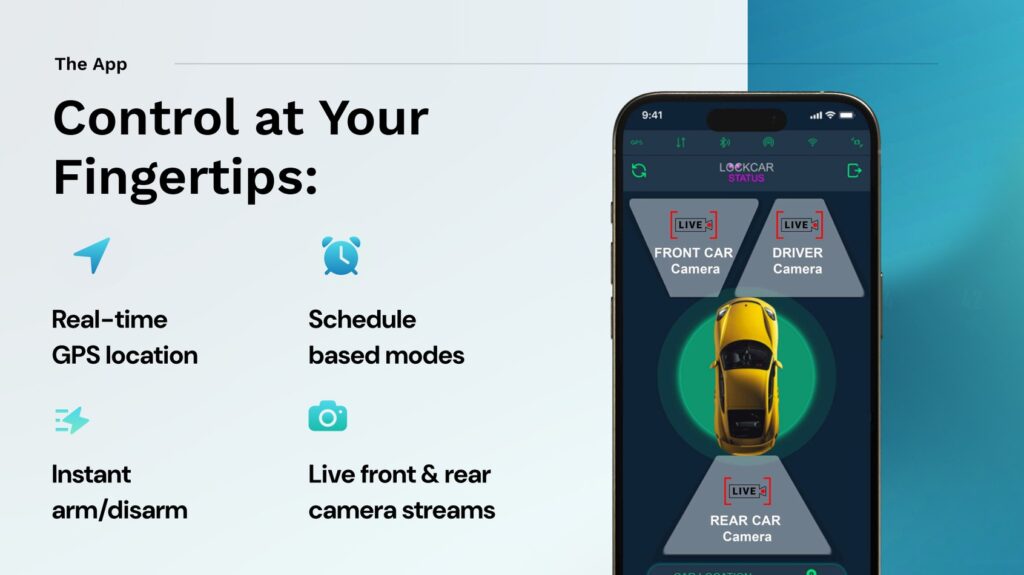
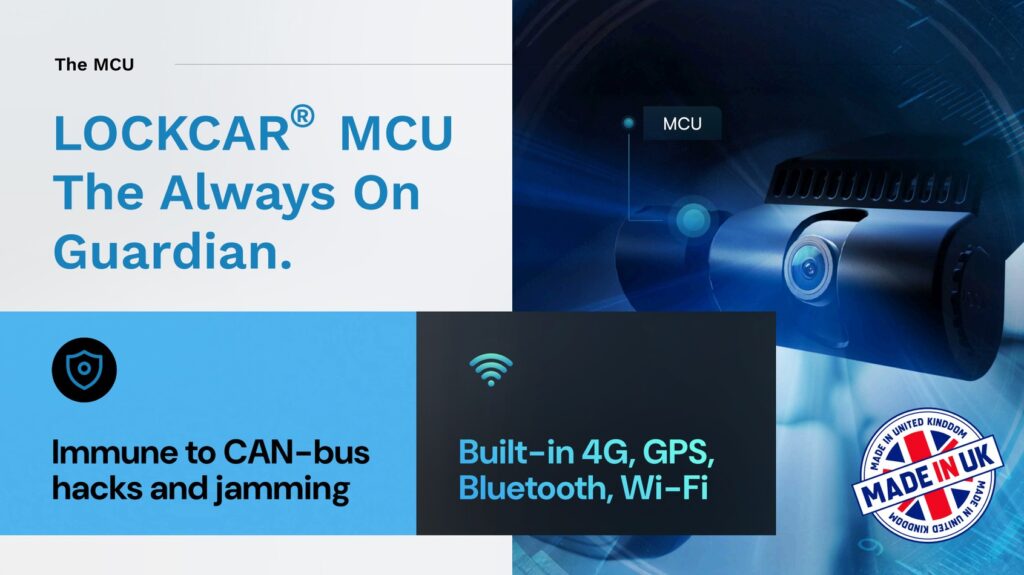
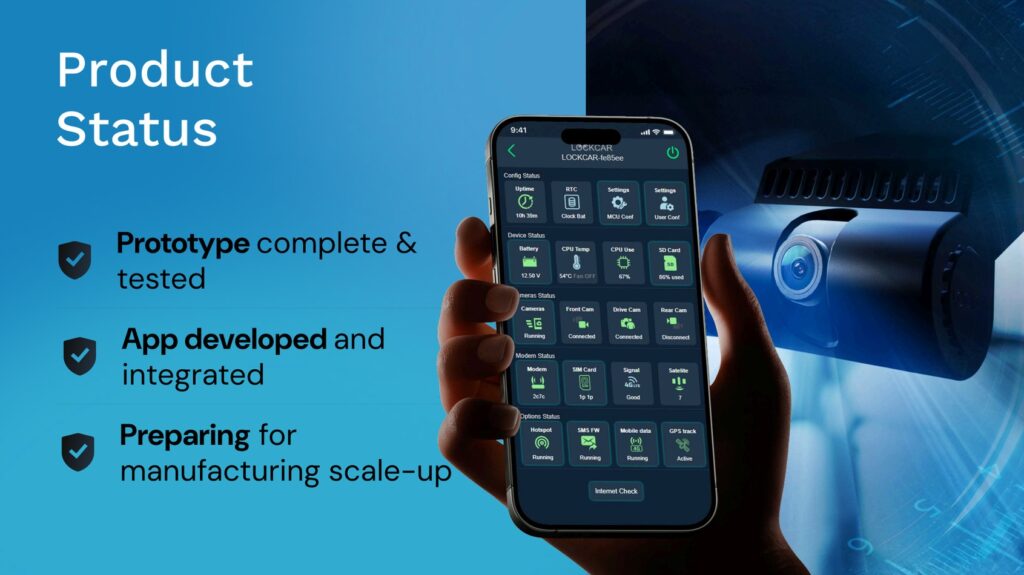
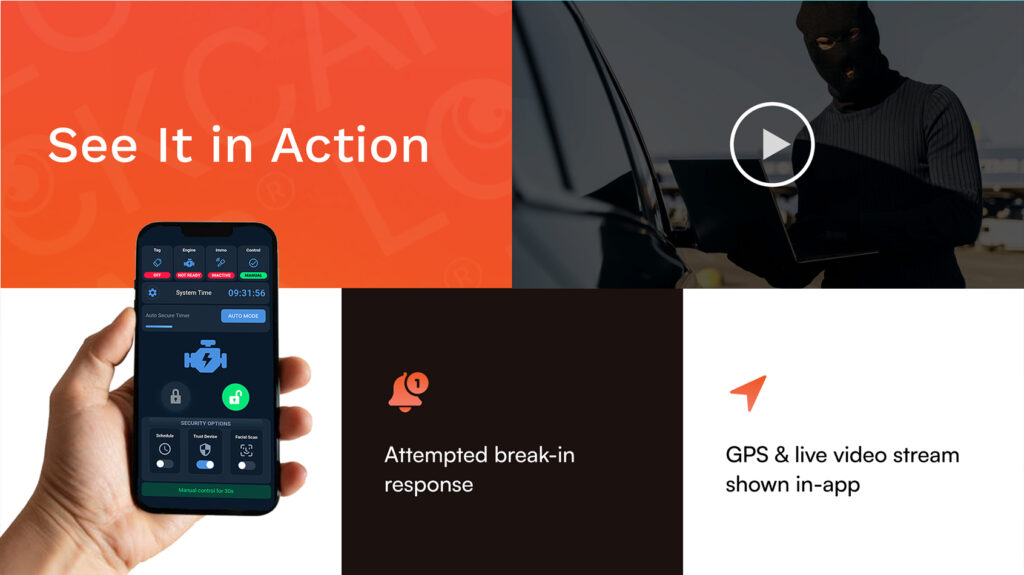
At LockCar, every product in the range is relay-based. The ↗ IC3ST (£139) is the entry point for individual car owners — standalone, app-controlled, proximity tag, no MCU required. The ↗ IS357 (£149) extends the detection range to 5 metres and adds wearable support. The ↗ ONE Plus (£199) adds 4G remote access, live camera, GPS, and automatic night immobilisation.
None of them touch your car’s CAN bus. None of them can cause a diagnostic fault. And every one of them is installed by the engineer who built it.
LockCar IC3ST — Standalone Relay Immobiliser
The relay-based alternative to Ghost. Proximity tag, full app control, hands-free operation. Fitted at your door by the engineer who built it. Zero CAN bus contact — guaranteed.
View the IC3ST → Get a free installation quoteFrom £300 fitted
The bottom line
CAN bus immobilisers like Ghost work. They stop relay attacks. The Ghost brand has a large installer base and strong market recognition. None of that is in dispute.
What is in dispute — and what real car owners on real forums are documenting — is the ECU interference risk. It doesn’t happen to every vehicle. But when it does, it’s expensive, difficult to diagnose, and in some cases invalidates your manufacturer warranty.
A relay immobiliser doesn’t have this problem. It’s not a trade-off — you don’t give anything up by choosing relay over CAN bus. You get equal or better theft protection, better app features, GPS and 4G options, and a design that is physically incapable of interfering with your car’s electronics.
The choice is simpler than the marketing makes it sound. Choose the one that doesn’t touch your car’s brain.
Want a second opinion before you commit? WhatsApp us directly — Victor will give you an honest recommendation based on your specific vehicle. If a Ghost is genuinely the better fit for your situation, he’ll tell you. That’s never happened, but he would.