
YOUR CAR
CAN BE STOLEN
in under 60 seconds with no alarm triggered
Keyless car theft UK statistics 2025: what the data means for your car
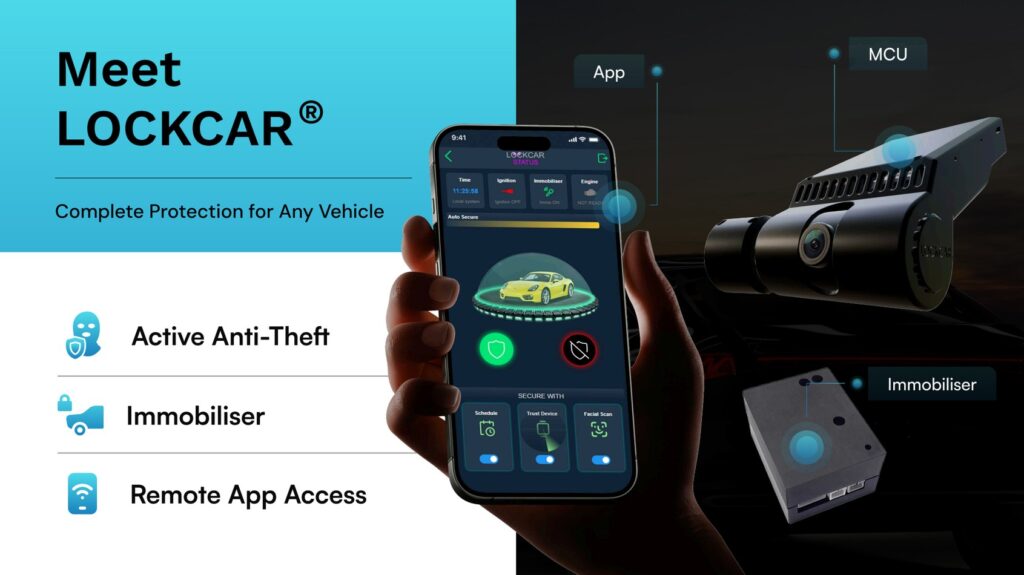
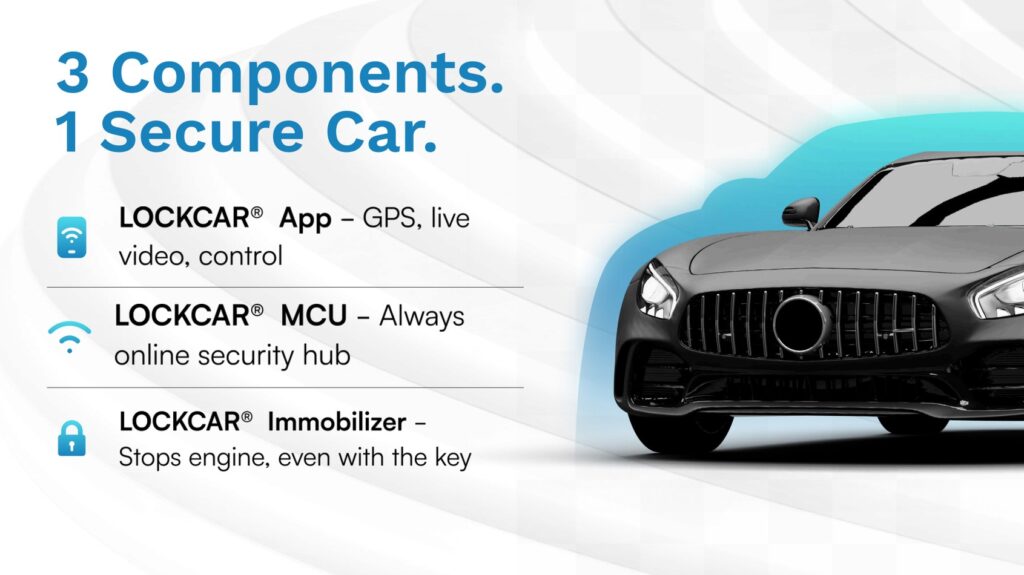
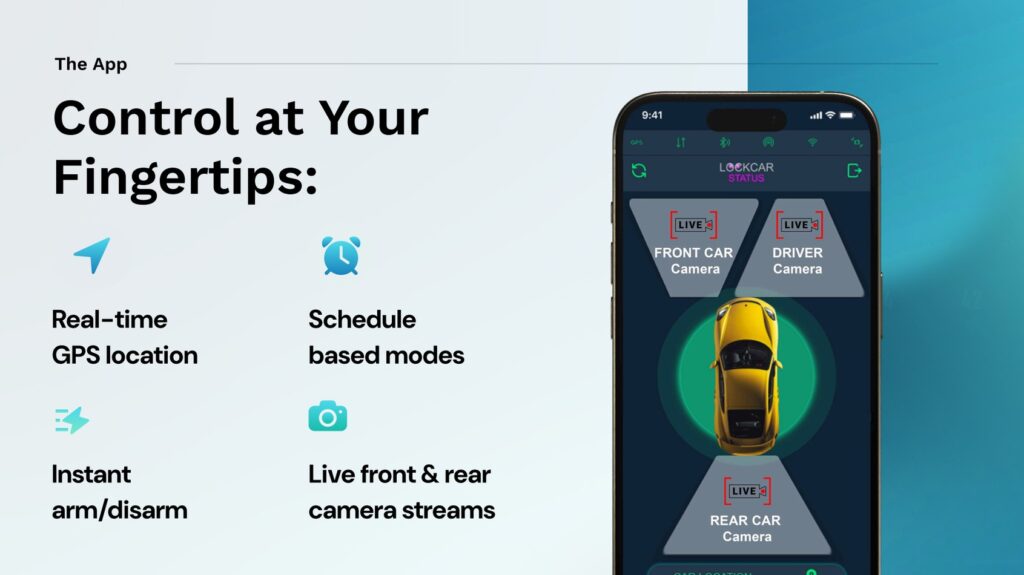
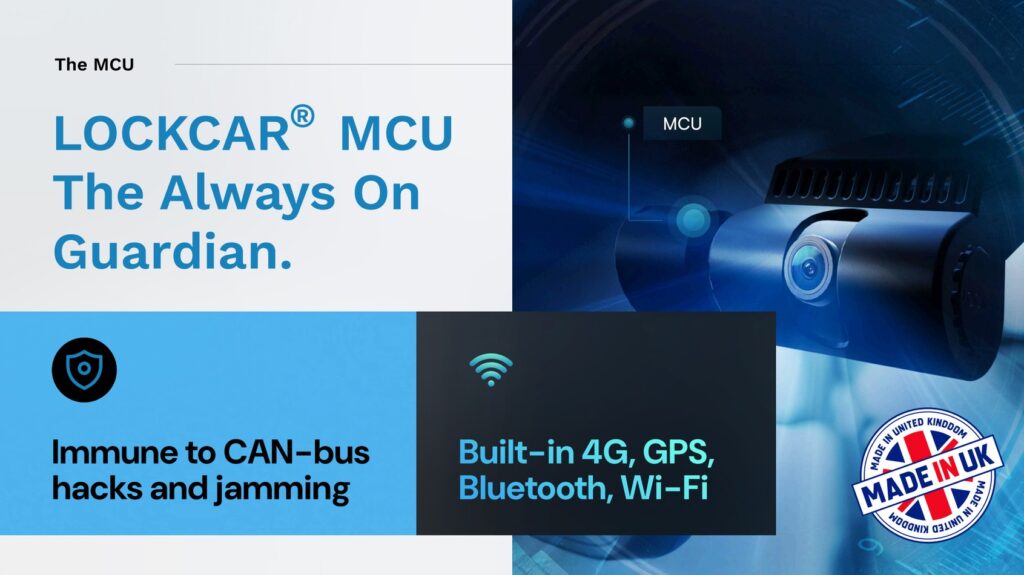
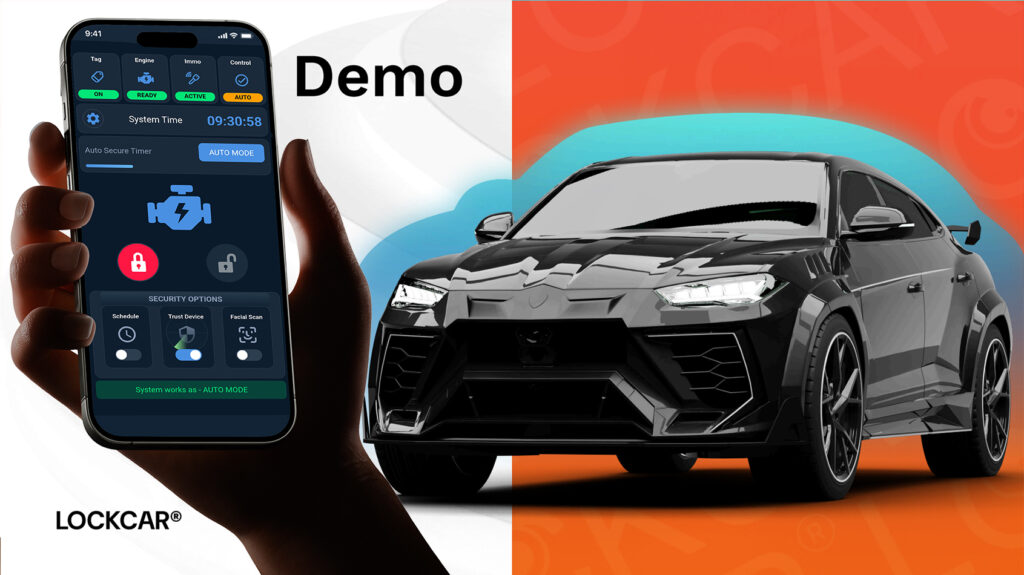
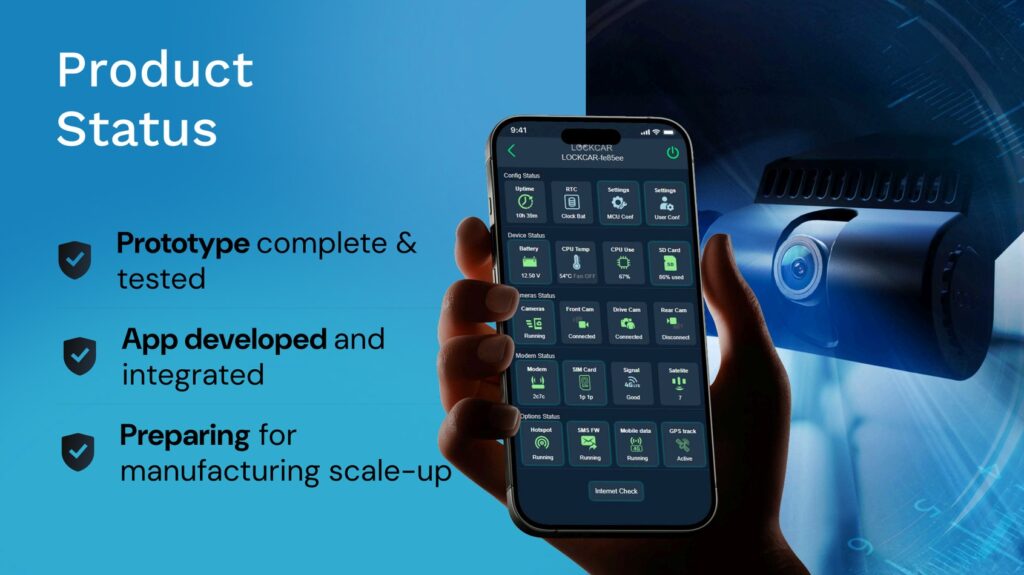
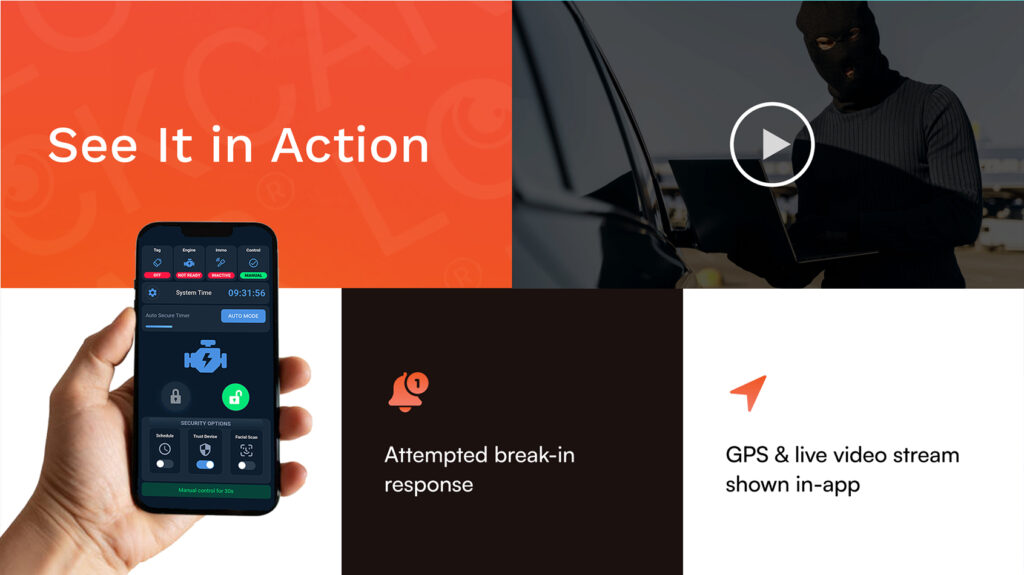
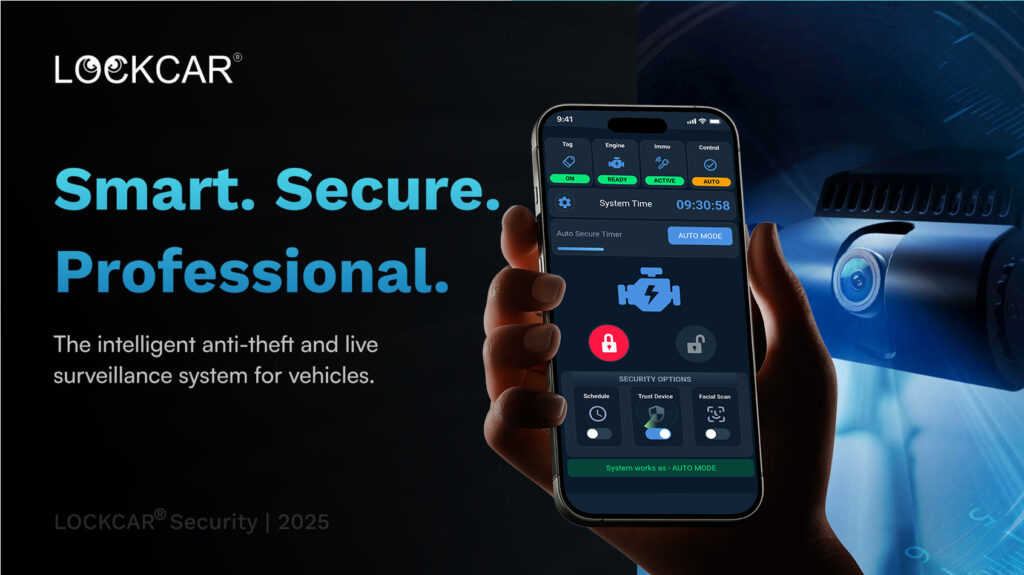
LockCAR is a UK vehicle security manufacturer, and we build CAN bus immobilisers, GPS trackers and 4G dashcams for drivers who want their car protected. This page explains what the keyless car theft UK statistics 2025 show in plain words: how relay attacks work, where the risk is highest, which models are targeted, and what actually stops a thief driving your car away.
Not sure what you need? Ask on WhatsApp- No subscription
- Fitted at home or work
- Made in the UK
How keyless cars are stolen, in plain words
You cannot read the theft statistics properly without knowing the two methods behind most of them.
- Relay attack
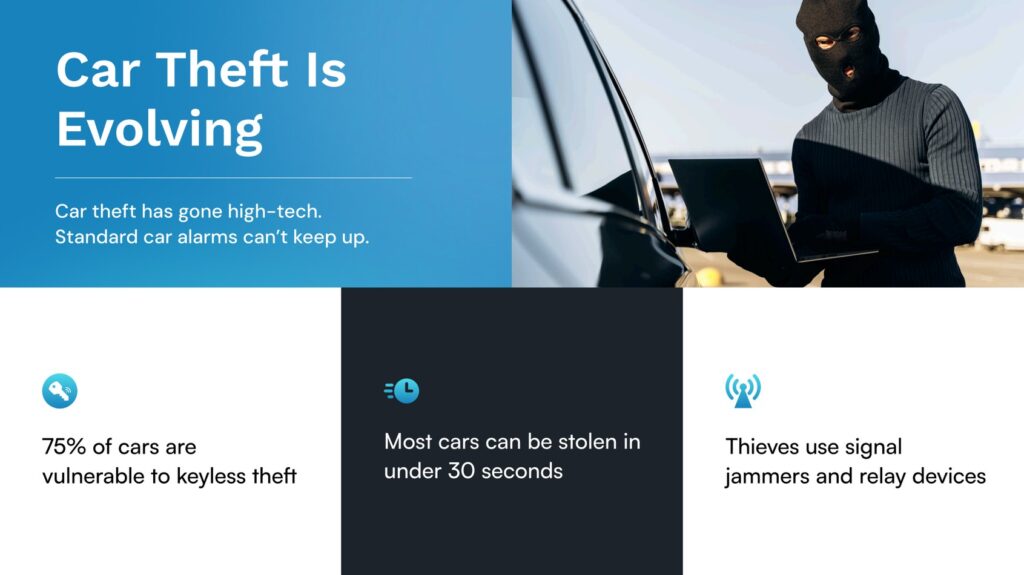
- Two thieves work as a pair. One stands near your front door with a device that picks up the signal from your key inside the house. The other stands by the car with a device that relays that signal to it. The car thinks the key is next to it, unlocks, and starts.
- CAN bus injection
- A thief breaks into the car, reaches the wiring or the diagnostic port, and programmes a new key. No original key is needed, and the theft can be quick. Police intelligence has linked this method to organised groups.
- Key cloning
- Older or less secure systems can be tricked into accepting a copied key. It is less common on modern cars than relay, but it still appears in theft reports.
- Why keyless cars are the target
- A keyless car is designed to start without the key being physically used. That convenience is exactly what a relay attack abuses.
- Why the equipment got cheaper
- Relay devices became cheap and widely available, so attacks are no longer limited to professional gangs. A pair of opportunists can try their luck on a driveway.
- Why a steering lock is not enough
- A visible lock may put some thieves off, but it does not stop a relay attack or a CAN bus injection. The engine can still be started.
What the data says actually works
- Prevention beats recoveryA GPS tracker can help you get a car back after it is gone. Only something that blocks the engine stops it being driven away in the first place.
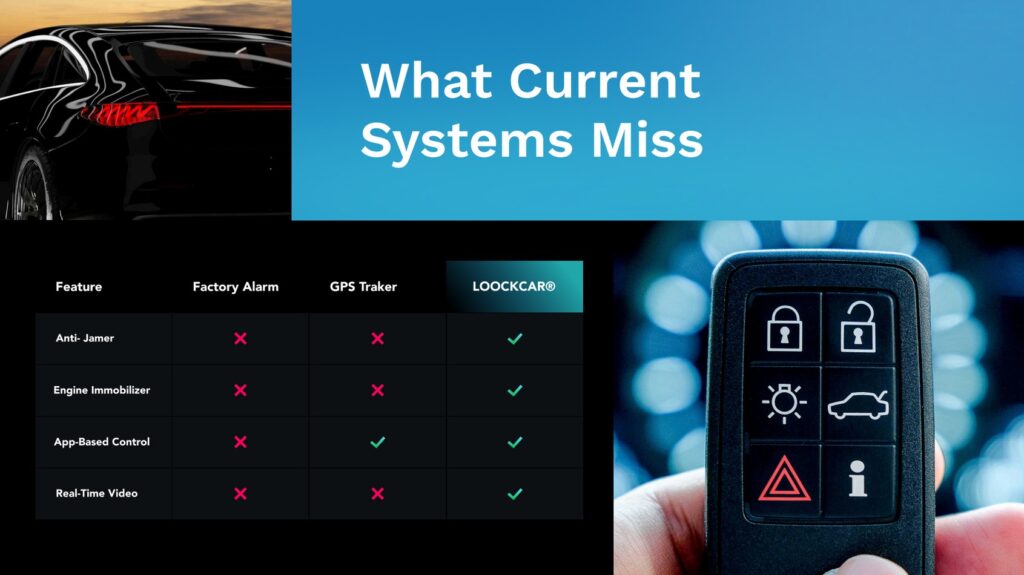
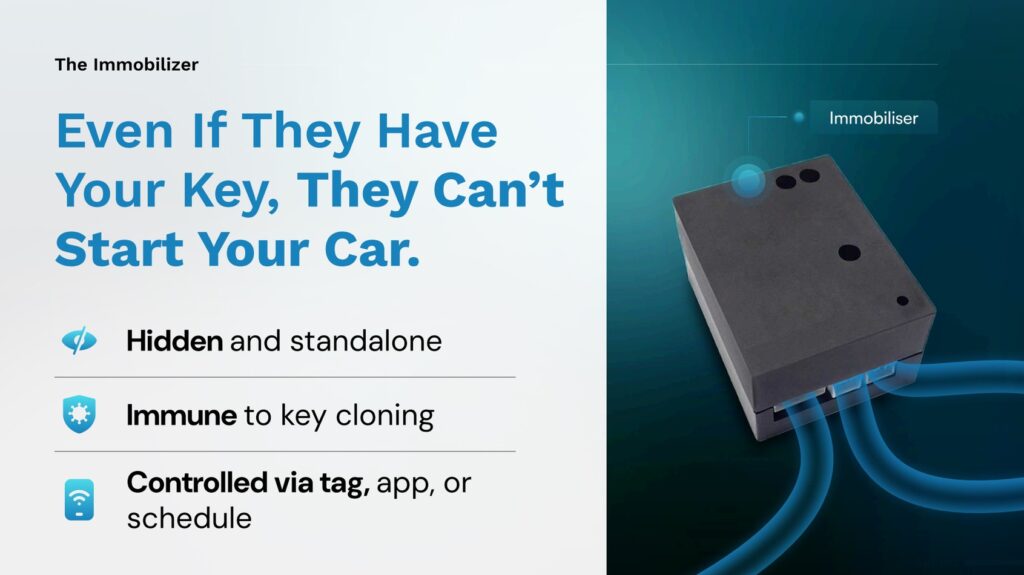
- Physical, independent immobilisationAn immobiliser that works separately from the factory keyless system is the layer relay thieves cannot talk their way past.
- Alarms and pouches fall shortAn alarm may deter an opportunist, but not a determined relay team. A Faraday pouch helps only while the key is inside it.
- Layers, not a single gadgetImmobiliser for prevention, tracker for recovery, dashcam for evidence. Each does a different job, and together they cover the whole theft.
Insurer and police data are the best places to check current theft figures for your area. Search crime data by postcode, and ask your insurer how they treat tracking and immobilisers before you buy.
Hotspot regions and the models thieves target
Theft is not spread evenly across the UK. Some regions and some models carry far more risk than others.
| Risk factor | What the data shows | What it means for you |
|---|---|---|
| West Midlands | Consistently one of the worst regions for vehicle theft in the UK, with Birmingham and the Black Country a particular focus | If you park on a driveway or street here, an immobiliser is a sensible first step |
| Greater Manchester | Another long-standing hotspot, with strong motorway links used to move stolen cars | High-value keyless models are most at risk |
| London and the South East | Outer boroughs with easy motorway access carry more risk than central areas | Do not assume cameras make your car safe |
| High-value keyless models | Premium SUVs and large 4x4s are targeted more than any other type | Even a well-kept car on a quiet road can be a target |
| Motorway corridors | The M1, M6 and M62 are used by gangs moving stolen vehicles between cities | Living near these routes raises your exposure |
Model by model, premium keyless SUVs and pickups dominate theft reports, and popular fleet vans are targeted for the tools inside them. The pattern is simple: if a car can be started without the key being used, it can be attacked by relay.
How to protect your car, step by step
Three steps, and you are covered. The whole process is quick.
Check your car and your postcode
Use the LockCAR Vehicle CHECK to confirm your car is compatible. LockCAR immobilisers work on 12 V and 24 V vehicles. Look up the theft figures for your area so you know how much risk you carry.
Choose the right level of protection
An immobiliser alone stops the car being driven away. If you also want recovery, add a GPS tracker. If you want camera evidence, add a dashcam system.
Book fitting with an approved installer
LockCAR approved installers fit at your home, at work or at an installation centre. Send your car and postcode on WhatsApp and we will arrange a fitting.
The LockCAR range and prices
Every LockCAR immobiliser works the same way: the engine stays blocked until the driver proves it is them. Prices are from the LockCAR shop.
| Product | What it does | Price |
|---|---|---|
| Fob (TAG) IC3262 | Kit, disarmed by carrying the TAG | £139 |
| Smart ring | Kit, disarmed by the paired ring | £149 |
| Smartwatch | Kit, disarmed by your smartwatch, no extra fob | £160 |
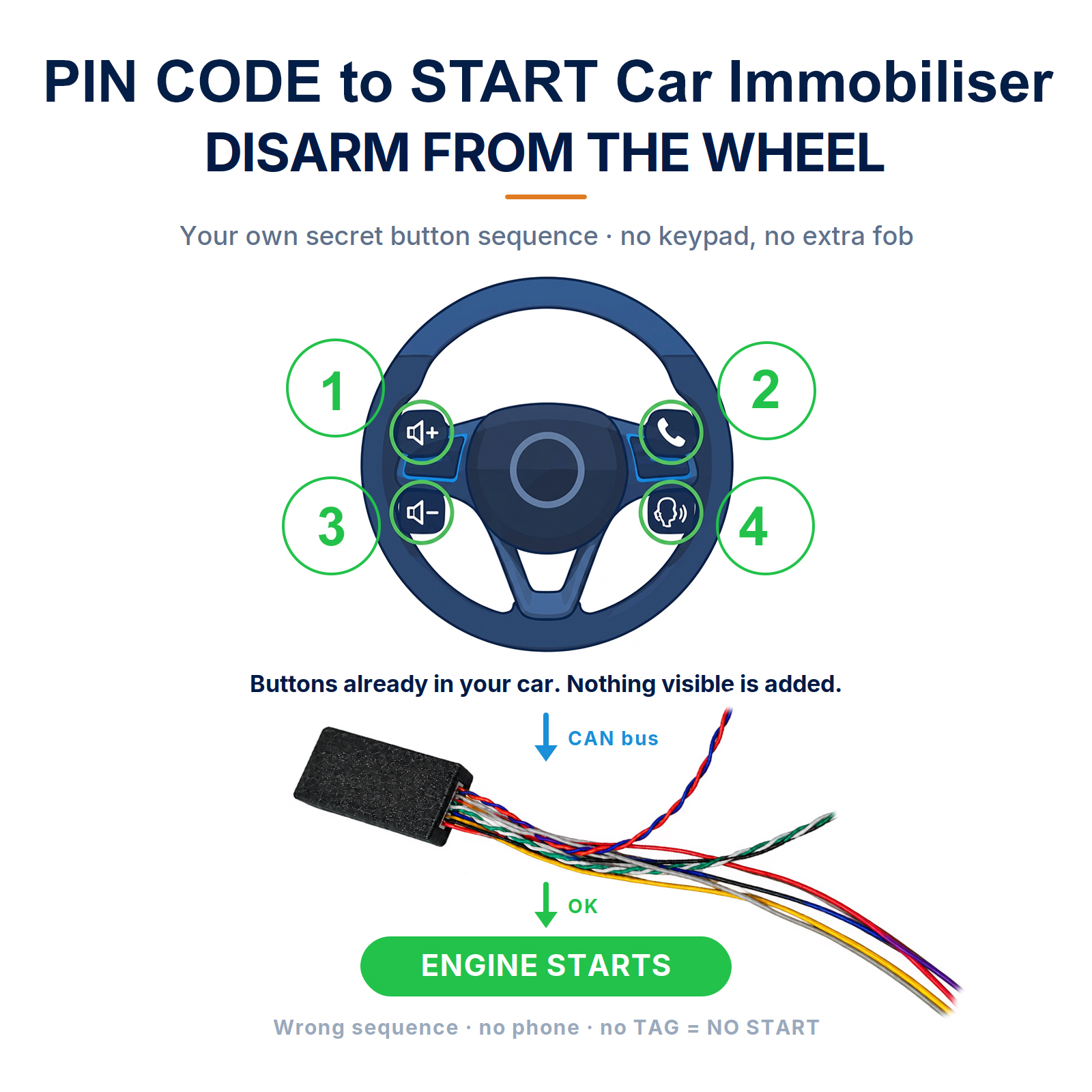
| PIN code | Kit, disarmed with steering wheel buttons | £189 |
| TAG fitted | Fob immobiliser fitted by an approved installer | £249 |
| PIN fitted | PIN immobiliser fitted by an approved installer | £299 |
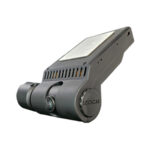
| LockCar One Plus 4G | Dashcam, immobiliser and GPS tracker, fitting included | £499 |
| LockCar One | Dashcam and immobiliser, no GPS tracker, fitting included | £450 |
| LockCar Duo RH Plus 4G | Dual-camera 4G dashcam, immobiliser and GPS tracker, fitting included | £699 |
| LockCar Duo RH | Dual-camera dashcam and immobiliser, no GPS tracker, fitting included | £550 |
LockCAR is not Thatcham approved. Our immobilisers are going through Thatcham Security Certification, and we will publish the details when a certificate is issued. We do not claim Thatcham, insurer or police approval. Immobilisers need no subscription: the customer pays once.
Questions drivers ask about keyless theft
Where can I check vehicle theft statistics for my area?
Police forces publish crime data that you can search by postcode, and the DVLA publishes annual vehicle registration data. For a national picture, insurer bodies also publish theft claims data. Check the figures for your own postcode before you decide how much protection your car needs.
Has keyless car theft gone up or down?
Reported vehicle theft has risen sharply since relay attack equipment became cheap and easy to buy, and high-value keyless models remain the main target. Police and insurer data are the places to check for the latest national picture. The trend has not reversed for keyless vehicles.
Does my car’s age affect its relay attack risk?
The main risk factor is keyless entry. Most cars built with passive keyless entry as standard or optional equipment can be attacked by relay. Older cars with a traditional key and ignition are not vulnerable to relay, but can still be targeted by other methods. Check your vehicle’s specification to confirm whether keyless entry is fitted.
Will a Faraday pouch stop keyless theft?
A Faraday pouch blocks the key signal only while the key is inside it, and only if the pouch is in good condition. It offers no protection when the key is being carried or used. A hardwired immobiliser works every time, because the engine stays blocked until the driver proves it is them.
Does a GPS tracker stop my car being stolen?
No. A tracker helps you find a vehicle after it has been taken, which can improve recovery, but it does not stop the theft. An immobiliser is the prevention layer; a tracker is the recovery layer. Many drivers fit both.
Are LockCAR immobilisers Thatcham approved?
Not yet. Our CAN immobilisers are going through Thatcham Security Certification, and we will publish the details when a certificate is issued. We do not claim Thatcham, insurer or police approval.
Do LockCAR immobilisers need a subscription?
No. LockCAR immobilisers need no subscription: the customer pays once. Prices start at £139 for a kit, or £249 fitted by an approved installer for the TAG model.

Written by the LockCAR engineering team. We design and build our immobilisers in the UK and fit them through our approved installers. Meet the engineers. Last updated .