

Vehicle security from
£199
Enter car's registration plate number to find the right LockCar security option
We could not pull the details automatically. Fill these in and we will carry on — it only takes a few seconds.
- Free, no obligation
- Fitted, not posted
- 12 months hardware warranty
Showing sample data – add your MOT History API credentials in the plugin settings to return real vehicles.
MOT history
Pick the level of protection
Every option is fitted by an approved installer. Choose one to see the exact devices.
Immobilisers only for
Hidden engine block. Nothing to see, nothing to record.
CAN BUS Immobiliser
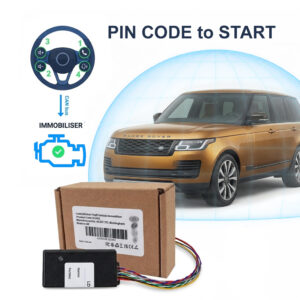
PIN CODE Car Immobiliser LockCar CAN-IMMO – Free Fitting
£299.00 £350.00
PIN CODE to START – NO PIN. NO START – LOCKCAR CAN-IMMO Immobiliser – Smart Advanced CAN Bus Vehicle Immobiliser – entering the PIN CODE each startup
App + Tag Immobiliser
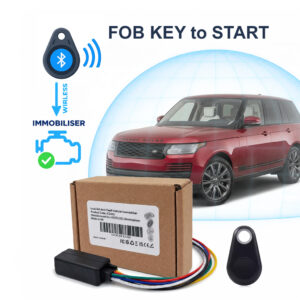
TAG FOB Car Immobiliser LockCar IC3262 TAG Immobiliser
£199.00 £250.00
TAG FOB KEY to START – NO FOB. NO START – LOCKCAR IC3262 Immobiliser – Smart Immobiliser – authorizes the car to start if it detects the fob…
Immobilisers + Dashcams for
Block the theft and record what happens around the car.
Dashcam + Immobiliser + App
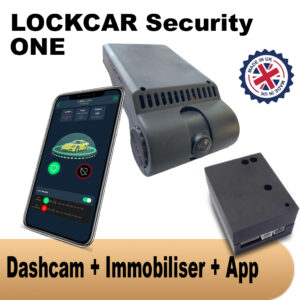
Dashcam + Immobiliser LockCar One – Free Fitting
£450.00 £550.00
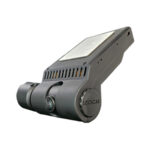
LockCar ONE is a professional dash camera with 24/7 monitoring, SD recording, and smart immobiliser integration. Built for security, durability, and total control in the UK.
Dashcam + Immobiliser + App
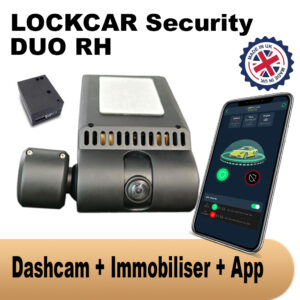
Dashcam + immobiliser Lockcar Duo Rh – Free Fitting
£550.00 £650.00
Local MCU system security. Power ON 24/7. Smart parking mode. Local car status, Immobilization, Local GPS Traking, Local Cameras Front + Driver. FREE UK INSTALLATION
4G Live Dashcams + Immobilisers for
Live view and alerts from anywhere, plus the engine block.
4G + Dashcam + Immobiliser + App
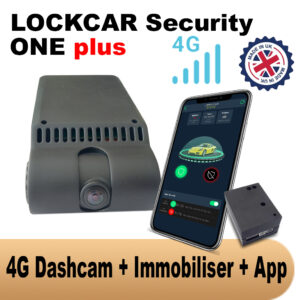
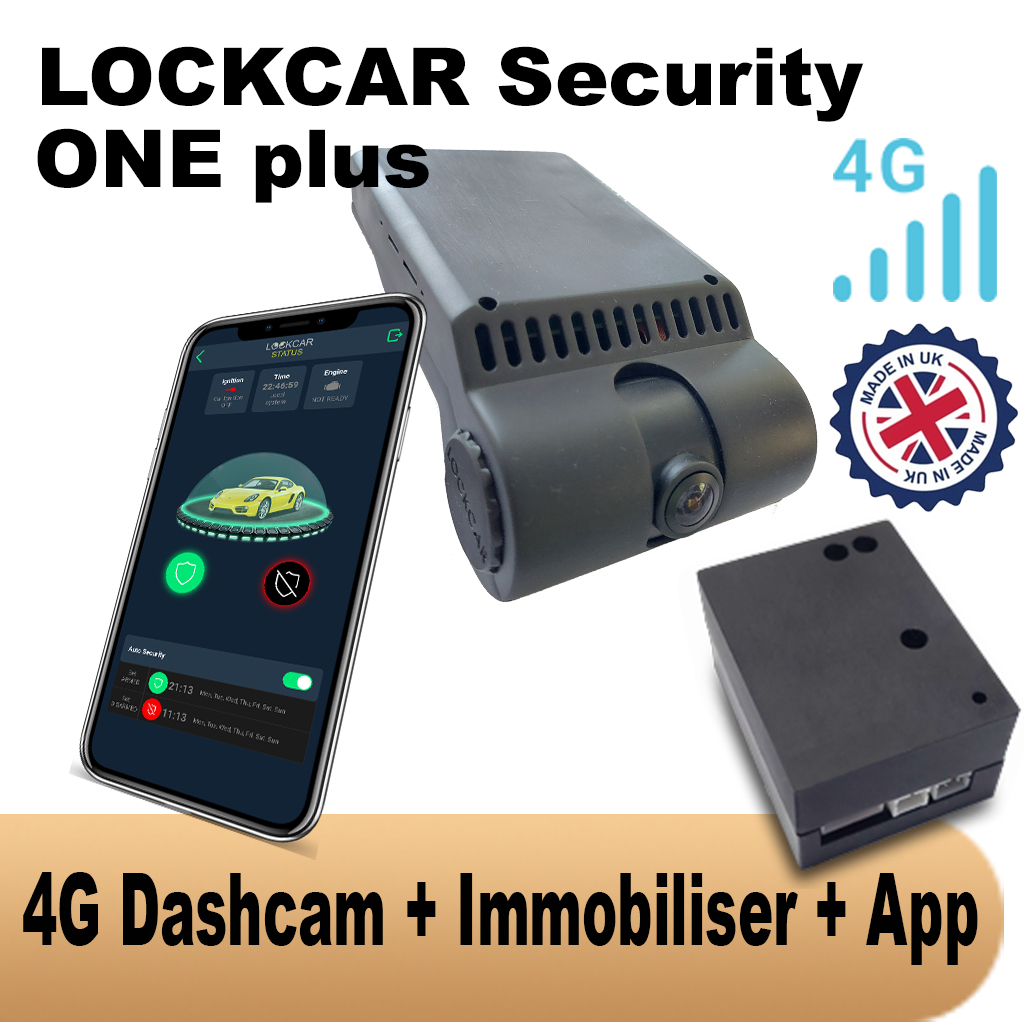
Dashcam + Immobiliser + Tracker LockCar One Plus 4G- Free Fitting
£499.00 £600.00
LockCar One Plus is 4G remote access and intelligent immobiliser. Designed for modern threats, this advanced anti-theft system allows you to monitor and control your car from anywhere,…
4G + Dashcam + Immobiliser + App
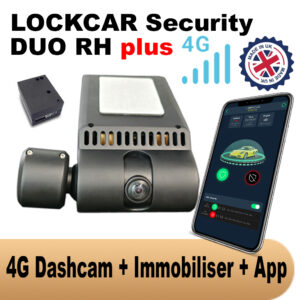
4G Daschcam + Immobiliser + Tracker Lockcar Duo Rh Plus 4G – Free Fitting
£699.00 £750.00
Remote access via 4g permanently. Power ON 24/7. Smart parking mode. Real-time car status, Immobilization, Real-time GPS Traking, Live Cameras Front + Driver. FREE UK INSTALLATION
Where should we fit it?
We come back with the theft method known for your model, what we would fit, the price with fitting, and the nearest slot to you. One message, no sales calls.
Got it – check your inbox
We have your registration and what you picked. We will come back to you shortly.
Message us on WhatsAppWhat is a relay immobiliser, and why does your factory immobiliser need backup?
Every modern car already has a factory immobiliser. Relay attacks are designed to fool it in seconds. A relay immobiliser adds a second, independent layer that a relay attack simply cannot reach. Here is what it actually does, in plain terms.
How a relay attack actually works, step by step
A relay attack targets keyless entry, not the ignition lock. One person stands near your front door holding a device that picks up the faint signal from your key fob inside the house. A second person stands next to your car holding a second device that replays that signal to the car.
The car cannot tell the difference between the real key being close and the relayed signal arriving from a device outside your window. It unlocks the doors and, on many models, allows the start button to be pressed as if the key were in the driver’s hand.
This whole process typically takes under a minute, requires no damage to the car, sets off no alarm, and leaves almost no trace. It is quiet enough that most owners only find out when they walk outside the next morning.
Why the factory immobiliser was never built for this
Factory immobilisers were designed decades ago to stop a thief from hot wiring a car with a screwdriver. They check that a valid key signal is present before allowing the engine to start. A relay attack does not defeat that check, it simply supplies the check with a signal it accepts as genuine.
From the factory system’s point of view, nothing suspicious has happened. The correct key answered the correct request. That is exactly why a growing share of vehicle thefts in the UK now happen through electronic methods rather than broken windows or hot wiring.
Checks the Key, Not the Owner
The factory system only confirms a key signal was present. It cannot tell a relayed signal from a genuine one held in your hand.
One Layer, One Point of Failure
If that single check is satisfied, nothing else stands between the attacker and a running engine.
Silent by Design
No forced entry means no smashed glass, no alarm trigger, and often no visible sign anything happened.
What a relay immobiliser does differently
A relay immobiliser is a separate device, fitted by an installer, that sits in the vehicle’s start circuit as an extra switch. It has nothing to do with the key fob signal at all, so a relayed signal has nothing to trick.
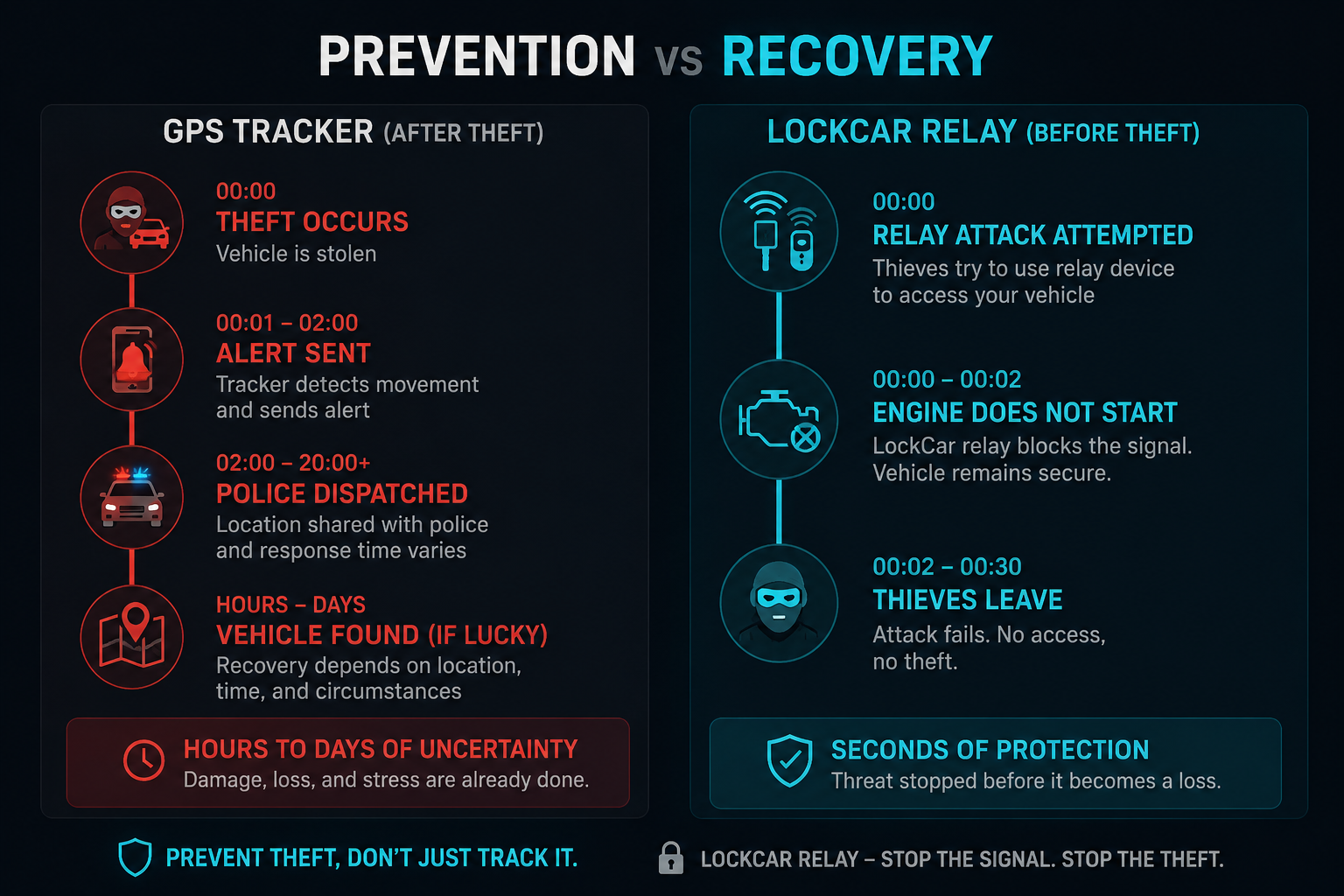
Even after a relay attack successfully unlocks the car and satisfies the factory immobiliser, the engine still will not turn over, because the LockCar relay in the circuit is open. The attacker can sit in the driver’s seat with the ignition fully authorised and the car simply will not move.
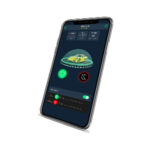
Authorisation to close that circuit comes from something a relay attack cannot copy: a paired phone app and proximity tag, using encrypted pairing between the device and your phone. No app, no tag, no engine.
A relay immobiliser does not try to detect the attack and react faster. It removes the outcome the attack is trying to achieve. The engine simply cannot start without your authorisation, regardless of how convincing the relayed signal is.
LockCar recommended for this page
- Physical relay break in the start circuit
- Proximity tag and app authentication
- For owners who already have a separate tracker
- Fitted from £150, full insurance certificate
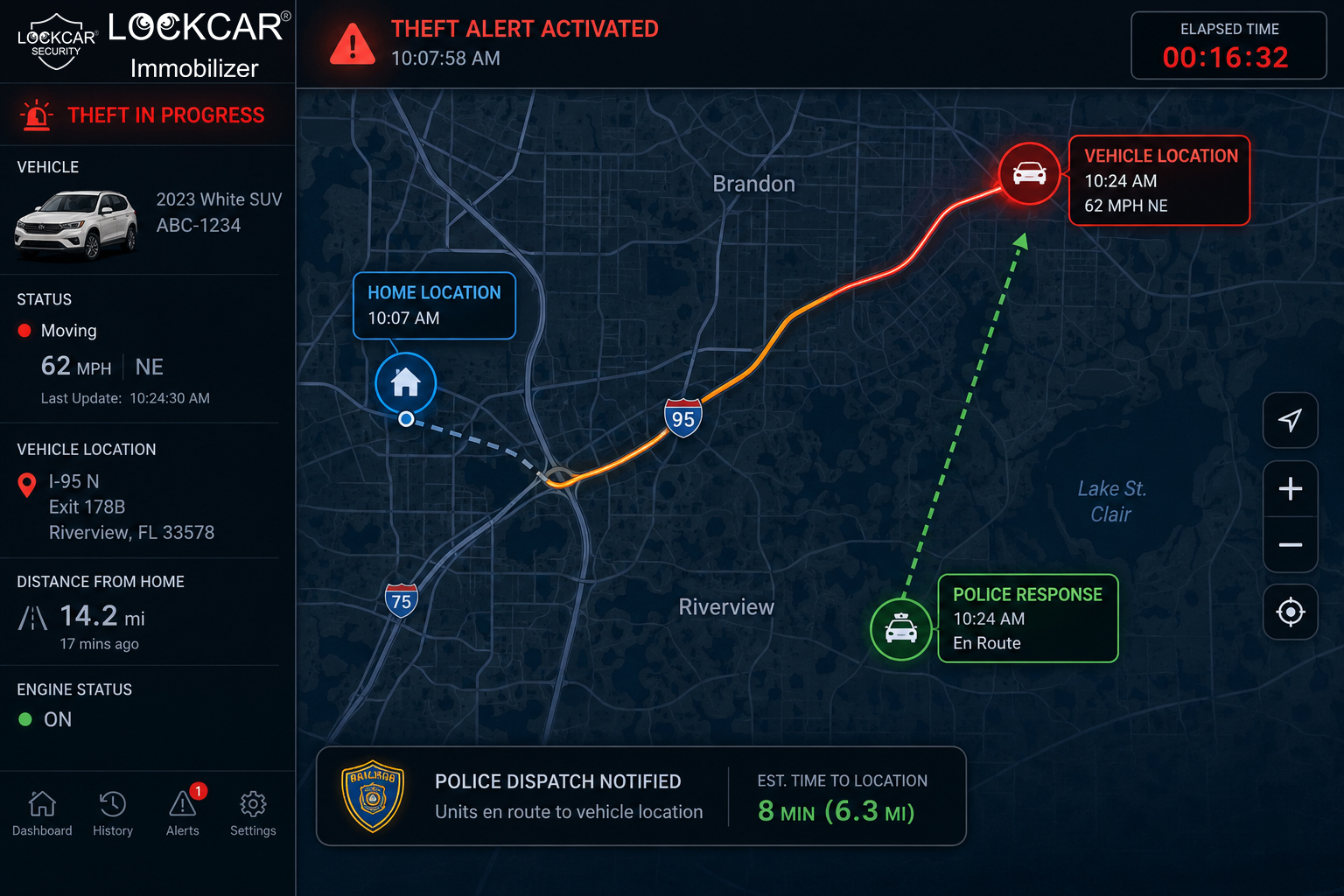
- Same relay break as IC3ST, plus tow-away tracking
- Movement alerts sent to your phone in seconds
- Live camera stream to check the situation remotely
- No mandatory monthly subscription
Frequently asked questions
Does a relay immobiliser replace my car’s factory immobiliser?
No, it works alongside it as an extra, independent layer. The factory immobiliser still runs its own checks. The relay immobiliser adds a check that a relay attack has no way to satisfy.
Will it slow down starting my car every day?
No. Once your phone or proximity tag is recognised, the relay closes automatically. You get in and start the car exactly as before. It only stays open when your authorised phone or tag is not present.
Can a thief find and bypass the relay if they know the car has one?
Installation places the relay at a concealed, vehicle-specific location. Finding and bridging it correctly takes far more time and specialist knowledge than a standard relay attack, which is built around speed and simplicity.
Is a relay immobiliser enough on its own?
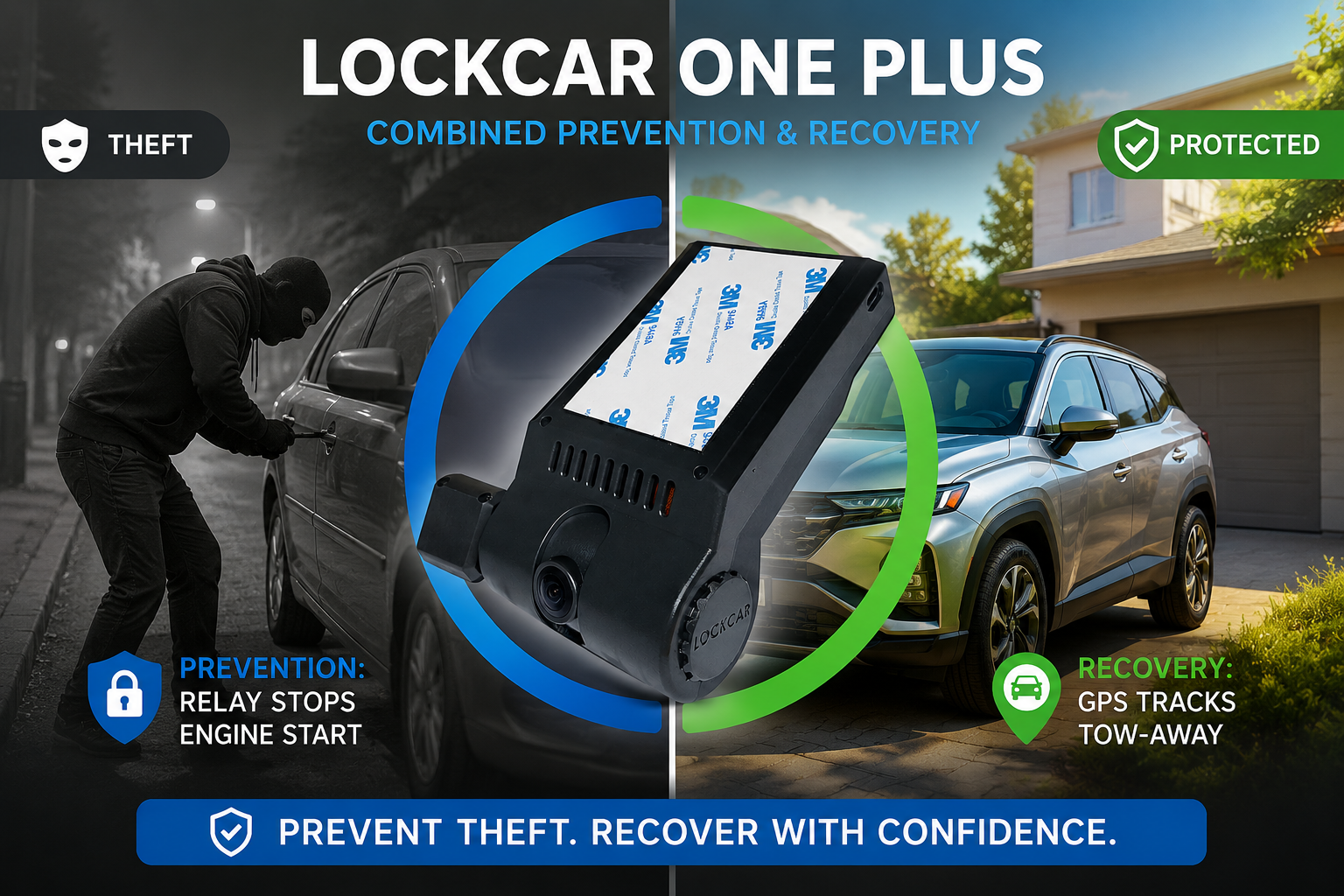
It stops any theft method that requires starting the engine. It does not track a vehicle that is towed away without being started. For that scenario, pairing it with GPS tracking, such as LockCar One Plus, closes the remaining gap.
Give your car a second lock a relay attack cannot reach
LockCar relay immobilisers are fitted UK-wide by professional installers, with a full insurance certificate included.