


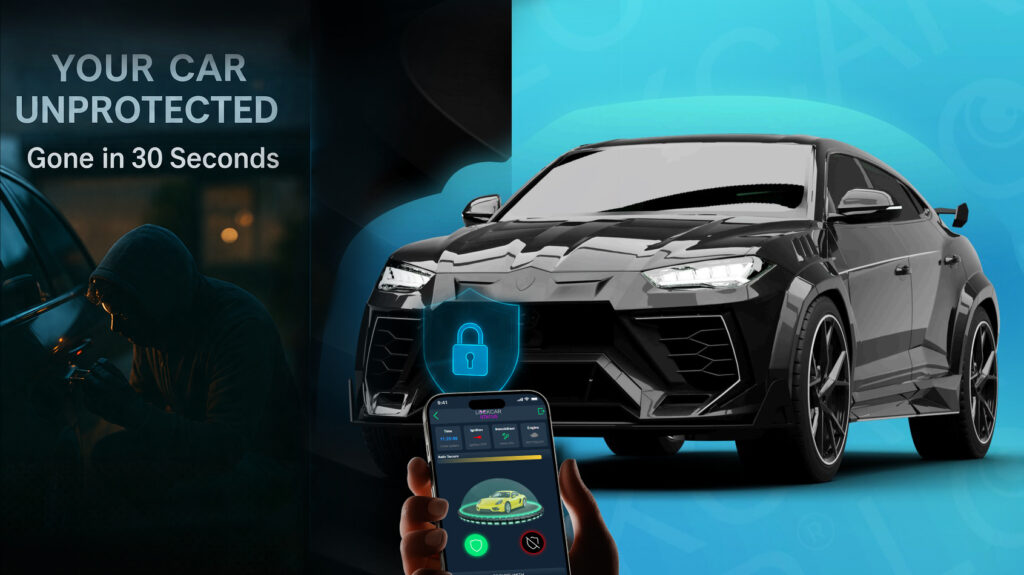





YOUR CAR
CAN BE STOLEN
in under 60 seconds with no alarm triggered
Van theft prevention UK 2025 – what actually works
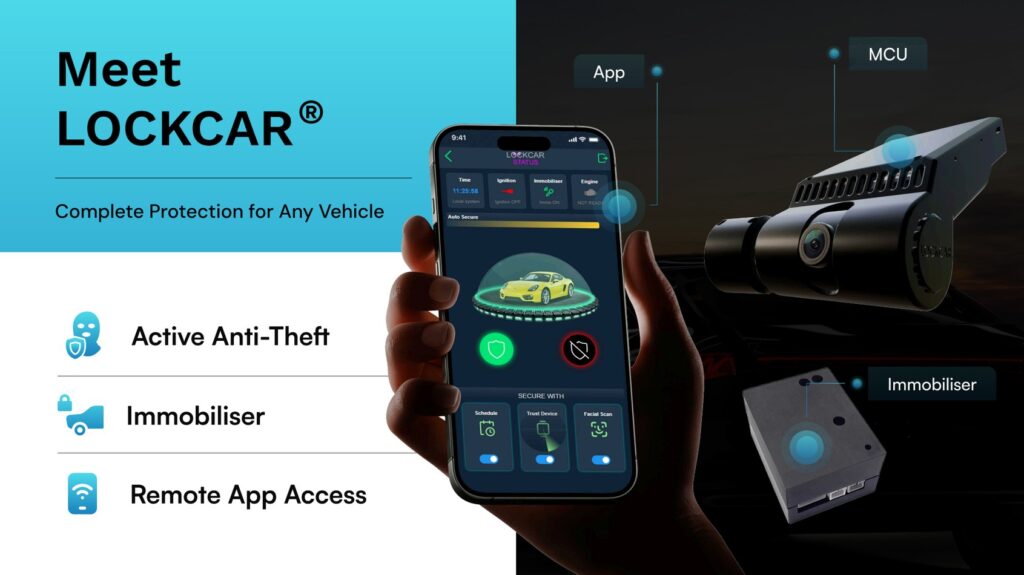
Commercial van theft is one of the most disruptive crimes facing UK tradespeople and businesses. A stolen Ford Transit or Mercedes Sprinter doesn’t just mean a lost vehicle – it means lost tools, lost income, and potentially days or weeks off the road. LockCar’s hardwired immobiliser is purpose-built for commercial vehicle circuits and stops thieves before they start.
On this page
Van theft in the UK costs tradespeople, delivery companies, and small businesses hundreds of millions of pounds every year. The problem extends beyond the vehicle itself – the tools, equipment, and materials stored inside a commercial van represent a second, often larger financial loss. Many van owners discover that insurance does not cover tools at full replacement value, leaving them personally out of pocket for thousands of pounds worth of equipment even if the vehicle itself is recovered. LockCar’s commercial-grade immobiliser range is designed specifically for the electrical architecture of modern vans and fits to all major platforms including Ford Transit, Mercedes Sprinter, VW Transporter, Vauxhall Vivaro, Renault Trafic, and Iveco Daily.
The scale of van theft in the UK
Commercial vehicle theft in the UK has risen substantially over the past decade, driven by several converging factors: the growth of the trades sector and construction industry, the increasing value of tools and equipment carried in vans, and the widespread adoption of keyless entry on newer commercial vehicle platforms. The West Midlands, London, and Greater Manchester are the highest-risk regions, but van theft is recorded across every county in England and Wales.
For self-employed tradespeople – electricians, plumbers, carpenters, HVAC engineers – van theft can be catastrophic. Losing a vehicle overnight means no transport, no tools, and no ability to fulfil booked work. The average tradesperson carries £5,000 to £15,000 of tools and specialist equipment. Replacement typically takes days or weeks, during which work cannot be completed, income stops, and client relationships are damaged. The Federation of Master Builders has consistently cited van theft as one of the most significant operational risks facing small construction businesses in the UK.
For courier and delivery businesses, van theft disrupts service contracts, damages brand reputation, and – on vehicles carrying customer parcels or time-sensitive goods – creates liability exposure beyond the vehicle itself. Fleet operators managing multiple vans face the additional complexity of gaps in their delivery capacity that ripple through the entire operation.
Most stolen vans in the UK
Ford Transit and Transit Custom are consistently the most stolen commercial vehicles in the UK, reflecting their dominant market position. The Transit’s ubiquity also means there is a well-developed criminal supply chain for Transit parts and rebirthed vehicles. Mercedes Sprinter, VW Transporter, Vauxhall Vivaro, Renault Trafic, and Peugeot Expert all feature in theft statistics, with models from 2018 onwards – when keyless entry became increasingly common on commercial platforms – showing higher theft rates than older non-keyless equivalents.
Newer platforms including the Ford Transit Connect and VW Caddy are also increasingly targeted as their keyless entry systems become standard. The pattern mirrors the timeline seen in the passenger car market: within two to three years of widespread keyless entry adoption, each van model appears in theft statistics as criminal networks develop the specific relay equipment and cloning tools for its platform.
How thieves steal vans
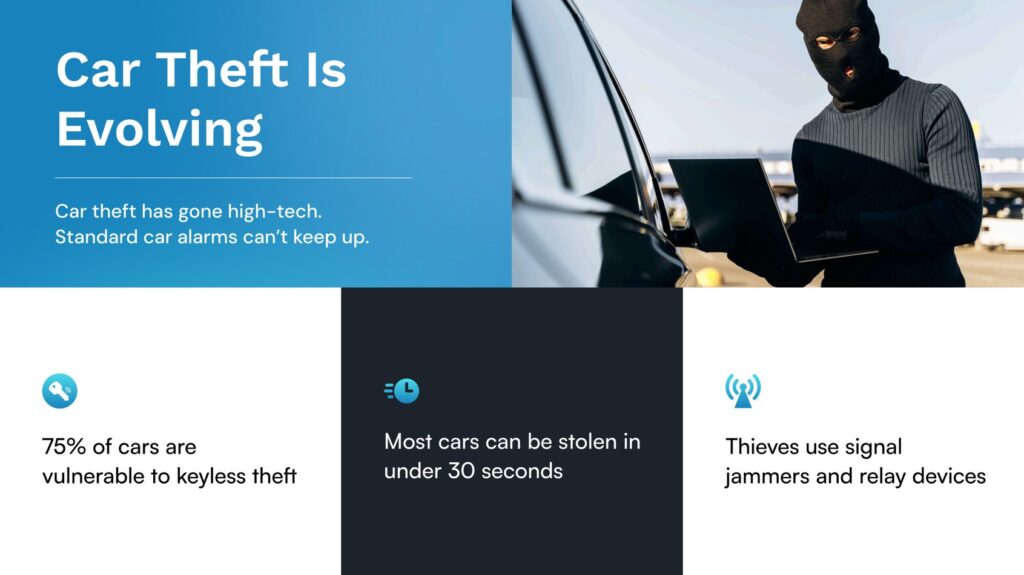
Van theft uses a combination of relay attack, OBD key programming, and physical forced entry depending on the platform and the criminals involved. Relay attacks on keyless vans follow the same process as car relay theft – amplifying the key fob signal from inside a property to the van parked outside. OBD programming attacks involve gaining physical access to the van’s diagnostic port and using stolen-car-specific programming devices to write a new key to the vehicle’s ECU.
Forced entry attacks – breaking a window or forcing a door – remain more common on vans than on passenger cars, partly because the contents of the van (tools) are often the primary target rather than the vehicle itself. Thieves will break into a van to steal tools without taking the vehicle, and the same criminals will take the whole vehicle if they also have the means to start it. A van owner who fits good door locks but no immobiliser is protected against opportunistic tool theft but not against organised vehicle theft.
Tool theft from vans costs UK tradespeople an estimated £500 million per year. The average loss per incident is approximately £3,000. Many standard van insurance policies include tool cover capped at £500–£1,000 – significantly below the replacement cost for a fully equipped tradesperson’s van.
Tool theft from vans – the secondary cost
When a tradesperson’s van is broken into or stolen, the tools inside are often the most financially damaging loss. A plumber’s van might carry £8,000 of specialist equipment. An electrician’s van might hold £6,000 in cable, test equipment, and hand tools. A joiner’s van might carry £10,000 in power tools alone. Replacing this equipment takes time – specialist tools can have lead times of days or weeks – and the cost often significantly exceeds the insurance payout.
Van vault security boxes, slam locks, and deadlocks are the most widely used tool protection measures. These are useful products but address only the forced entry route. LockCar’s immobiliser protects the entire vehicle from relay and electronic theft, which means that even if a criminal has slam lock picks, a van that cannot be started cannot be taken off the premises for leisurely stripping. The combination of good door hardware and a LockCar immobiliser provides comprehensive protection at both levels.
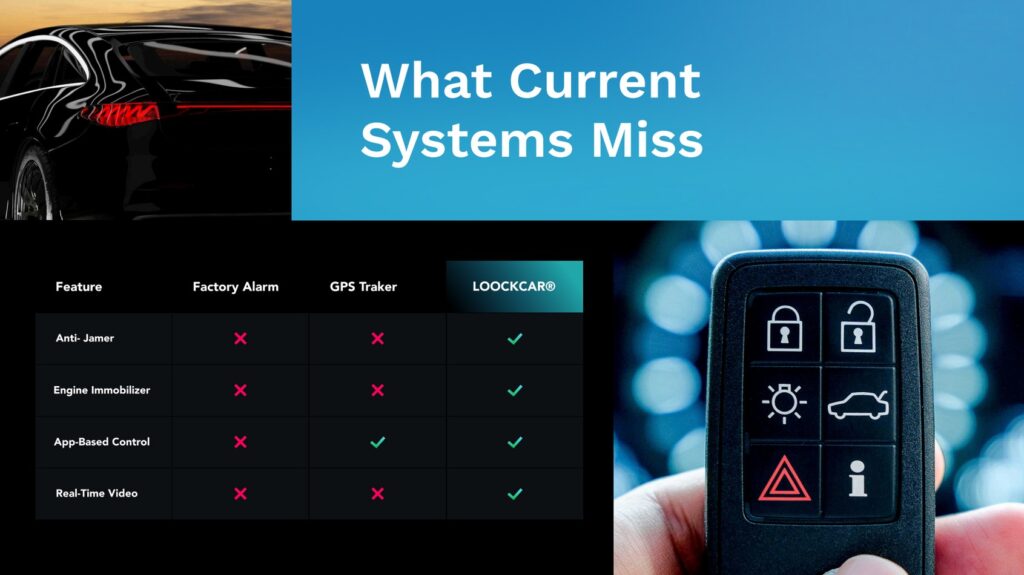
Van security products compared
Slam locks and deadlocks: Prevent unauthorised door opening. Effective against opportunistic tool theft. Do not prevent the vehicle being started or driven away.
Van vault security boxes: Heavy-duty lockable storage for high-value tools. Excellent for tool protection. Have no effect on vehicle theft.
Steering wheel locks: Visible deterrent. Adds some time to a theft but can be bypassed in minutes by experienced criminals carrying cutting equipment.
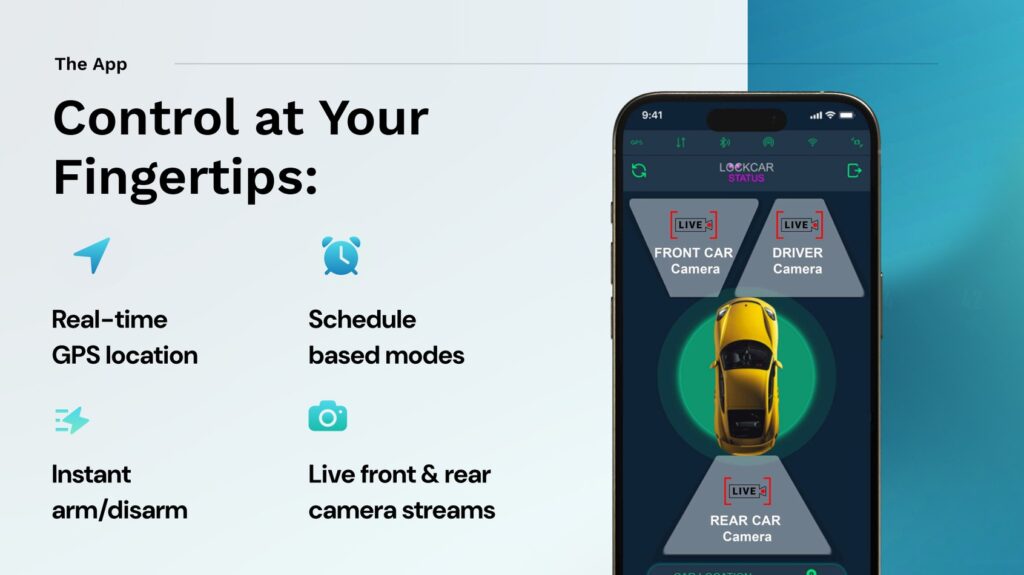
GPS trackers: Aid recovery after theft. Do not prevent theft. Experienced gangs use tracker detection equipment before stripping or shipping vehicles.
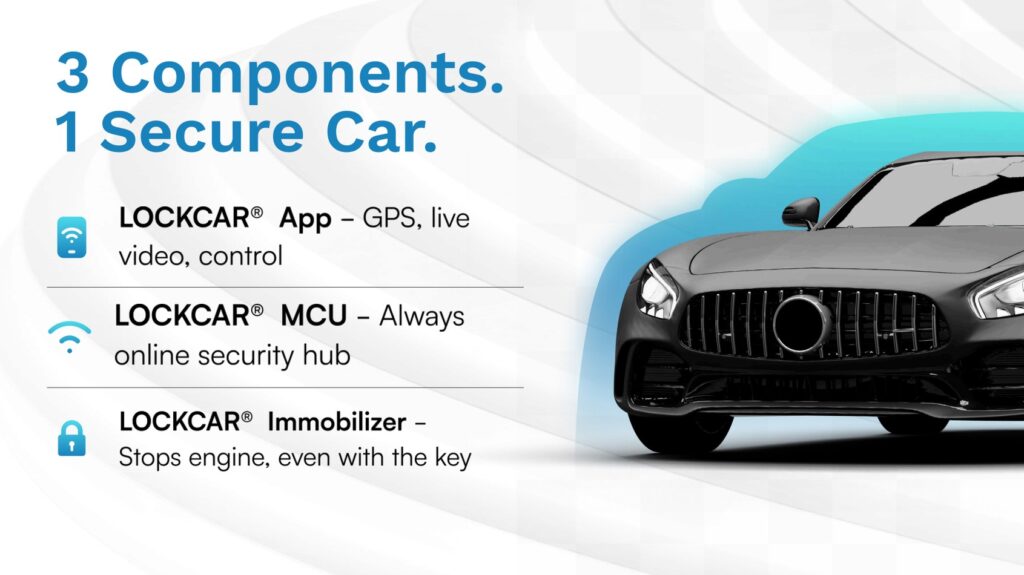
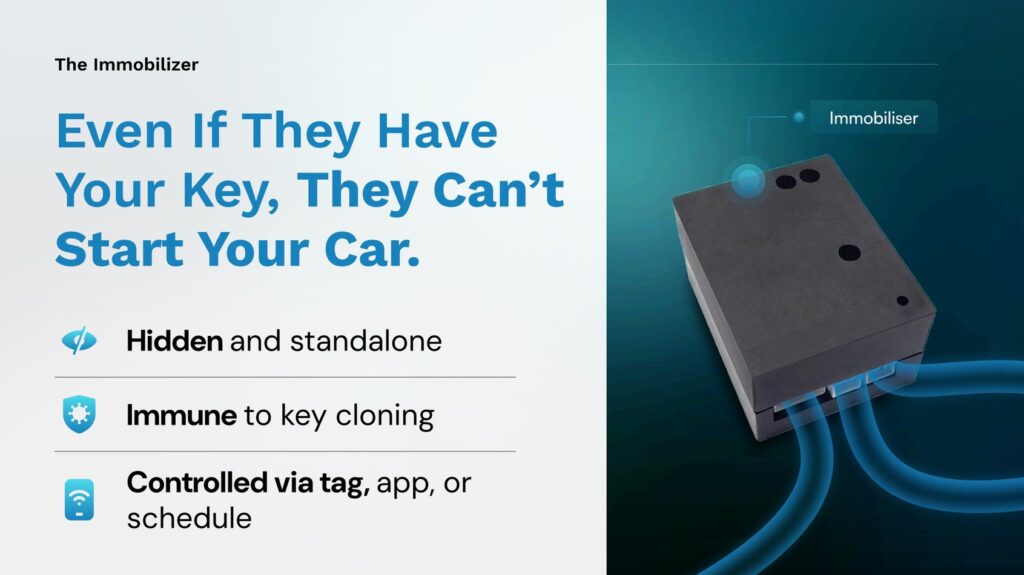
Hardwired immobiliser (LockCar): Prevents engine start regardless of whether the key fob signal is present, the OBD port is accessed, or the factory immobiliser is bypassed. The only product category that directly prevents the vehicle being driven away.
LockCar for commercial vans – the technical case
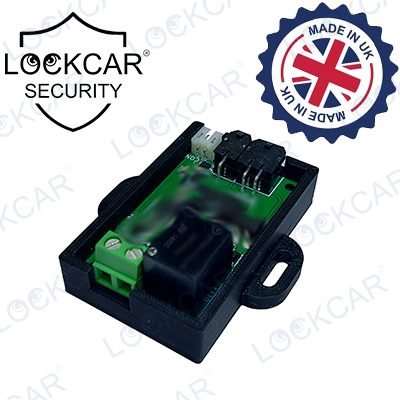
Standard passenger car immobilisers often use 10A or 15A relays in their start circuit break. Many commercial vans – particularly the Sprinter, Transit, Iveco Daily, and DAF LF range – draw more current through their starter circuits than a 10A or 15A relay can reliably interrupt. LockCar’s i226 uses a 20A relay, purpose-rated for the higher-current circuits found in commercial vehicle platforms. This ensures that the physical relay break is as effective on a 3.5-tonne Sprinter as it is on a Ford Fiesta.
The isolated MCU-to-immobiliser wiring architecture in the i226 provides an additional layer of security that is particularly relevant for commercial vehicles, which may be parked in less secure locations – a street, a building site, a trading estate – overnight. Even if a criminal locates the immobiliser unit under the dashboard, the isolated communication channel means that bridging or cutting the wiring does not allow the relay to close. The start circuit remains broken.
LockCar’s mobile installation service means your van never has to leave site. Our engineers come to your home, depot, building site, or any accessible location. Installation on a Transit or Sprinter typically takes 90 minutes. The system is fully tested before the engineer leaves, and you receive documentation of the installation for insurance purposes.
LockCar van immobiliser range


Will a LockCar immobiliser work on my older diesel van without keyless entry?
Yes. LockCar immobilisers work on any vehicle with a 12V or 24V electrical system, regardless of whether it has keyless entry. The hardwired relay break integrates with the ignition or fuel pump circuit and operates independently of the key system. Older diesel vans including pre-2015 Ford Transit and Sprinter platforms are fully supported.
Can I get a LockCar fitted to my van at a building site or depot?
Yes. Our mobile installation service is designed for exactly this situation. Our engineer brings all equipment, tools, and parts to your location. We can install at a building site, depot, trading estate, or any accessible location across the UK.
Does fitting a LockCar immobiliser reduce my van insurance premium?
Many UK van insurers offer discounts for professionally fitted aftermarket immobilisers. LockCar provides full installation documentation. Contact your insurer before booking to confirm their requirements and the discount applicable to your policy.
My van has a Thatcham alarm – do I still need a LockCar immobiliser?
A Thatcham alarm detects and signals intrusion. It does not prevent the engine from starting if the factory immobiliser is bypassed via relay or CAN bus attack. LockCar has 3 analog outups add can optinal add a physical relay break that prevents engine start regardless of whether the alarm or OEM immobiliser has been satisfied.
Book van installation today
Transit · Sprinter · Transporter · All vans · Mobile fitting UK-wide
WhatsApp to book → Call usUK-wide