


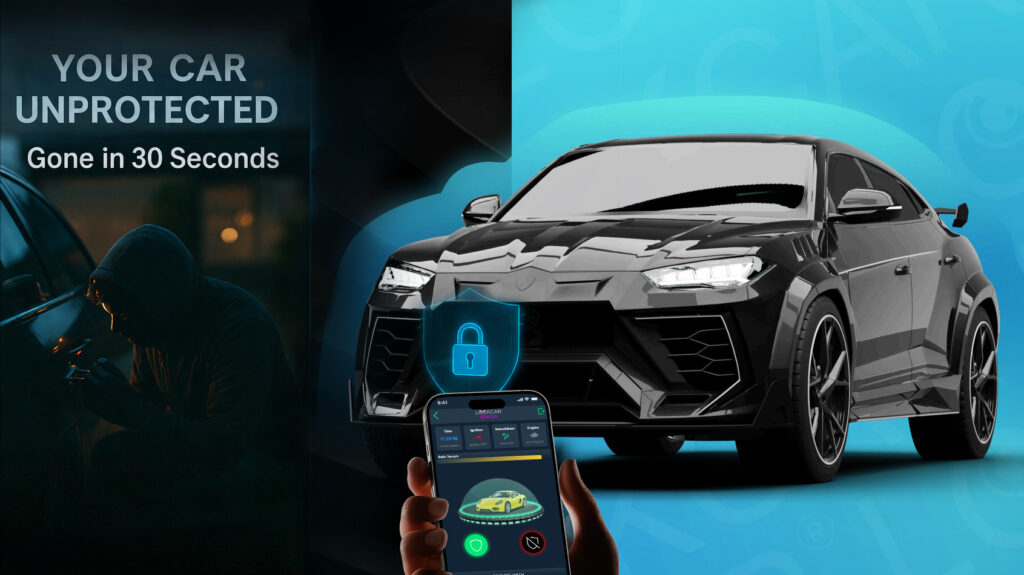



YOUR CAR
CAN BE STOLEN
in under 60 seconds with no alarm triggered
Security Audi Immobiliser Guide: protect your Audi from relay theft
This Security Audi Immobiliser Guide explains why Audi vehicles are increasingly targeted by relay theft gangs across the UK, and what actually stops them. The Q5, Q7, and A6 are among the most vulnerable models. A physical immobiliser is the most effective protection you can add.
In this guide
This Security Audi Immobiliser Guide starts with the pattern we see most often: Audi vehicles are popular targets for organised theft gangs, particularly the Q5 and Q7 SUVs. Many Audi models feature keyless entry systems that are vulnerable to relay amplification. The West Midlands has the highest vehicle theft rate in the UK, and Audi owners in affluent areas are at particular risk.
Audi theft risks in the UK
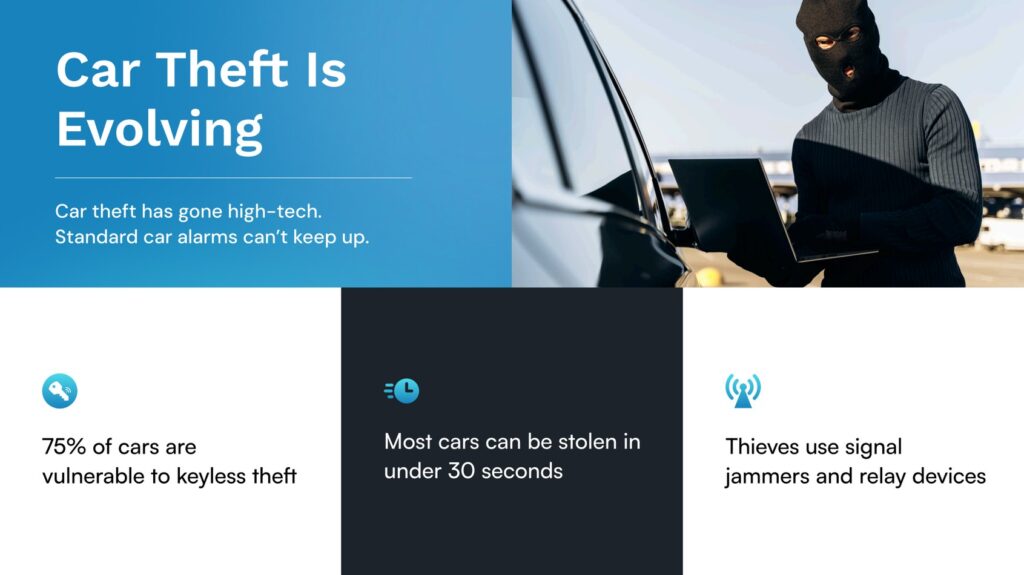
Audi has been one of the most stolen marques in the UK for several years, and the reasons are consistent. Audi’s keyless entry system (Advanced Key) is fitted as standard on most Q5, Q7, A6, A7, and A8 models built in the last decade. The system is convenient – the car unlocks as you approach – but it is also exactly the setup that relay attack equipment is designed to defeat.
A relay attack uses two operatives and a pair of signal amplifiers. One amplifier sits near your house, picking up the key fob’s signal from inside. The second sits at the car, amplifying that signal so the vehicle believes the key is present. From a standing start it takes around 60 seconds, and the car drives away as if you had unlocked it yourself. The factory immobiliser is satisfied because as far as it can tell, the key really is there.
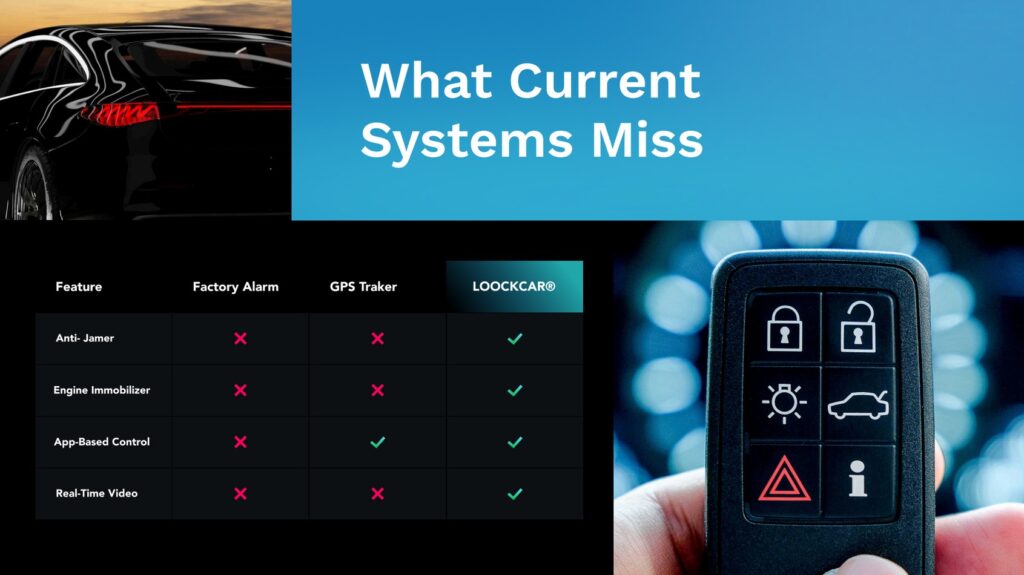
Audi’s own theft-prevention measures are improving, but they lag the theft crews. Motion-sleep key fobs help for some attacks but not for key programming at the OBD port. A Security Audi Immobiliser Guide approach treats the factory system as one layer and adds a second, independent one that the attack methods cannot reach.
Vulnerable Audi models
Every keyless Audi is exposed to relay attack, but the theft statistics cluster around the higher-value SUVs. That is not a coincidence: the same crews that attack a Q7 will also take a Q5 and an RS6 if the opportunity presents, and the resale market for Audi parts across Europe means almost any model has a buyer.
- Q5 (all generations) – the single most targeted Audi model in the UK. High resale value, keyless standard, frequently parked on residential driveways.
- Q7 and Q8 – large, premium, and often fitted with the most expensive factory options. A favourite target for organised crews.
- A6, A7 and A8 – executive saloons, regularly stolen from station car parks and hotel forecourts as well as driveways.
- RS and S models – the highest-value cars in the range. Thieves treat these as top-priority hits.
- e-tron and Q4 e-tron – keyless electric Audis are not immune. The same relay method applies.
If your Audi is keyless, our recommendation is simple: treat the factory immobiliser as one layer and add a second, physical one. You keep using your Audi key as normal. The car simply does not start without a second authorisation that the relay equipment cannot provide.
Protecting your Audi: what actually works
There are three practical layers of protection for a modern Audi, and this Security Audi Immobiliser Guide recommends using them together for the best result.
First layer: free habits. Move the key fob away from the front of the house when you are at home. Upstairs, at the back, inside a metal tin. This removes the easiest relay attack on a driveway, and it costs nothing. Buy a Faraday pouch for the fob if it helps you build the habit.
Second layer: a visible deterrent. A steering lock, a wheel clamp, or a locking post on the drive. These do not stop a determined crew, but they make your Audi a visibly harder target than the car next to it. Crews operating to a schedule skip anything that costs them extra seconds.
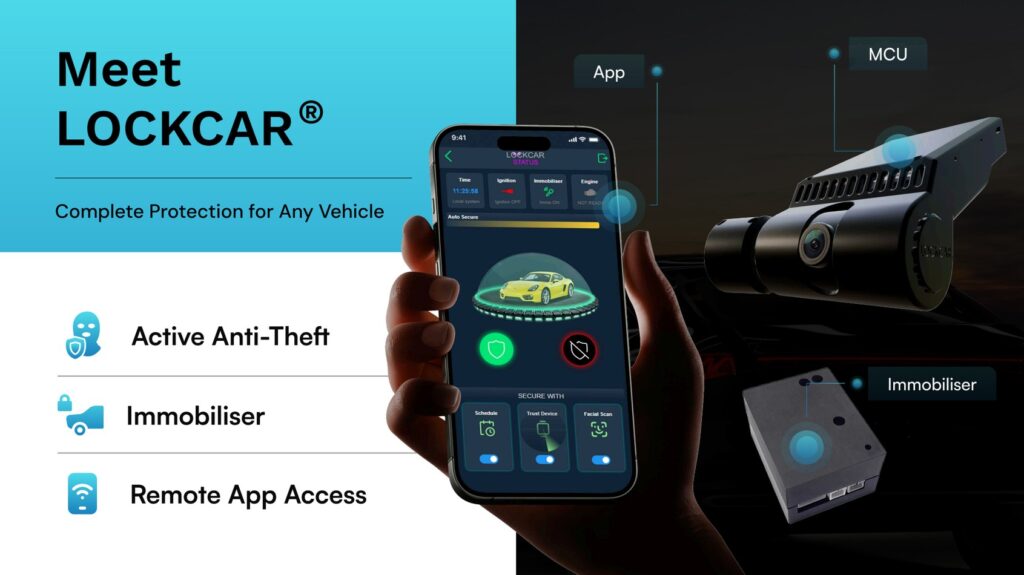
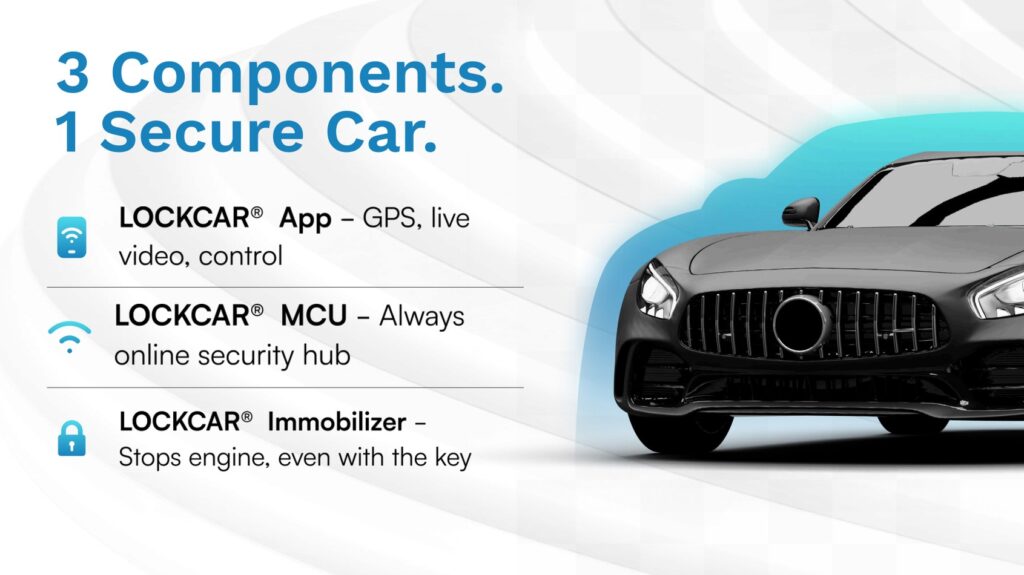
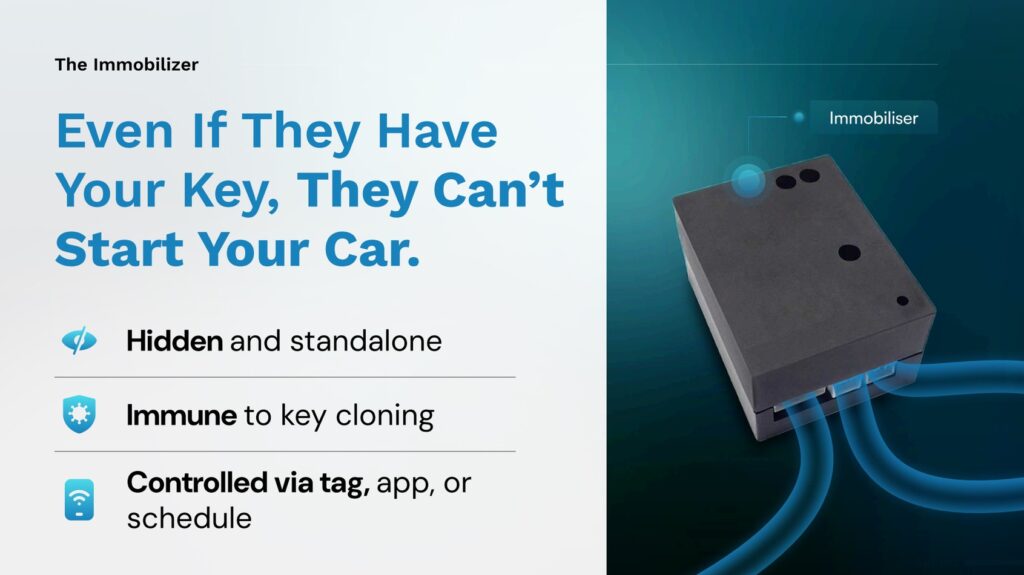
Third layer: a physical immobiliser. This is where LockCar comes in, and it is the layer that actually stops the theft rather than reporting it afterwards. A hidden immobiliser holds the engine’s start circuit closed until a separate authorisation is presented – a PIN, a proximity tag, or your phone over Bluetooth. Relay amplification of your key fob provides none of those things, so the engine will not start even with the key inside the car.
How a Security Audi Immobiliser Guide approach works
Modern Audis use a CAN bus – a two-wire network that every control unit in the car uses to talk to the others. The LockCar CAN-IMMO joins that network through the vehicle’s existing connectors and monitors the start condition. Until your authorisation is presented, the start condition stays blocked. Nothing is cut, nothing is visible, and the install is fully reversible if you ever sell the car.
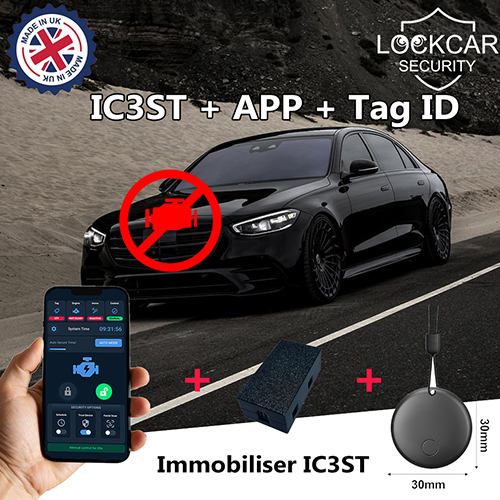
For Audis in higher-risk categories – Q7s, RS models, anything on a theft-to-order list – we often recommend pairing the CAN-IMMO with a standalone LockCar unit such as the IC3ST. The CAN-IMMO blocks the start at network level, and the standalone IC3ST holds a hardwired circuit that operates outside the CAN bus altogether. The two systems cover different attack paths and can be fitted in a single appointment.
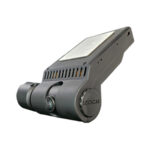
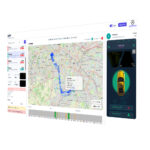
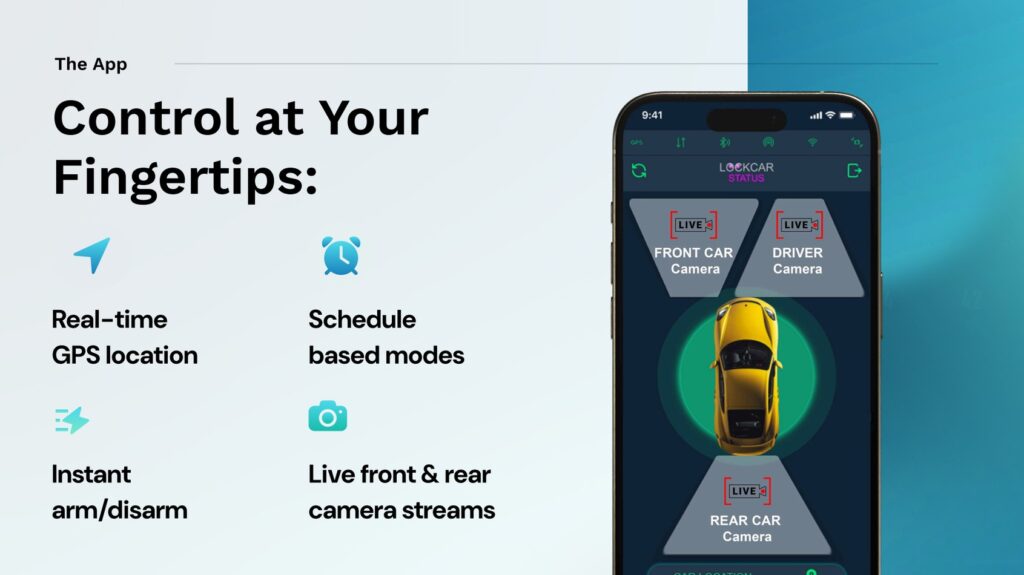
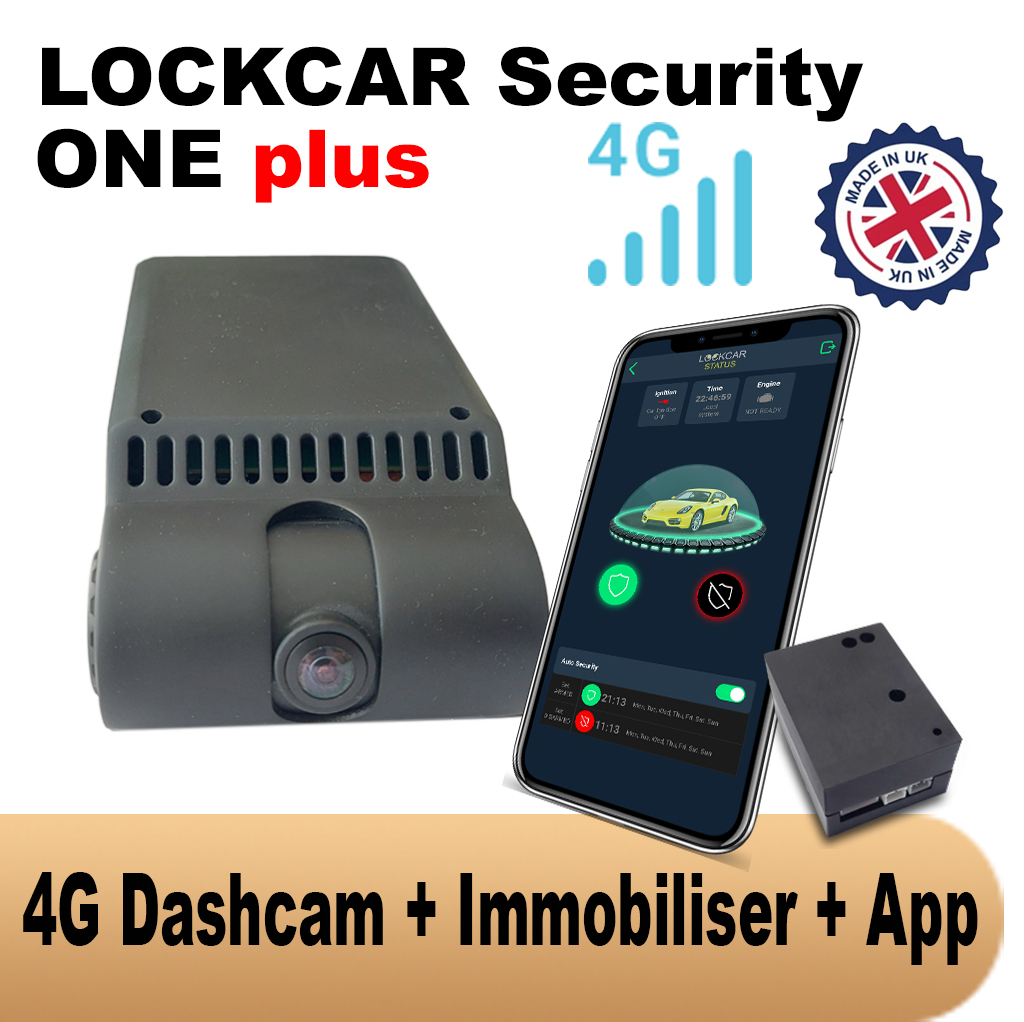
For owners who want recovery as well as prevention, the LockCar One Plus combines a 4G GPS tracker with the immobiliser in one unit. That is the configuration we fit most often on A6 and A7 models used for business, because it lets you see where the car is at any moment as well as stopping it being driven away.
The installation process, step by step
Every LockCar installation is a mobile job – the engineer comes to you, whether that is your home driveway, your workplace car park, or a customer site. Here is how it runs:
- Vehicle check. We confirm your Audi model, year and trim so the unit is programmed against the correct factory profile before we arrive.
- Pre-installation assessment. The engineer checks your vehicle’s wiring, confirms the intended connection points, and shows you where the unit will be concealed.
- Wiring and fitment. The unit is soldered and sleeved into the vehicle loom rather than crimped. All connections follow the Audi’s own wiring standards.
- Concealed placement. The module goes behind trim, in a location that requires panels to be removed to reach. Nothing is visible from inside or outside the car.
- Programming and testing. The unit is paired with your phone or tag, tested through the start cycle, and every factory function is verified before the engineer leaves.
- Handover. The engineer shows you how to use the app or tag, demonstrates the anti-hijack and valet modes, and leaves you the number for any follow-up questions.
Typical installation time is one to three hours depending on the model and how much trim has to come apart. Everything is tested twice – once immediately after fitting, and once again before the engineer leaves, so you are not finding a fault a week later.
Full insurance documentation is provided with every LockCar installation, including device serial number, installation date, and a technical description suitable for your insurer.
Recommended Audi security
Where we fit across the UK
This Security Audi Immobiliser Guide is written for Audi owners across the UK, and our mobile fitting service matches that reach. Engineers cover London and the Home Counties, Birmingham and the West Midlands, Manchester and the North West, Leeds and Yorkshire, Bristol and the South West, and the major Scottish cities.
The West Midlands has the highest rate of Audi theft in the country, and it is where we fit the largest number of Q5 and Q7 units. If you are unsure whether your postcode is covered, message us on WhatsApp with your location – we will confirm coverage and the nearest fitting slot.
Book professional installation
UK-wide mobile service · Same-day available
WhatsApp to book → Call usUK-wide
Which Audi models are most at risk of relay theft?
The Q5 and Q7 are the most stolen Audi models in the UK, followed by the A6, A7 and A8. Any keyless Audi is exposed, but the higher-value SUVs are targeted first because of their resale value and the demand for parts across Europe.
Will fitting a LockCar immobiliser void my Audi warranty?
No. Our installations follow Audi’s own wiring standards, use vehicle-specific connection points, and are fully reversible. Factory functions continue to work exactly as before. If your Audi is still under warranty and you want to be certain, tell us when you book and we will describe the exact connection points so you can check with your dealer.
How long does installation take on an Audi?
Typically one to three hours, depending on the model and how much trim has to come apart to route the wiring out of sight. The engineer works at your address, whether that is a home driveway, a workplace car park, or a customer site.
Does a LockCar immobiliser work with Audi’s Advanced Key?
Yes. The LockCar unit sits alongside Advanced Key rather than replacing it. You keep using your Audi key as normal to unlock and get in. The engine simply will not start until the second authorisation – a PIN, a proximity tag, or your phone – is presented.
Can I fit an immobiliser myself to my Audi?
Installation requires soldering skills and vehicle-specific CAN bus knowledge, so professional fitting is recommended. Modern Audis are sensitive to wiring changes, and a splice in the wrong place can cause warning lights and expensive diagnostic work. Your installer also programs the unit against your specific model and year.
What is the cheapest way to protect my Audi?
Start with free steps: move the key fob away from the front of the house, use a Faraday pouch, and park defensively. If your Audi is keyless and parked on a driveway or street, a fitted immobiliser from £150 is the next most effective step, and it is far cheaper than an insurance excess or a replacement car.