

Vehicle security from
£199
Enter car's registration plate number to find the right LockCar security option
We could not pull the details automatically. Fill these in and we will carry on — it only takes a few seconds.
- Free, no obligation
- Fitted, not posted
- 12 months hardware warranty
Showing sample data — add your MOT History API credentials in the plugin settings to return real vehicles.
MOT history
Pick the level of protection
Every option is fitted by an approved installer. Choose one to see the exact devices.
Immobilisers only for
Hidden engine block. Nothing to see, nothing to record.
CAN BUS Immobiliser
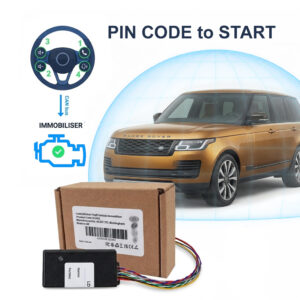
PIN CODE Car Immobiliser LockCar CAN-IMMO – Free Fitting
£299.00 £350.00
PIN CODE to START – NO PIN. NO START – LOCKCAR CAN-IMMO Immobiliser – Smart Advanced CAN Bus Vehicle Immobiliser – entering the PIN CODE each startup
App + Tag Immobiliser
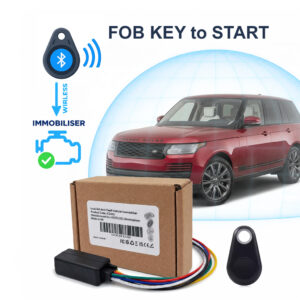
TAG FOB Car Immobiliser LockCar IC3262 TAG Immobiliser
£199.00 £250.00
TAG FOB KEY to START – NO FOB. NO START – LOCKCAR IC3262 Immobiliser – Smart Immobiliser – authorizes the car to start if it detects the fob…
Immobilisers + Dashcams for
Block the theft and record what happens around the car.
Dashcam + Immobiliser + App
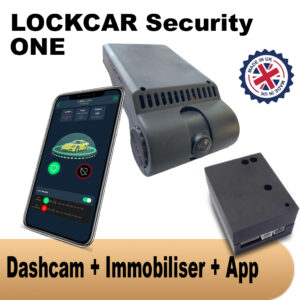
Dashcam + Immobiliser LockCar One – Free Fitting
£450.00 £550.00
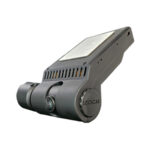
LockCar ONE is a professional dash camera with 24/7 monitoring, SD recording, and smart immobiliser integration. Built for security, durability, and total control in the UK.
Dashcam + Immobiliser + App
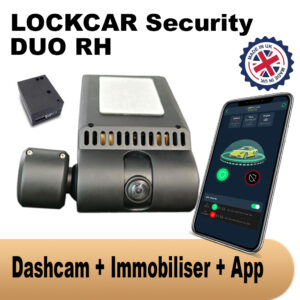
Dashcam + immobiliser Lockcar Duo Rh – Free Fitting
£550.00 £650.00
Local MCU system security. Power ON 24/7. Smart parking mode. Local car status, Immobilization, Local GPS Traking, Local Cameras Front + Driver. FREE UK INSTALLATION
4G Live Dashcams + Immobilisers for
Live view and alerts from anywhere, plus the engine block.
4G + Dashcam + Immobiliser + App
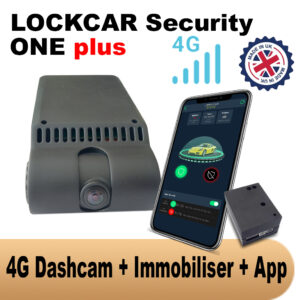
Dashcam + Immobiliser + Tracker LockCar One Plus 4G- Free Fitting
£499.00 £600.00
LockCar One Plus is 4G remote access and intelligent immobiliser. Designed for modern threats, this advanced anti-theft system allows you to monitor and control your car from anywhere,…
4G + Dashcam + Immobiliser + App
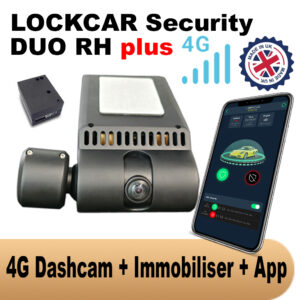
4G Daschcam + Immobiliser + Tracker Lockcar Duo Rh Plus 4G – Free Fitting
£699.00 £750.00
Remote access via 4g permanently. Power ON 24/7. Smart parking mode. Real-time car status, Immobilization, Real-time GPS Traking, Live Cameras Front + Driver. FREE UK INSTALLATION
Where should we fit it?
We come back with the theft method known for your model, what we would fit, the price with fitting, and the nearest slot to you. One message, no sales calls.
Got it – check your inbox
We have your registration and what you picked. We will come back to you shortly.
Message us on WhatsAppCar immobiliser fitted, not posted
Your car already has an immobiliser. It was designed to stop someone starting the engine without a key – and modern thieves no longer need one. An aftermarket car immobiliser adds a second authorisation step that sits outside the key system entirely, so relaying or cloning your key gets a thief precisely nowhere. Fitted at your address, anywhere in the UK.
What a car immobiliser actually does
An immobiliser is a device that refuses to let the engine start unless it receives the right authorisation. It does not lock doors, it does not make noise, and it does not tell you where the car is. Its single job is to make the engine unusable to anyone who should not be driving.
Every car sold new in the UK since 1998 has one built in. The factory version checks for a chip in your key: right chip, engine starts; wrong chip or no chip, the starter turns and nothing happens. That single check is what ended the era of hotwiring, and for roughly two decades it worked.
An aftermarket immobiliser is a second, independent device fitted on top of that. It has its own authorisation – a PIN, a phone, a proximity tag – and the factory system knows nothing about it. Two locks on the same door, and a thief who has picked the first one still has no idea the second exists.
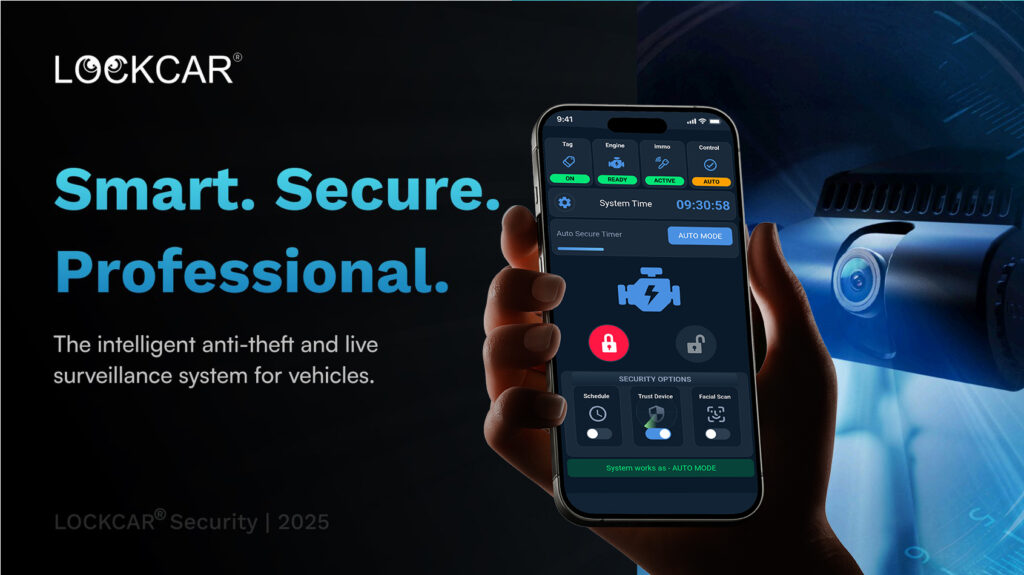
Why your factory immobiliser is not enough
A relay attack does not break the factory immobiliser. It makes it irrelevant. One person stands near your front door with an amplifier and finds your key through the wall. A second stands at the car and rebroadcasts that signal. From the car’s point of view your key is right there, in your hand, exactly where it should be. The immobiliser checks, is satisfied, and authorises the start.
CAN injection works differently and arrives at the same place. A thief reaches a wiring loom behind a headlight or wing mirror, plugs in a device, and sends the network the message it would have received from a valid key. No glass broken, no alarm, no forced ignition – and nothing for a neighbour to hear.
Both methods share one weakness, and it is the weakness an aftermarket immobiliser is built to exploit: they defeat the check the car performs, so you add a check the car does not perform.
This is the most common and most expensive mix-up we see. A tracker tells you where your car went after it was taken. An immobiliser is the reason it does not go anywhere. Recovery rates for stolen vehicles are far from guaranteed, and a recovered car is rarely returned in the condition it left in. If you are choosing one, choose the one that prevents.
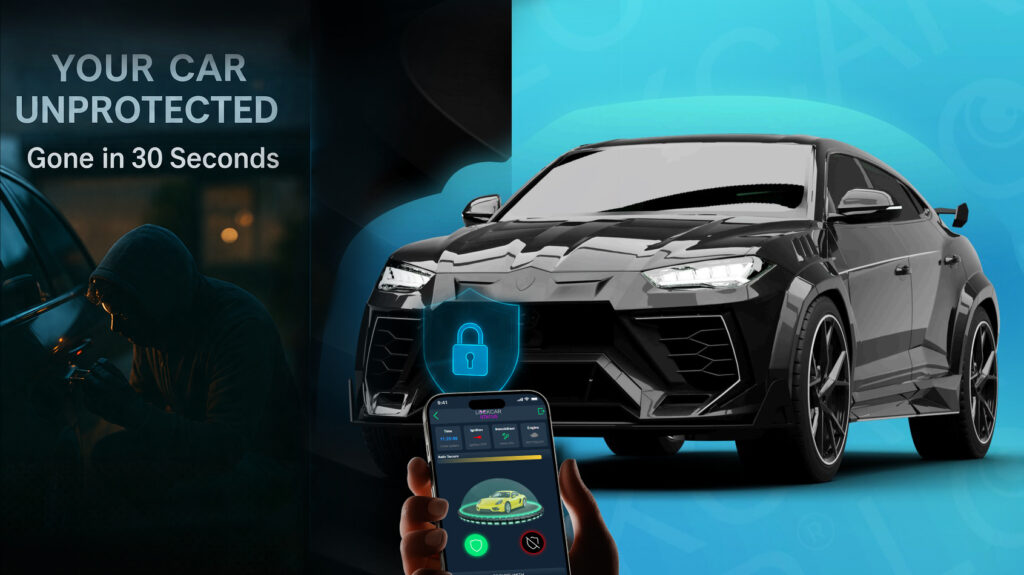
The types of aftermarket immobiliser
PIN-sequence (CAN bus)
You enter a sequence using buttons the car already has – steering wheel, climate controls, indicator stalk. The unit talks to the vehicle network and holds the start until the sequence is right. Nothing extra to carry, but you enter it every single time you drive.
Proximity tag (ADR)
A small encrypted fob stays in your pocket. The car recognises it when you get in and releases automatically. Nothing to remember and nothing to type. The tag is a separate device from your car key, so relaying the key alone achieves nothing.
App-authorised
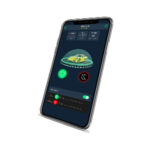
Your paired phone is the key. Approach, the unit sees the phone, the engine is released – and you can immobilise remotely if the car is taken. Needs a phone with charge, so any serious system keeps an offline PIN or tag as backup.
Relay circuit-cut
A physical relay wired in series with starter, fuel or ignition. It interrupts the circuit outright rather than negotiating with the car’s electronics. Simple, vehicle-agnostic, and completely separate from the ECU – but it does not use the car’s own controls for authorisation.
What to check: visibility
No LEDs, no keypad, no standard fitting position. A unit installed in the same place on every car is a unit a professional thief already knows how to find. Ask your installer whether the location varies per vehicle – the honest ones say yes.
What to check: paperwork
Ask for an installation certificate naming the vehicle, the device and the fitter. It is what your insurer will want if you declare the system, and it is what you will need if you ever claim. A system fitted with no paperwork is worth less than one that comes with it.
Against what you already have
| Capability | Factory immobiliser | GPS tracker only | Aftermarket immobiliser |
|---|---|---|---|
| Stops a relay attack | No | No | Yes |
| Works if the key is cloned | No | No | Yes |
| Survives CAN injection | No | No | Yes |
| Visible to a thief | – | Sometimes | Hidden |
| Tells you where the car is | No | Yes | Only on combined units |
| Effort every time you park | None | None | None with a tag |
| Typical cost | Included | £150–£350 plus monthly | From £299 fitted |
How to choose the right one
Start with how your car is stolen, not with the product. If it has keyless entry and keyless start, relay is the threat and you want authorisation that lives away from the key – a tag or a phone. If it is an older car with a blade key or a button-start fob, key cloning and OBD key programming are more likely, and a PIN sequence handles both.
Then look at where the car sleeps. On a driveway in range of your front door, a relay attack is straightforward and a hidden immobiliser is the highest-value thing you can fit. In a locked garage, your risk profile is different and you may reasonably spend less.
Finally, be honest about daily friction. A PIN you must enter before every journey is secure and free of extra hardware, and plenty of owners quietly stop using systems that annoy them. If you know you will resent it, buy the tag version. The most effective immobiliser is the one that is still armed in six months.
Send us the make, model and year and where you park. We will come back with the known theft method for that vehicle, what we would fit and why, the price, and the nearest fitting slot. One message, no sales calls.
What it costs, and what insurers say
What is the real price of a fitted car immobiliser in the UK?
The aftermarket runs from roughly £299 to £700 fitted, depending on the technology and the brand. The well-known PIN-based systems sit at the top of that range once installation is added. LockCar CAN-IMMO starts at £299 including fitting at your address. When you compare quotes, check whether the number includes labour – a lot of advertised prices do not.
Are there ongoing costs?
An immobiliser on its own has none. There is no SIM, no server and nothing to renew. Monthly fees appear when you add GPS tracking, because that needs a data connection and a platform to display it on. If a quote for an immobiliser alone includes a subscription, ask exactly what the subscription pays for.
Will it reduce my insurance premium?
Sometimes, and it depends entirely on the insurer and the vehicle. Thatcham-accredited systems are the ones most likely to be recognised on a policy schedule. Some insurers now require an aftermarket immobiliser or tracker as a condition of covering certain high-theft models at all. Declare any system you fit, keep the installation certificate, and ask your insurer directly before assuming a discount.
Does fitting one affect my manufacturer warranty?
A professional, non-invasive installation should not. What causes warranty arguments is cut or spliced factory wiring and permanent modification. Ask your installer whether the fit is reversible and whether the vehicle can be returned to standard on removal, and get the answer in writing.
LockCar immobilisers
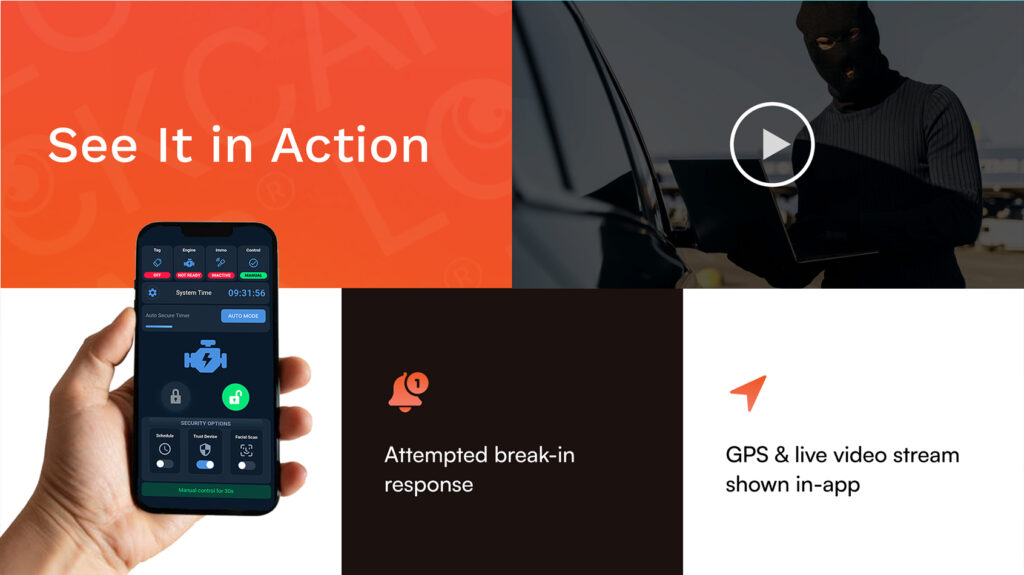
- Authorisation from your paired phone or optional proximity tag – nothing for a relay device to amplify
- No LEDs, no keypad, concealed module, and a fitting location that changes vehicle to vehicle
- Offline PIN sequence using the car’s own buttons, so a flat phone never locks you out
- Every model built on the same CAN-IMMO core
- Speak to an installer for the right fit
Frequently asked questions
Can a thief find and bypass an aftermarket immobiliser?
No security system can honestly claim to be impossible to defeat, and you should be wary of anyone who says otherwise. What an immobiliser does is change the maths. With no visible indicator, no standard fitting point and a different location on every vehicle, finding and bypassing it takes far longer than the minute or two a thief is prepared to spend on your driveway. Most attempts end with them walking away.
How long does fitting take, and where does it happen?
Most installations take a few hours depending on the vehicle, and we come to you – home or workplace, anywhere in the UK. You get a walkthrough of the system before we leave, plus documentation for your insurer. Appointments are usually available within a few days.
Will it drain my battery?
Standby draw is a few milliamps, which a healthy battery supports for weeks of parking. In practice your car’s own electronics – keyless entry, telematics, alarm – use considerably more than the immobiliser does. If your battery is already weak, that is worth fixing regardless.
Do I need an immobiliser if I already have a tracker?
They solve different problems and the tracker solves the later one. Tracking tells you and the police where a stolen car went; an immobiliser is why there is nothing to trace. If you can only fit one, fit the one that stops the theft. If you can fit both, the combination is what we would recommend for a high-theft model.
What happens if I sell the car?
The system can be removed professionally and transferred to your next vehicle, with the app account moved across where applicable. A transfer or reinstallation fee applies. Tell us before you sell rather than after, so the removal is booked while you still have the car.
Find out how your car gets stolen – then stop it
Send the make, model and year. We reply with the known theft method for your vehicle, what we would fit, and the nearest fitting slot.