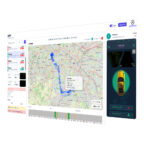


How to choose a car immobiliser and get it fitted properly
Thieves stopped attacking keys and started attacking the car’s own wiring. A factory immobiliser no longer settles the question, and neither does a new registration plate. This guide covers what actually stops a modern theft, the three ways to get a device installed, and what it should cost you in 2026.
On this page
- Why factory security stops working
- Certification, and the mistake that costs you twice
- The three types of immobiliser
- The top 3 installation methods for 2026
- How to choose: a six-step framework
- What it costs in 2026
- Five questions to ask before you book
- LockCar CAN-IMMO
- Frequently asked questions
- Book an installation
Why factory security stops working
There is a reasonable assumption behind most premium car ownership: a vehicle built in the last two or three years has a factory immobiliser, a Thatcham Category 2 rating, and on newer models ultra-wideband keys designed specifically to defeat signal relay. All of that is true. None of it has stopped the thefts.
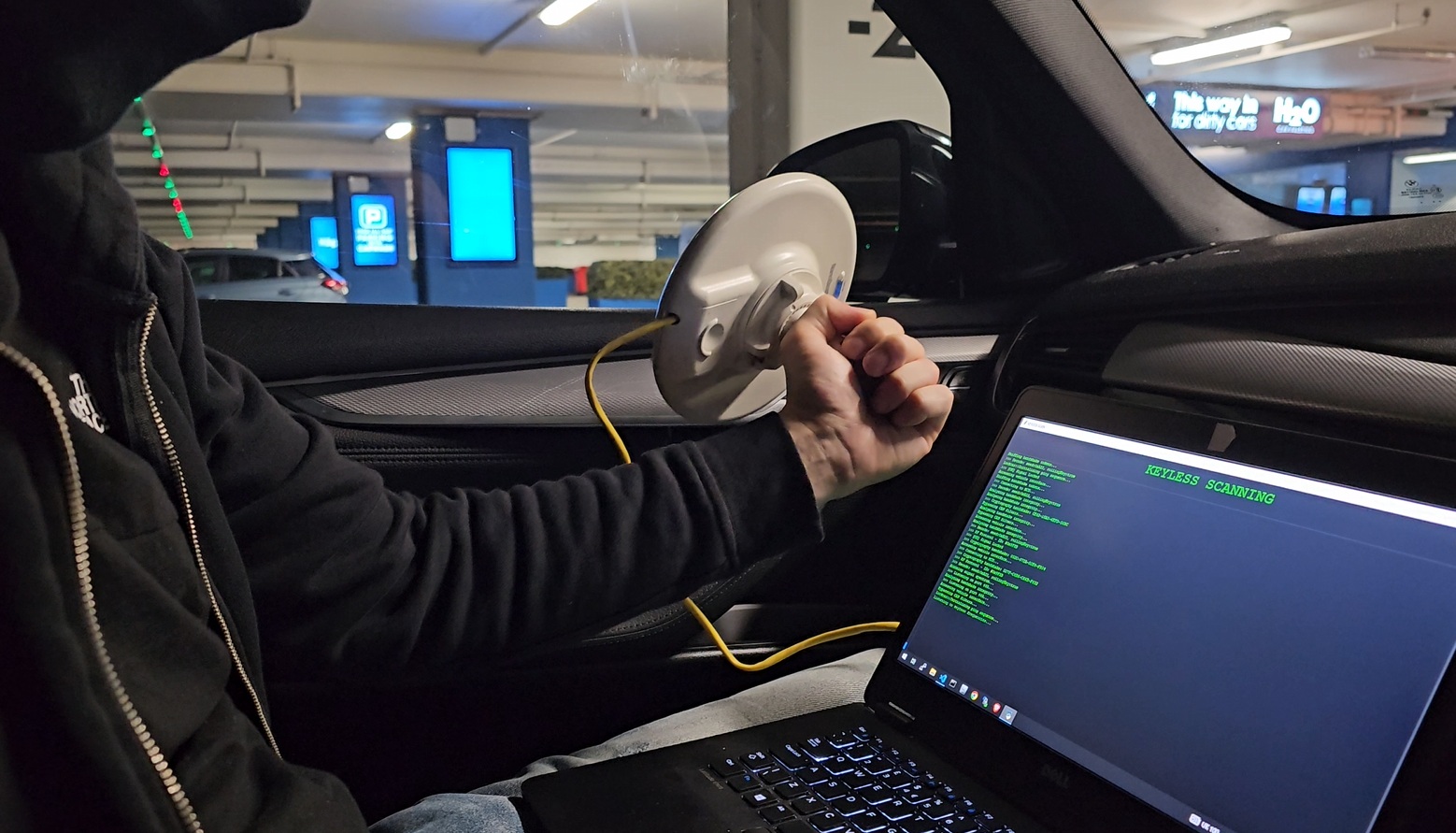
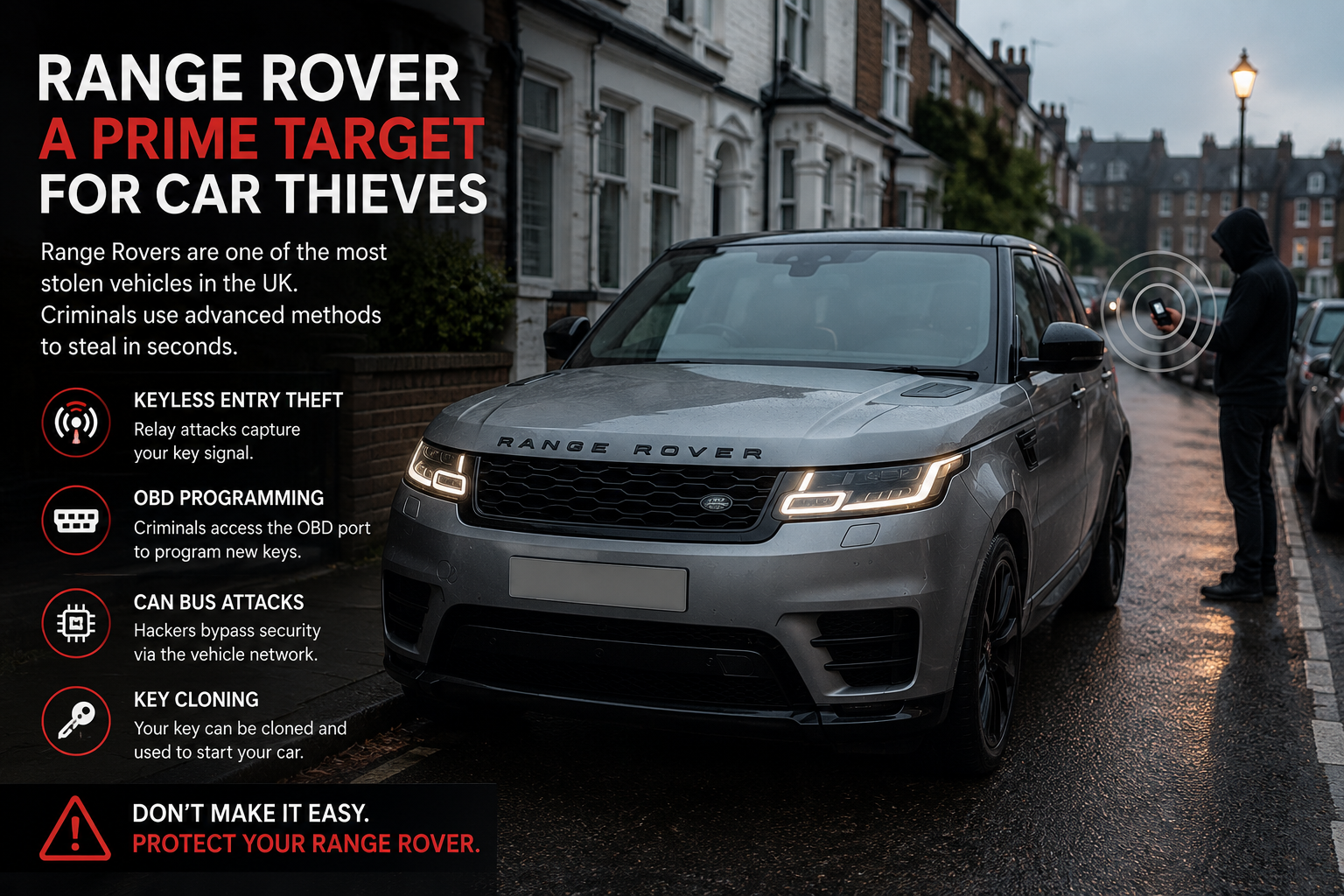
The reason is that vehicle crime moved on. It no longer attacks the key. It attacks the car’s own nervous system, and it does so in three ways. Relay attacks remain the volume crime: two people, two signal amplifiers, one at your front door and one at the car. The vehicle believes the key is present and forty seconds later it is gone. OBD key cloning is faster and nastier. A coding device costing a couple of hundred pounds plugs into the diagnostic socket, programs a fresh key, and in many cases deauthorises your original in the process.
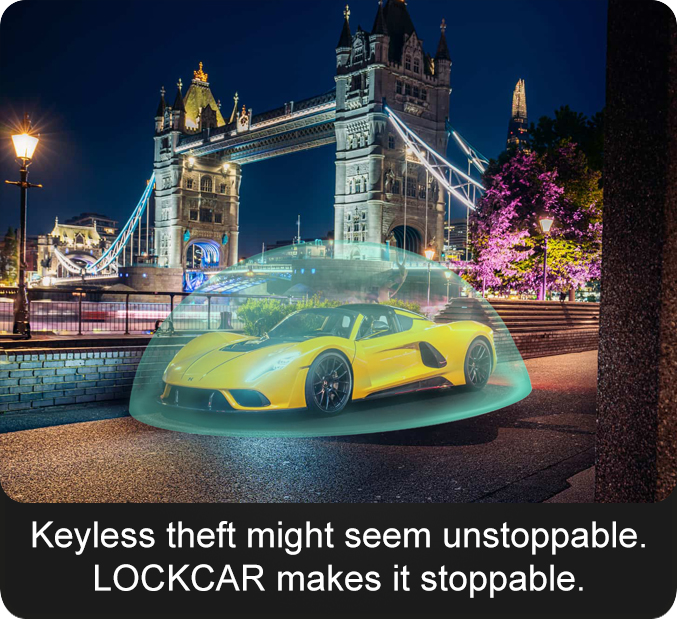
The third technique is the one that changed the calculation. CAN injection, often called headlight hacking, does not require getting inside the car at all. A device is spliced into the CAN bus network through accessible exterior wiring, usually a headlight cluster, and instructed to broadcast the message that says valid key present, unlock, start. Factory security is not defeated so much as bypassed entirely. An aftermarket immobiliser answers all three, because it introduces logic the thief has no map for. It is not part of the vehicle’s designed architecture, so there is nothing standardised to attack.
Certification and the mistake that costs you twice
Two kinds of certification exist in the UK, and they answer different questions. Thatcham Research is the older, insurer-founded standard, and it certifies the product. It categorises devices: S5 and S7 for trackers, Category 1 and 2 for alarms and immobilisers. When an insurance schedule names a security requirement, it almost always names a Thatcham category.
Separately, there are industry accreditation schemes that approve the installer rather than the device, typically involving identity and background checks on the engineer who attends. Some also include vehicle marking registered against your VIN, which supports police identification if a car is recovered.
Here is the trap that catches people. The two are not interchangeable, and an immobiliser can carry an installer accreditation while holding no Thatcham rating at all. If your insurer’s letter specifies a Thatcham S5 tracking device, fitting any immobiliser will not satisfy that requirement, however good the device is, because an immobiliser and a tracker do different jobs. You can spend several hundred pounds and still be non-compliant.
Phone your insurer and ask them to state in writing exactly what they require: a Thatcham S5 tracker, a Thatcham S7 tracker, an accredited immobiliser, or a combination. Get the answer by email, then buy to that specification. Every other decision in this guide is secondary to that one phone call.
The three types of immobiliser
CAN bus PIN systems
The device sits on the vehicle’s CAN network and blocks engine start until you enter a sequence using buttons the car already has: steering wheel controls, window switches, climate keys. No fob to clone, no LED to spot, no radio emissions for a scanner to find. A thief who has cloned your key, swapped the ECU or injected the CAN bus still cannot drive away. The trade-off is a short sequence every time you start.
Bluetooth and proximity tag systems
An encrypted tag on your keyring or in a pocket disarms the immobiliser automatically. Step away with the tag and the system arms itself within a few metres. Nothing to remember, nothing to press. Some installers now prefer these purely on usability, since service mode and emergency disarm tend to be more forgiving. The trade-off is that you must carry the tag and keep it charged.
Trackers with remote immobilisation
Thatcham S5 systems pair GPS tracking with driver recognition and, on most vehicles, remote immobilisation run by a 24/7 control room that works directly with police. These satisfy insurers who name S5 explicitly. They also carry a yearly subscription, and the tracking element only helps after the car has already been taken.
The top 3 installation methods for 2026
The device matters less than who fits it and how. A CAN bus immobiliser fitted badly is worse than none at all: it can cause intermittent electrical faults that are miserable to diagnose, it can put your manufacturer warranty at risk, and it produces paperwork your insurer will reject. These are the three legitimate routes, ranked by how well they suit most owners.
1. Mobile fitting at home or work
A registered engineer comes to you and the car never moves. Two to three hours on most vehicles, mobile service included in the headline price rather than charged as an extra. The engineer works through the CAN bus without cutting factory wiring, conceals the unit in the loom, programs your code with you present and demonstrates the system before leaving. Best for the large majority of owners. You need a driveway or a workplace car park, not a busy public street.
2. Specialist workshop fitting
You bring the car to a dedicated auto-electrical bay. Worth choosing when the vehicle is genuinely complex: dual-CAN architecture, CAN FD protocol, a hybrid or EV with a dense digital network, or an unusual import. A workshop has lifts, proper lighting, full diagnostic kit and the option to keep the car overnight if something needs a second look. Also the better route if you are bundling a tracker, an OBD lock or a hardwired dashcam into one visit.
3. Pre-delivery fitting at the dealership
The method most people never consider, and arguably the smartest. A mobile engineer fits the immobiliser while the car sits awaiting handover, so it is protected from the moment it leaves the forecourt. That closes the highest-risk window in the whole ownership: the first few weeks, when the car is newest and most conspicuous. It also puts the certificate in your hand before the insurance conversation starts. Clear it with the sales manager in advance.
Do not fit it yourself. This is not gatekeeping. A modern vehicle’s electrical architecture is unforgiving, and an incorrect CAN tap can produce faults that surface weeks later and cost more to diagnose than the device cost to buy. More to the point, installer accreditation is only valid when the work is done by a registered engineer. A self-fitted device generates no certificate, no vehicle marking registration and no insurance recognition. You would carry all of the risk and receive none of the benefit.
How to choose, in six steps
Get the insurer requirement in writing
Ask specifically whether they require Thatcham S5, Thatcham S7, an accredited immobiliser, or a combination. Do not order anything until you have that answer by email. Everything downstream depends on it.
Decide how you want to disarm it
A PIN means nothing to carry but a sequence to press. A Bluetooth or tag system means nothing to remember but something to carry. Neither is meaningfully more secure. Choose the one you will not resent in month eighteen.
Confirm compatibility with your exact vehicle
Not every device fits every car, and the correct variant matters. Dual-CAN vehicles need different hardware to standard ones, and CAN FD vehicles different again. A competent installer identifies this from your registration before quoting. If nobody asks, that tells you something.
Say which factory features you need kept
Remote pre-conditioning, remote start and manufacturer app functions can usually keep working alongside an immobiliser, but only if the system is configured for it. Raise this at the booking stage, not on the day.
Decide whether you also need tracking
Prevention and recovery are different jobs. An immobiliser stops the theft; a tracker gets the car back if it is winched onto a flatbed. On a high-value vehicle you want both, and bundles cost meaningfully less than buying separately.
Pick your installation method, then vet the fitter
Mobile, workshop or pre-delivery, using the section above. Then run through the five questions further down this page before you pay a deposit. The fitter matters more than the badge on the box.
What an immobiliser costs in 2026
The figures below are typical UK supply-and-fit ranges by category, including mobile installation where the installer offers it. They are a general guide only and individual products vary, so confirm the price and specification of whatever you are actually quoted. Subscription costs apply to tracking products only.
| Category | Supply and fit | Ongoing cost |
|---|---|---|
| LockCar CAN-IMMO | £299 | None |
| Hidden CAN bus immobiliser, typical market range | £450–600 | None |
| Hidden CAN bus immobiliser, dual-CAN or CAN FD vehicles | £550–650 | None |
| Thatcham S7 tracker | £329–399 | £129–139 per year |
| Thatcham S5 tracker | £399–499 | £155–190 per year |
| Immobiliser and S7 tracker bundled | £500–650 | S7 subscription |
| Immobiliser and S5 tracker bundled | £775–800 | S5 subscription |
The most common way to misread a quote is to compare a device price against a fitted price. Ask every supplier for one number that includes the unit, the mobile installation and any proximity tag, then compare those. Also ask whether the quoted price covers your specific vehicle: dual-CAN and CAN FD architectures often need different hardware, and that difference tends to appear after the deposit rather than before it.
Five questions to ask before you book
Is the specific engineer attending registered, or just the company?
Company registration and engineer registration are not the same thing. Ask who is coming and confirm their status. Installer accreditation schemes generally include identity and background checks on the individual fitting your car.
Will I receive a certificate, and when?
The answer should be on the day, or by email within seven working days. Anything vaguer is a warning sign, because that document is what your insurer wants to see.
Is the installation registered, and do I get vehicle marking labels?
On accredited installations, expect coded labels applied to the vehicle and registered against your VIN, plus a contact card for your wallet. Where it is offered, it should be included rather than an upsell.
Do you cut factory wiring?
The correct answer is no. Non-invasive CAN bus integration with factory wiring left intact is the standard that protects your manufacturer warranty. If wire cutting is described as normal, book someone else.
What happens if I forget my code?
Every properly documented install includes a device-specific emergency override and a recovery procedure. Make sure you understand it, and where it is written down, before the engineer drives away.
LockCar CAN-IMMO
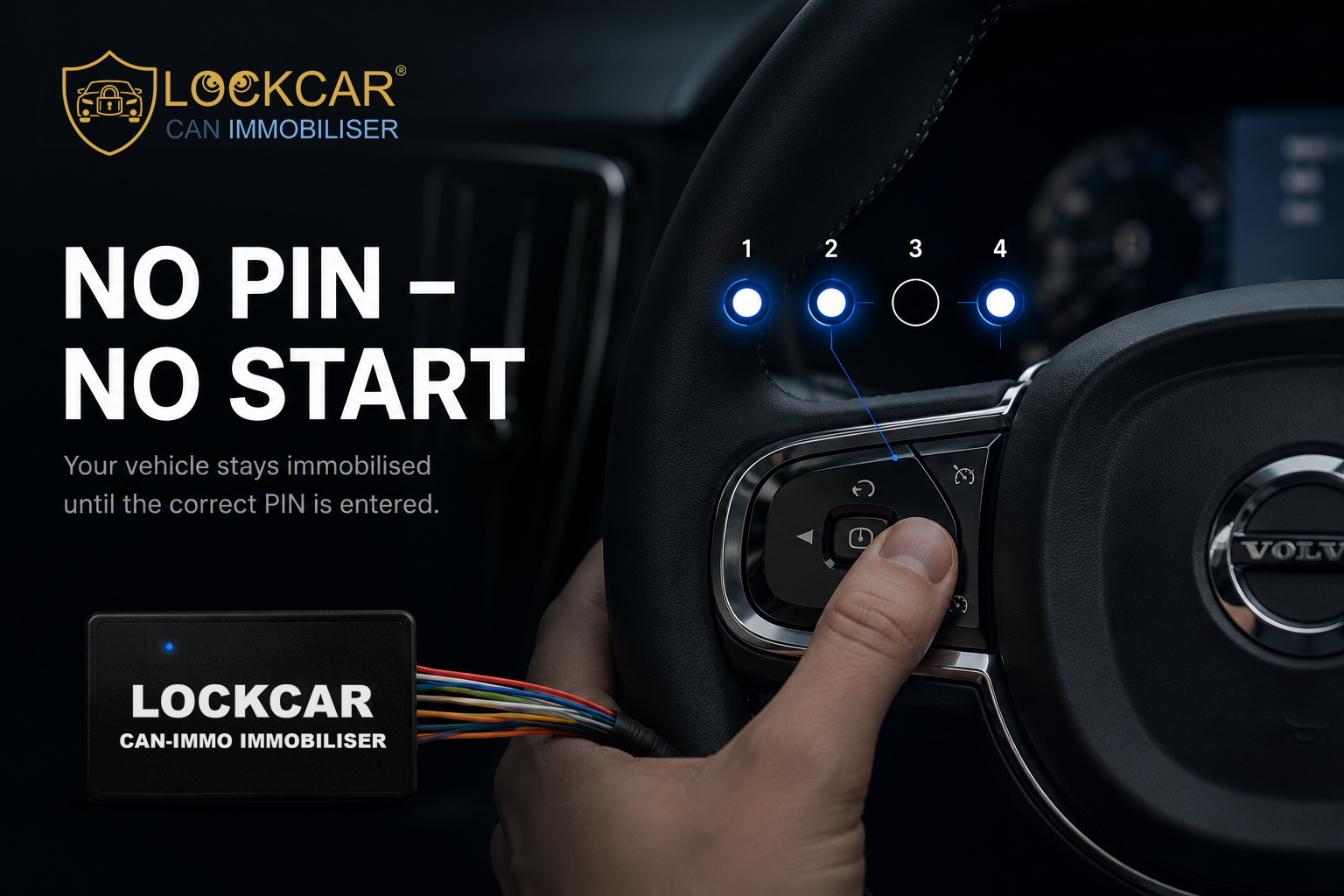
- Integrates through the CAN bus with no factory wiring cut
- Disarm by PIN through your existing controls, or by Bluetooth
- Fully covert: no fob, no LED, nothing for a scanner to find
- Every model built on the same CAN-IMMO core
- Speak to an installer for the right fit
LockCar CAN-IMMO is designed and engineered by AZFO Ltd in Birmingham. It is not currently covered by an independent accreditation scheme, and it is not a Thatcham rated device. If your insurer requires either, ask them to confirm the specification in writing and buy to it.
Frequently asked questions
Will an immobiliser affect my manufacturer warranty?
A CAN bus installation carried out without cutting or interfering with factory wiring leaves the vehicle’s own systems untouched, and should not. Terms vary between manufacturers, so if you have specific concerns, particularly on a car still inside its warranty period, raise it with your dealer before booking and get their position on record.
How long does the installation take?
Around two to three hours on most vehicles. Complex architectures, hybrids and EVs can take longer because the digital network demands more care. The engineer will also spend time with you afterwards setting your code and demonstrating service mode, so allow a little beyond the fitting itself.
What happens when the car goes in for a service?
Use service or valet mode. It suspends the disarm requirement temporarily so a technician can move the vehicle without you handing over your code. Set it before you drop the car off, and write down how to do it somewhere you will find it again in eight months.
Do I need to tell my insurer?
Yes. An immobiliser is a declarable modification, so send them the certificate and ask for the policy to be updated. This is not a formality worth skipping, since an undeclared modification can complicate a claim. Whether it changes your premium is a decision for the insurer.
Is an immobiliser enough on its own?
For most vehicles, yes. For high-value cars on a driveway, layering is better. A steering lock, an OBD port lock, anti-theft wheel bolts and a Faraday pouch together cost under £200 and cover the routes an immobiliser does not: towing, wheel theft and opportunist entry. Layered security is what moves a car from target to too much trouble.
Get it fitted where the car already is
Mobile installation at your home, your workplace or the dealership forecourt before you take delivery. Tell us the registration and we will confirm the right configuration for your vehicle before you commit to anything.
Vehicle security from
£199
Enter car's registration plate number to find the right LockCar security option
We could not pull the details automatically. Fill these in and we will carry on — it only takes a few seconds.
- Free, no obligation
- Fitted, not posted
- 12 months hardware warranty
Showing sample data — add your MOT History API credentials in the plugin settings to return real vehicles.
MOT history
Pick the level of protection
Every option is fitted by an approved installer. Choose one to see the exact devices.
Immobilisers only for
Hidden engine block. Nothing to see, nothing to record.
CAN BUS Immobiliser
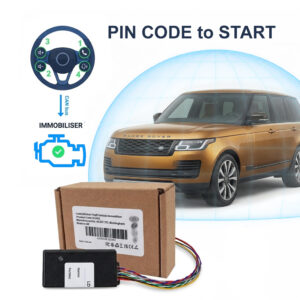
PIN CODE Car Immobiliser LockCar CAN-IMMO – Free Fitting
£299.00 £350.00
PIN CODE to START – NO PIN. NO START – LOCKCAR CAN-IMMO Immobiliser – Smart Advanced CAN Bus Vehicle Immobiliser – entering the PIN CODE each startup
App + Tag Immobiliser
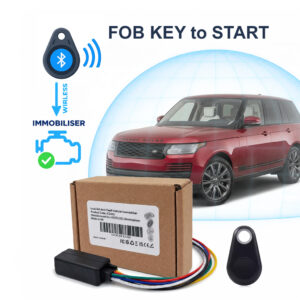
TAG FOB Car Immobiliser LockCar IC3262 TAG Immobiliser
£199.00 £250.00
TAG FOB KEY to START – NO FOB. NO START – LOCKCAR IC3262 Immobiliser – Smart Immobiliser – authorizes the car to start if it detects the fob…
Immobilisers + Dashcams for
Block the theft and record what happens around the car.
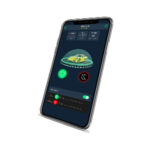
Dashcam + Immobiliser + App
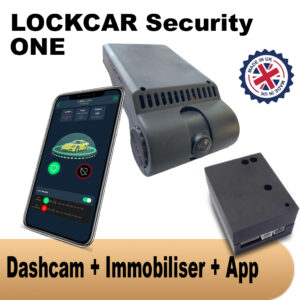
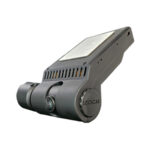
Dashcam + Immobiliser LockCar One – Free Fitting
£450.00 £550.00
LockCar ONE is a professional dash camera with 24/7 monitoring, SD recording, and smart immobiliser integration. Built for security, durability, and total control in the UK.
Dashcam + Immobiliser + App
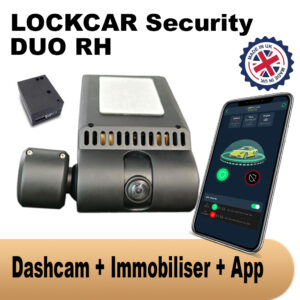
Dashcam + immobiliser Lockcar Duo Rh – Free Fitting
£550.00 £650.00
Local MCU system security. Power ON 24/7. Smart parking mode. Local car status, Immobilization, Local GPS Traking, Local Cameras Front + Driver. FREE UK INSTALLATION
4G Live Dashcams + Immobilisers for
Live view and alerts from anywhere, plus the engine block.
4G + Dashcam + Immobiliser + App
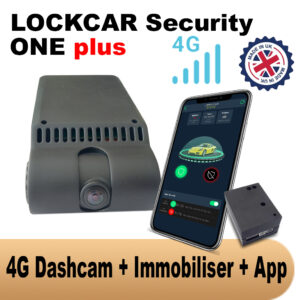
Dashcam + Immobiliser + Tracker LockCar One Plus 4G- Free Fitting
£499.00 £600.00
LockCar One Plus is 4G remote access and intelligent immobiliser. Designed for modern threats, this advanced anti-theft system allows you to monitor and control your car from anywhere,…
4G + Dashcam + Immobiliser + App
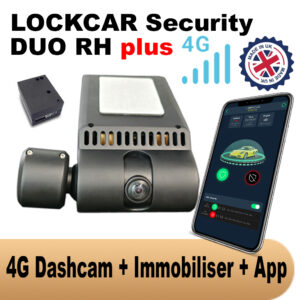
4G Daschcam + Immobiliser + Tracker Lockcar Duo Rh Plus 4G – Free Fitting
£699.00 £750.00
Remote access via 4g permanently. Power ON 24/7. Smart parking mode. Real-time car status, Immobilization, Real-time GPS Traking, Live Cameras Front + Driver. FREE UK INSTALLATION
Where should we fit it?
We come back with the theft method known for your model, what we would fit, the price with fitting, and the nearest slot to you. One message, no sales calls.
Got it – check your inbox
We have your registration and what you picked. We will come back to you shortly.
Message us on WhatsApp